A University of Mississippi-led study has found that gambling problems are often associated with mental health problems, prompting researchers to urge Mississippi parents, legislators and mental health officials to include gambling in mental health prevention programs. Photo illustration by Clara Turnage/University Marketing and Communications
- Researchers say legislators, mental health officials need to understand risks of problem gambling.
As gambling becomes more accessible to college students, a statewide study of Mississippi’s public universities found gambling problems frequently occur alongside depression, anxiety and substance use.
The findings suggest policymakers, parents and healthcare officials should recognize gambling problems as a potential sign that a student may need broader mental health support, researchers said.
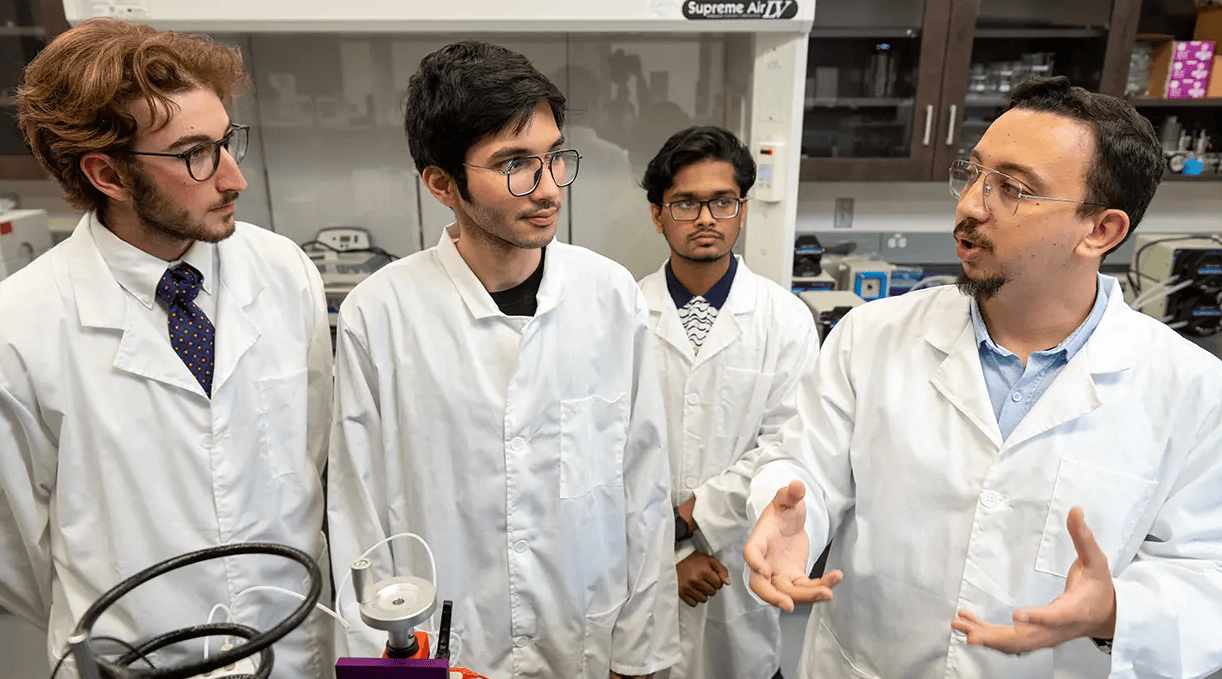
In a study of more than 1,800 students attending college at Mississippi’s eight public universities, researchers found that nearly 1 in 4 gambled and 7% showed signs of a gambling problem. The study, published in International Journal of Mental Health and Addiction, also revealed that students with gambling problems are more likely to report problems with mental health.
“Students were really, really struggling,” said Nicholas McAfee, director of the William Magee Center for AOD and Wellness Education at the University of Mississippi and lead author on the study. “Almost every student in the sample reported some increased level of mental health concern. It didn’t matter what school you went to; it was just across the board.
“What’s interesting about this study is even though mental health concerns were very prominent, students who tended to gamble more were more likely to be experiencing greater levels of problems among a sample that was already experiencing plenty.”
The survey took place in 2021 during the COVID-19 pandemic, when many casinos were closed. In the years since the study began, access to gambling has only increased.
Prediction markets offer opportunities to place wagers on future events at any time using a cellphone. In-person or online sports betting has become legal in 38 states, with 30 allowing online betting.
“A lot has changed since the study began, but what unfortunately hasn’t changed is access to evidence-based care and treatment or intervention strategies,” McAfee said. “This is not a Mississippi thing; we as a country are trying to figure out how to address the proliferation of gambling among young adults and college-age adults, which are of the most at-risk populations.”
As sports betting and other forms of online wagering expand, colleges, parents and legislators should be prepared to recognize gambling problems as another sign a student may need help, said Rory Pfund, associate professor of psychiatry at the University of Tennessee Health Science Center.
“At the policy level, there are not many, if any, resources in Mississippi dedicated specifically to gambling,” he said. “I hope that this is a call for policymakers to create a mechanism to provide dedicated funding not just to college students, but outside of campus as well.”
While not every student who gambles will develop a problem, many will, he cautioned.
“There will be people who experience problems, and in fact, there already are,” Pfund said. “Tennessee dedicates funding to this issue, and when I worked at a state-funded specialty clinic, we regularly treated people, including college students, from Mississippi for gambling problems. It’s already happening.”
Funding for gambling problem prevention, treatment and research is scarce at a national level, too. The National Institutes of Health has agencies dedicated to problematic alcohol and substance use, but no such official effort is aimed at problem gambling.
“Obviously gambling brings in a lot of revenue, and that’s important,” McAfee said. “But also important is taking care of our students. We have to have ways to identify problem gambling.
“That means having the means to identify those students and provide intervention services. That will be a net benefit for everyone involved.”
Although the study found a connection between gambling, mental health and substance use, future studies will need to clarify the nature of that relationship.
“Does gambling cause mental health problems, or do mental health concerns make someone more likely to develop gambling problems?” Pfund said. “This study is a foundation for us to advance our knowledge to understand if there is a causal relationship.”
Often the answer is not as simple as one issue causing another. Many people who have mental health problems are more susceptible to reward-seeking behavior such as gambling or substance use, but situations where gambling is common often are environments where drinking and substance use occur, McAfee said.
“Many of these social get-togethers are around betting on sports while you’re drinking, which of course increases all of your risk factors for all of the above,” he said. “The next frontier in understanding college student gambling behaviors is understanding how both these social mechanisms and co-occurring alcohol use feed into one another to create a risky environment.”
Until problem gambling and its causes are better understood, parents, educators and administrators must be aware of the warning signs, McAfee said.
“When people are withdrawing from friend groups, or when gambling becomes the entirety of their conversation, there’s clearly a change happening here,” the Ole Miss administrator said. “If you notice changes – whether that’s in mood or withdrawing socially – talk to them.
“The stigma around mental health is shifting, but there is still a huge stigma around problem gambling, and that makes people less likely to seek treatment. For a lot of people, they don’t know how to ask for help.”
This article is published courtesy of the University of Mississippi.

Clara Turnage