FILE - Mississippi Supreme Court justices, right, listen to arguments in Jackson, Miss., July 6, 2023. (AP Photo/Rogelio V. Solis, File)
- The Mississippi State Board of Election Commissioners asked the U.S. District Court to allow additional discovery and briefs ahead of oral arguments in the judicial redistricting case. State Senator Derrick Simmons and his fellow plaintiffs, represented by the SPLC and ACLU, say that isn’t needed.
No agreement was reached this week between the Mississippi State Board of Election Commissioners and the plaintiffs challenging the current state Supreme Court district maps.
The judicial redistricting case was remanded back to the U.S. District Court for Northern Mississippi by the Fifth Circuit Court of Appeals after the recent U.S. Supreme Court ruling in Louisiana v. Callais where the nation’s highest court deemed racial gerrymandering unconstitutional as it had been practiced under Section 2 of the Voting Rights Act.
Section 2 was being used as the justification for U.S. District Judge Sharion Aycock’s order that mandated the redrawing of Mississippi’s Supreme Court district lines set in 1987 to accommodate greater black voting strength.
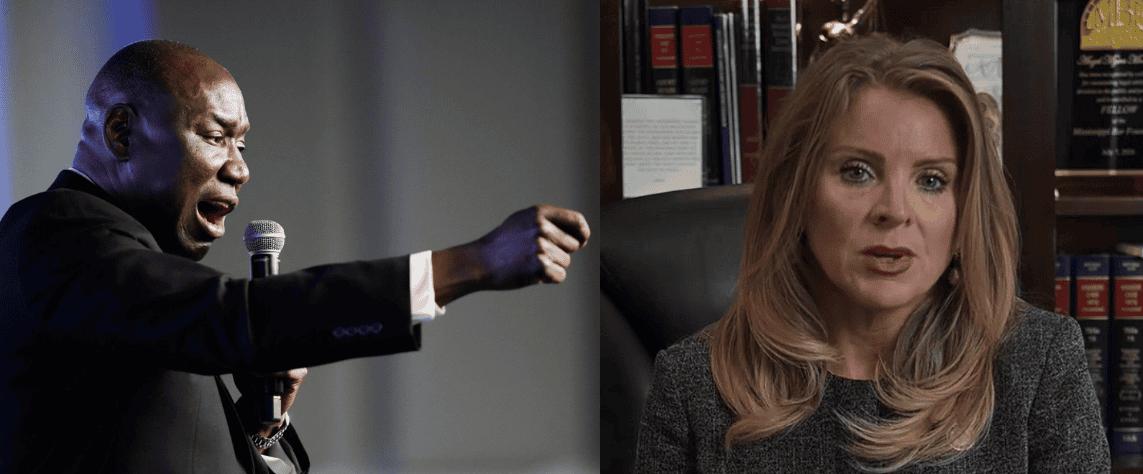
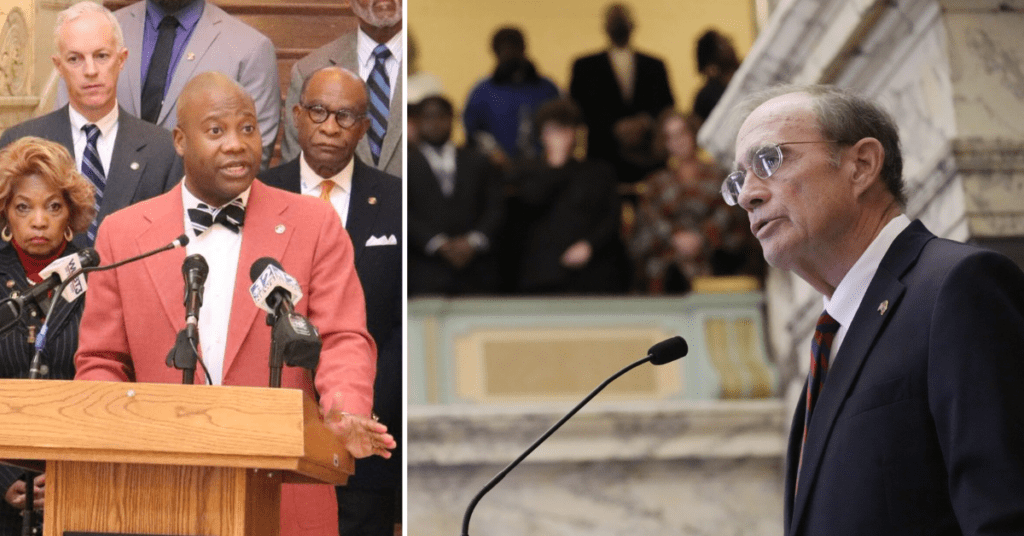
State Senator Derrick Simmons (D), Dyamone White, U.S. Senate candidate Ty Pinkins, and Constance Olivia Slaughter Harvey-Burwell are the plaintiffs in the case, represented by the ACLU of Mississippi and the Southern Poverty Law Center.
Notably, Lt. Governor Delbert Hosemann (R) recently appointed Senator Simmons who is suing the State to the Senate Select Committee on Redistricting and Reapportionment. That group is charged with evaluating potential future redistricting of congressional, legislative, and state Supreme Court districts in light of the Callais decision.
In a status update this week in the U.S. District Court, the State Board of Election Commissioners and the plaintiffs jointly told the court that the parties met and conferred in good faith but were unable to reach agreement on the next steps in this case.
The two sides had previously agreed that the plaintiffs would not ask the court to order special elections for the state Supreme Court before November 2027. However, the parties have not agreed on further proceedings in the case.
The State believes the court should order further proceedings to allow both parties “a fair chance to present evidence and argument in light of Callais.”
“Callais imposes a new standard that governs plaintiffs’ claim under section 2 of the Voting Rights Act,” the State contends. “The U.S. Supreme Court made clear that section 2 protects an ‘opportunity’ to vote that ‘results from the application of the State’s combination of permissible [redistricting] criteria,’ not a ‘right’ to a ‘sufficient number of majority-minority districts.’”
Post-Callais, the State wants the court to require the plaintiffs to file factual allegations on which their Section 2 claim rests under the standard now set forth by the U.S. Supreme Court’s decision.
“Callais ruled that section 2 must be read to ‘focus’ on ‘intentional racial discrimination’ and ‘imposes liability only when the evidence supports a strong inference’ that state lawmakers ‘intentionally drew’ disputed electoral ‘districts to afford minority voters less opportunity because of their race,'” the State’s filing outlines.
The plaintiffs disagree, telling the court that they have already submitted evidence to satisfy the updated framework and the State has already had a chance to probe and respond to that evidence.
“Plaintiffs are unaware what additional discovery Defendants specifically believe to be necessary,” the plaintiffs contend. “Given that Plaintiffs do not need to introduce new evidence or legal theories, Defendants’ proposal is not legally justified or practically necessary and will only make it more difficult to put a remedy in place for November 2027 should Plaintiffs again prevail on the merits under the updated vote dilution standard.”
No decision by the court has yet been announced. The State is asking the court to set oral arguments after additional discovery and briefs are submitted in late December.
The State’s latest filing in this case is below, followed by the plaintiffs’ response.