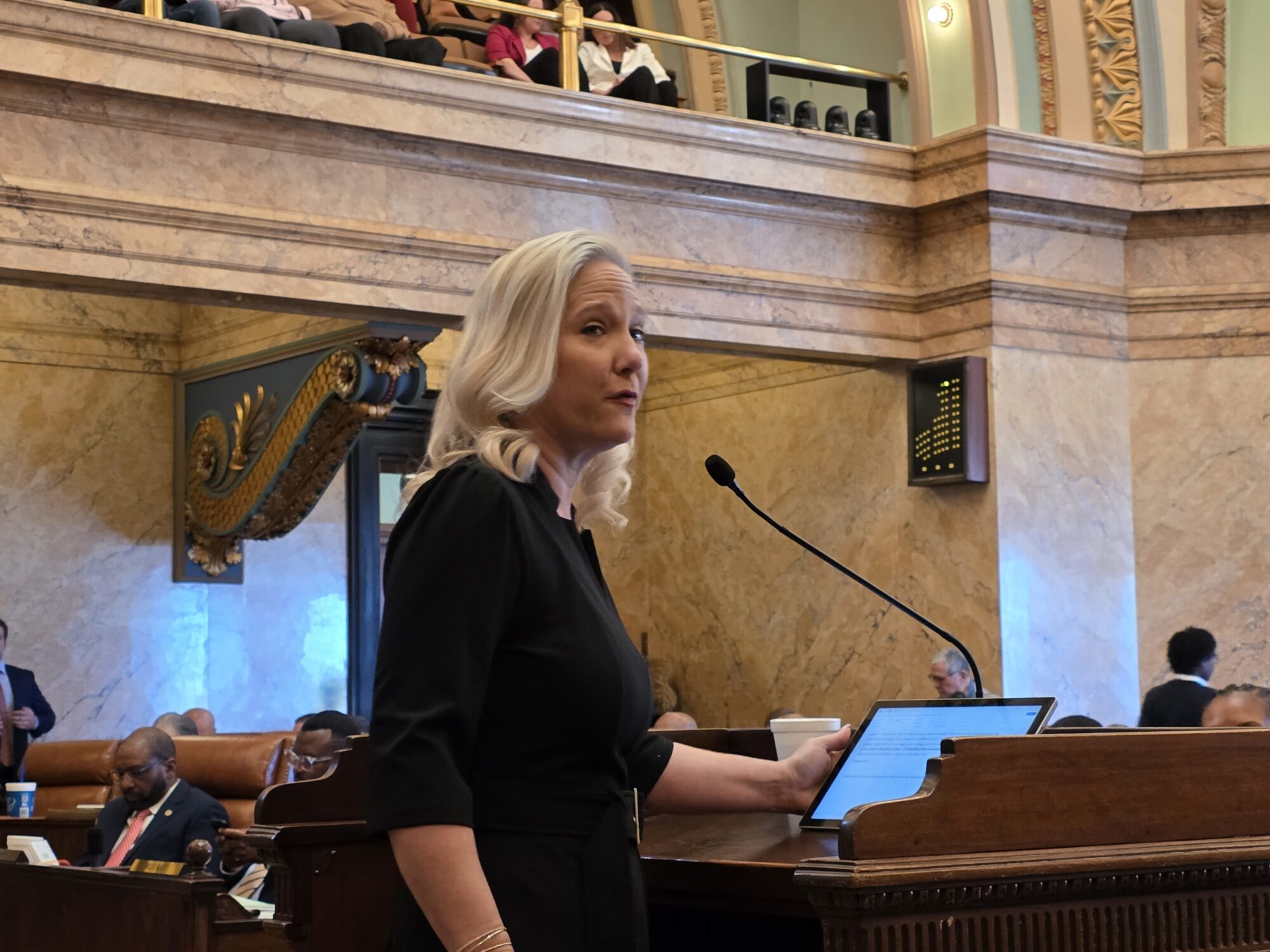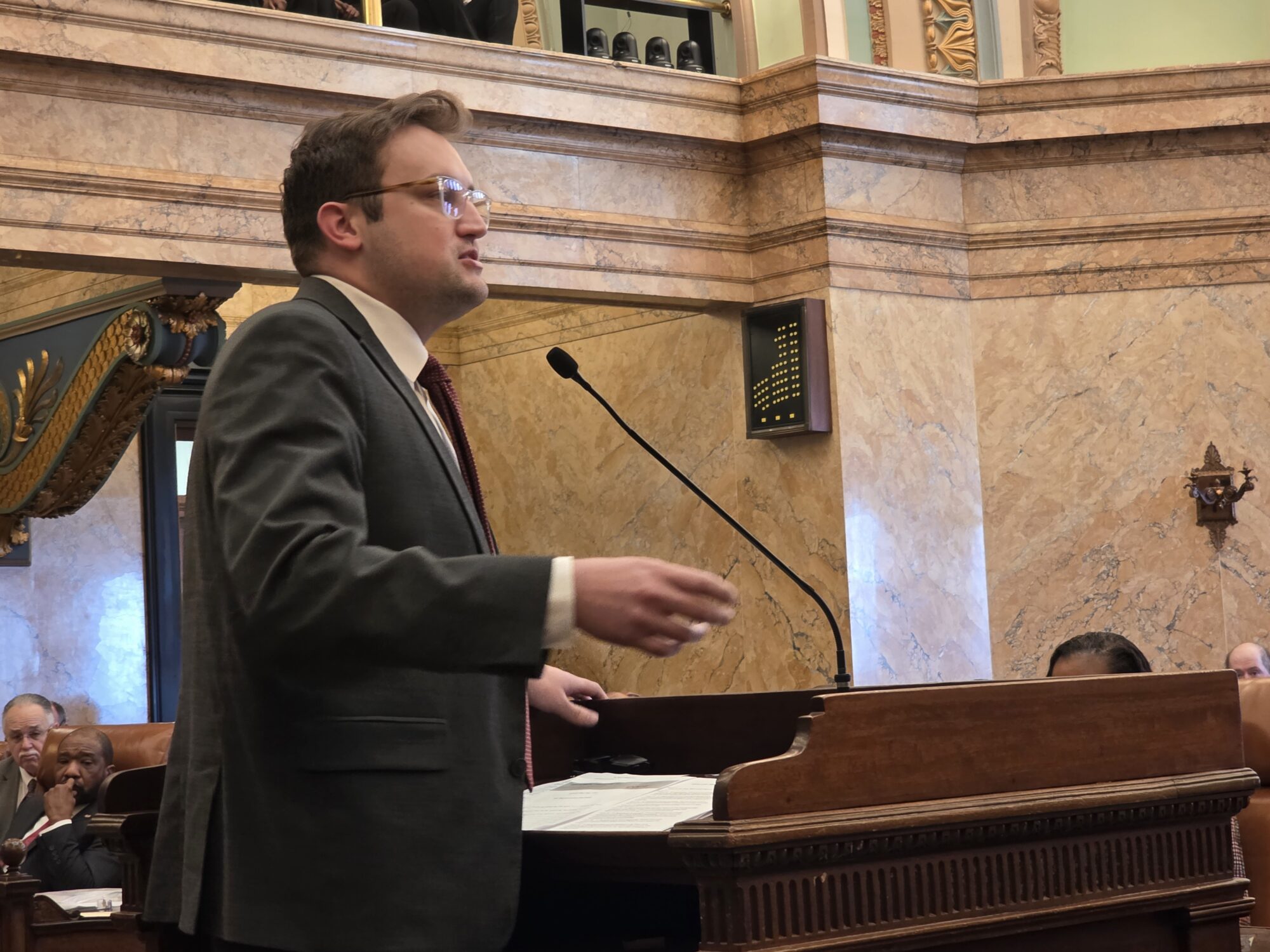
Rep. Jansen Owen (R) described the Mississippi Open to Religion Act on the floor of the House of Representatives as a vehicle to protect schools from potential lawsuits that could be filed in relation to allowing prayer on school grounds. (Photo by Jeremy Pittari | Magnolia Tribune)
- The measure would allow students to opt-in to pray and participate in religious activities while on public school grounds, so long as it does not affect instruction time.
A bill that would allow students to engage in prayer or other religious activities while attending school has passed in the Mississippi House of Representatives.
The bill, titled the “Mississippi Open to Religion Act,” aims to provide legal protection to K-12 public schools that allow students to engage in religious activities and group prayer sessions while on campus. An amendment that clarified or corrected some language within the bill was adopted during discussion of the bill.
Authored by State Rep. Charles Blackwell (R), HB 1310 provides the legal protections for the schools through assigning representation to the Attorney General’s Office.
The bill was drafted in a manner so as to not buck constitutional safeguards while also ensuring any prayer or other religious activities are not state sponsored, State Rep. Jansen Owen (R) said while presenting the measure to the House.
Any participation in religious activities or prayer sessions while on campus is on at-will basis and would be voluntary.
“It is an opt-in provision, not an opt-out. So, the student or parent must request to be added to participate,” Owen said.
The religious activities would be held in classrooms, gymnasiums, outside or in other areas of the school not already occupied by students for learning at the allowed times, ensuring that only those who choose to engage are in attendance.
“Consistent with past court decisions, the prayer and reading may not be broadcast over the speaker or intercom and may also not replace instructional time,” Owen noted.
Another provision of the bill is that any religious activities or prayers do not have to add additional time to the instructional day and the practice cannot affect class time or other programs currently offered during the normal school day.
“My reading of the bill says that they can do it before school hours. My local high school allows students to come and meet before school hours,” Owen described. “They can also use already designated break times, lunch periods, things like that to accommodate. But there’s no requirement that they create an additional period.”
Concerns expressed about the bill included whether it would introduce students to religions their parents may not align with, or whether it would violate federal law and therefore put schools and districts in a position for potential lawsuits.
Rep. Owen said the bill expressly protects schools and districts from lawsuits by engaging the Attorney General’s office to provide legal representation should that occur.
It also addresses instances of some schools in the state refusing to allow students to engage in prayer while on campus.
“Various districts throughout the state, from what I understand, are not allowing that now,” Owen told the chamber. “If a school is sued on religious grounds, the Attorney General will defend that school as long as they are complying with the requirements of this act.”
State Rep. Justin Crosby (D) raised concern that children, who are often impressionable at an early age, might be exposed to a religion their parents may not practice.
“Gentlemen, in our society we already have that mix of ideologies. We’re in America, we’re a melting pot of different religious faiths. Even in this room we have different faiths,” Owen responded.
Owen added that the opt-in procedure on behalf of the parents will prevent a child from engaging in a faith they are not aligned with in their home. The bill does allow for any religion to be practiced during the allowed times.
Before the bill went to a vote, State Rep. Robert Johnson (D), the House Minority Leader, said the bill would violate the constitution as well as open the state up to unnecessary litigation since children can already pray in schools.
Ultimately, the bill passed in the House by an 80 to 35 vote. It now heads to the Senate for further consideration.

Jeremy Pittari