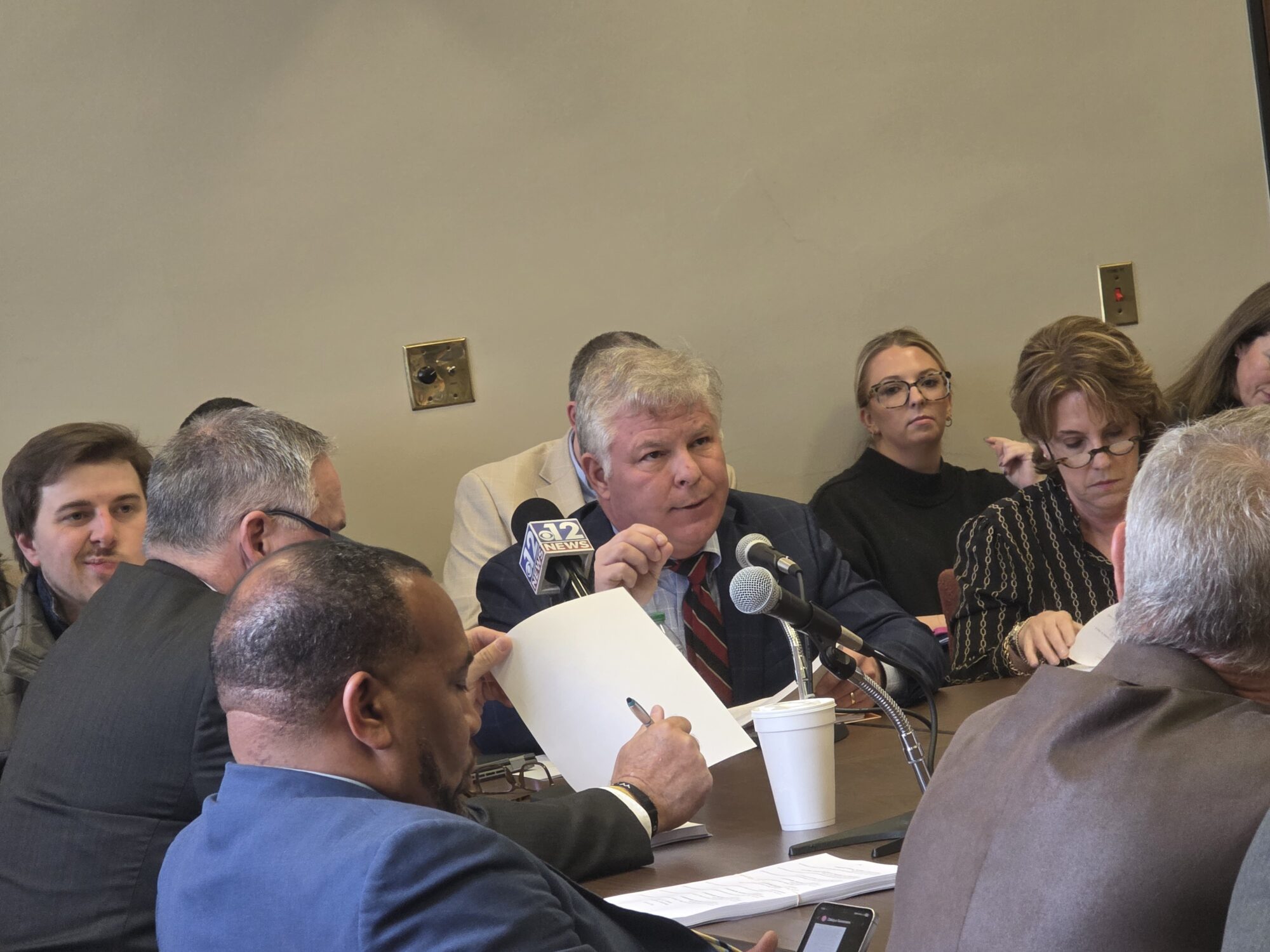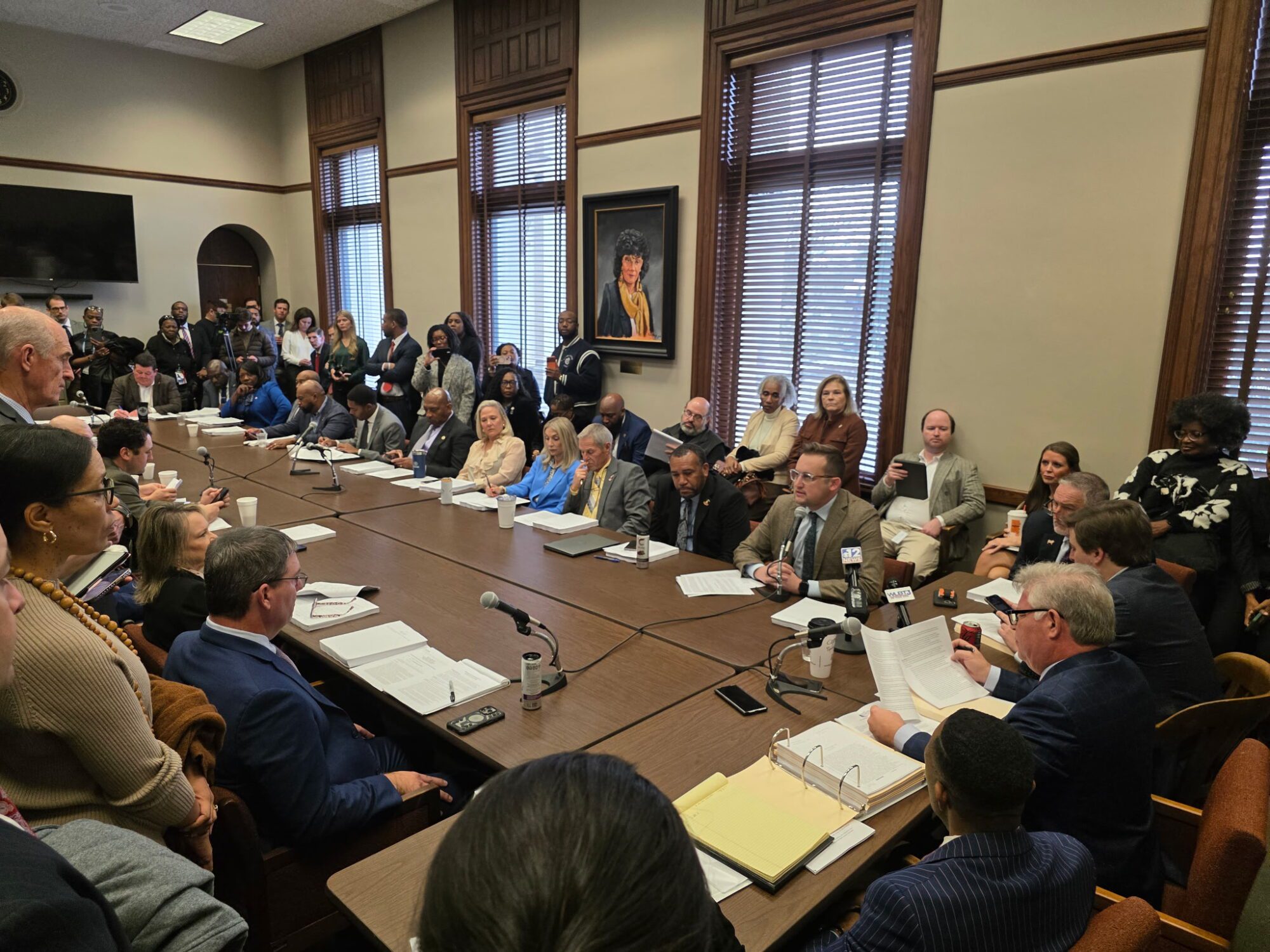
House Education Committee meets January 14, 2026, to discuss HB 2 (Photo by Jeremy Pittari | Magnolia Tribune)
- While the Republican-backed bill does include a universal school choice component, it also addresses a number of aspects within Mississippi’s education system, from student transfers and state employee retirement to standardized testing and the establishment of charter schools.
The Mississippi Education Freedom Act passed out of the House Education Committee on Wednesday by a roll call vote of 14-11 down party lines.
While the Republican-backed bill does include a universal school choice component, it addresses a number of aspects within Mississippi’s education system, from student transfers and state employee retirement to standardized testing and the establishment of charter schools.
A committee substitute to the original bill was approved to correct language pertaining to Pre-K funding introduced as part of the passage of the new Mississippi Student Funding Formula as well as changes to charter school requirements. The new student funding formula did not include a definition for funding for children in Pre-K programs.
“So, when we passed the funding formula two years ago the definition between the old MAEP formula and the new formula as it pertains to what is a qualifying student changed,” House Education Committee Vice Chair Jansen Owen (R) explained. “It is the contention of the House that was an unintentional error.”
The committee substitute as adopted would provide the definition for all students, not just those in K-12.
“It is our intent to make sure that Pre-K is being funded through our collaborative program. It is not the intent that we cut Pre-K funding. We want it all to be under the collaborative program, a program that we built over the past 15 years,” Owen added.
The substitute also included change to the charter school provisions, which initially allowed charter schools to be established anywhere in the state. With the committee substitute, charter schools would be allowed to be established in areas where a district has at least one school rated at a D or F.
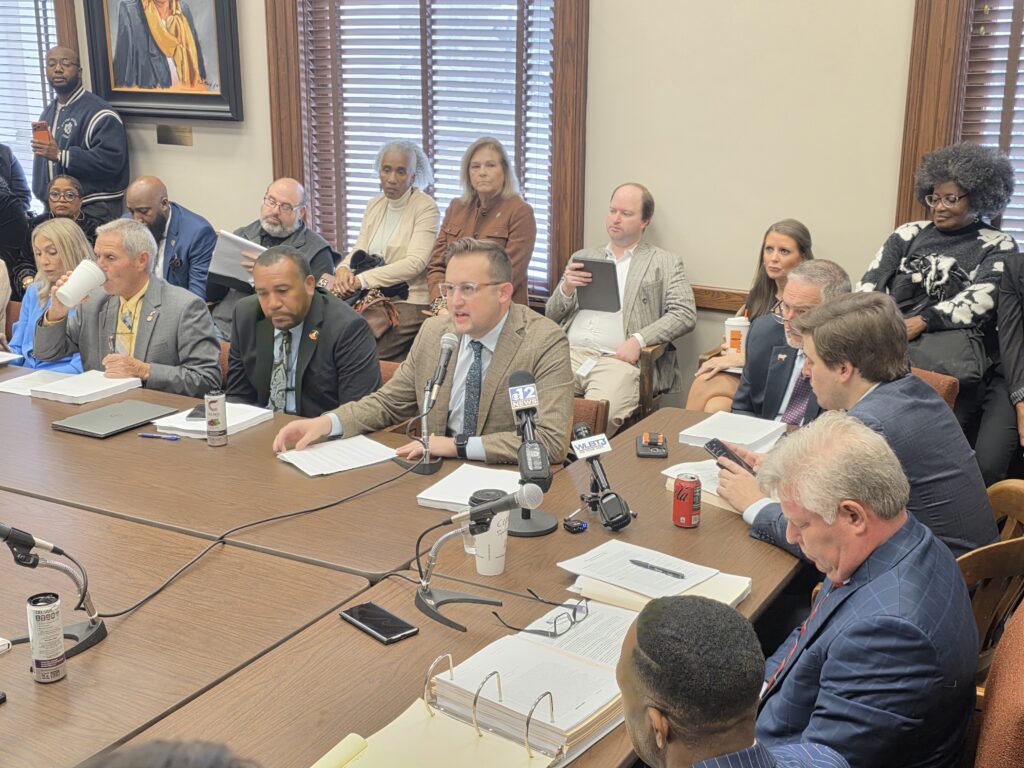
The remainder of the original bill as filed by Speaker Jason White (R) was passed out of committee with the provisions as previously reported by Magnolia Tribune last week.
READ MORE: Mississippi House proposes ambitious package of school choice reforms
Some highlights of the measure include the creation of additional Education Savings Accounts called Magnolia Student Accounts, of which there would be a total of 12,500 accounts in the first year that include the base student cost provided by the state to educate children. Half of those accounts would go to children currently attending public school, and the other half would be provided to students who want to transfer to any school, including private schools.
“We give those accounts out by priority based on income level – 100, 200, 300 percent of the area median income,” Owen told the committee.
An additional 2,000 accounts are proposed to be added annually, until a total of 20,000 accounts are available across both pools over the next four years.
“Once they get to 20,000 ESAs the number only grows in the event that there is a waitlist or they are exhausted and there is additional need for approval of additional ESAs,” Owen said.
Some concerns were lodged by committee members, namely those in the House Democratic caucus, over a lack of accountability in testing. Rep. Owen said private schools that accept state funding will be required to administer the same ACT or SAT tests as do public schools.
HB 2 also outlines a “period of reflection” where students can voluntarily engage in prayer at the beginning of the school day.
Changes to the existing Education Savings Accounts set aside for children with special needs include removing the existing wait list.
There is also a provision for families of homeschool children to receive $1,000 per family to help cover education expenses. That program will also require up to $5 million in funding. In addition, the bill would allow homeschooled students to participate in public school activities offered in their area, a provision often referred to as the “Tim Tebow Act” that has passed in over 30 states nationwide.
Scholarships for dyslexia and speech therapy will also include the base student cost with an additional $1,000 and $2,000 added, respectively.
As for transferring schools, HB 2 would remove a sending school district’s ability to veto student transfers, which under current state law requires both the sending and receiving districts to provide approval. If the bill becomes law, only the receiving district would have veto power to approve or deny a transfer request. Receiving school districts will retain the ability to deny requests when space is insufficient.
HB 2 creates an adolescent literacy program in support of the Literacy Based Promotion Act where the third grade reading gate will be replicated for grades 4th through 8th. It will also create intervention pathways in math that will include screeners with the goal being to build on proficiency and align milestones with career and college readiness standards. Financial literacy will be added to as a curriculum component, with completion of a half-credit course required prior to high school graduation, along with elective courses in lower grades.
The House bill also removes the limitations currently preventing retired teachers from coming back to the classroom.
“We removed the restrictions on allowing experienced educators to come back to the classroom if they choose to come out of retirement while continuing to collect their PERS benefits,” Owen said.
While the bill does not address a teacher pay increase, it does set the minimum salary of assistant teachers at $20,000 and provides $5 million to allow the establishment of high schools on some community college campuses.
State Rep. Rob Roberson (R), the committee chairman, expects a separate House bill to address a teacher pay raise. The Senate has already passed their version of a teacher pay increase.
In response to backlash that came after the establishment of a new Tier 5 in the state employee retirement program from last session, the House education bill also adjusts the length of service requirement not just related to educators, but all employees of the state.
“We removed the 35-year requirement. We bring that back down to 30 years and we bring the vesting period back down to four years,” Owen said.
Standardized testing will be removed from grades 3 through 8 but will remain at the high school level, if the House measure is passed.
Rep. Owen said he believes the bill could be presented to the full House on Thursday. It has already drawn praise from Governor Tate Reeves (R), who said he would sign it if it reached his desk, and the Trump Administration.