(Photo from Shutterstock)
- State Rep. Trey Lamar, Chairman of the Mississippi House Ways and Means Committee, was optimistic about the Magnolia State’s ranking but believes that the report emphasizes the need for property tax reform.
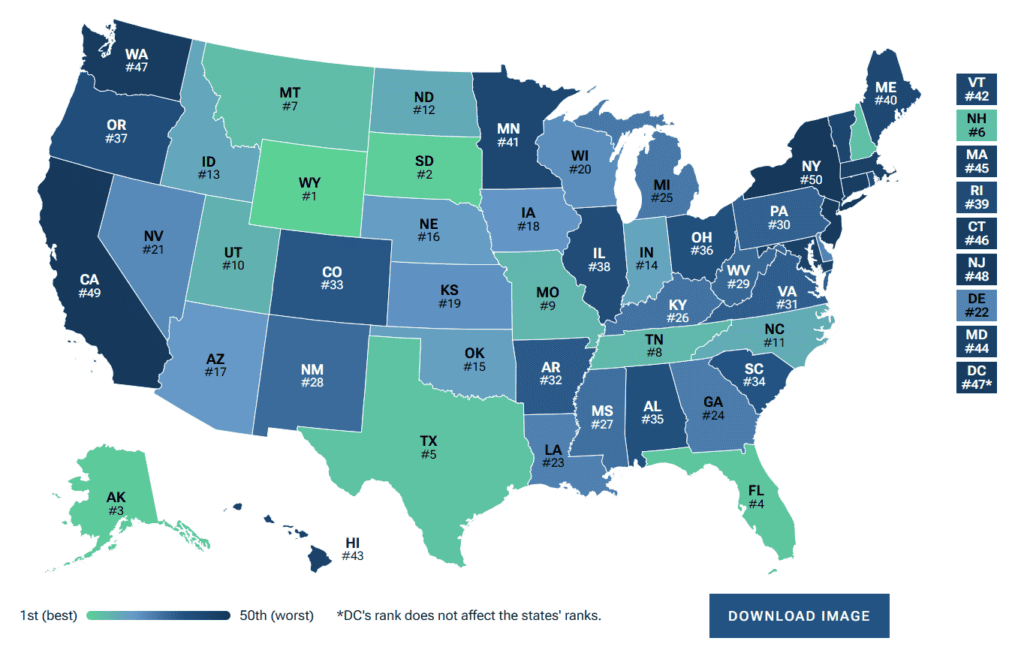
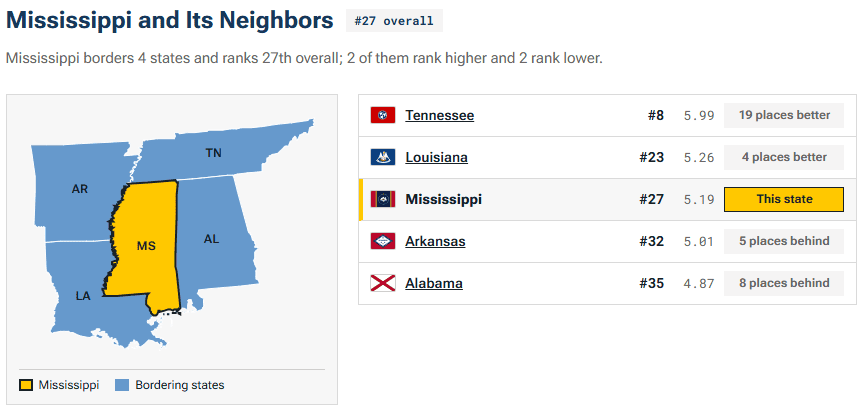
The Tax Foundation, a tax policy nonprofit, ranked Mississippi’s tax code 27th in the U.S. in its 2027 State Tax Competitiveness Index.
The State Tax Competitiveness Index, which is released annually, ranks how well states structure their tax system based on more than 150 variables.
Mississippi, which ranks near the middle of the pack on the Index, “benefits from a low, flat individual income tax rate and a relatively low corporate income tax rate,” the Tax Foundation report reads.
Mississippi fell one place from last year’s ranking, previously coming in at 26th in the country.
However, Mississippi’s individual income tax score improved from 34th to 29th because of an income tax rate reduction from 4.4% to 4%. Mississippi also decreased its capital stock tax rate from 7.5% to 5%.
State Rep. Trey Lamar (R), Chairman of the Mississippi House Ways and Means Committee, was optimistic about the Magnolia State’s ranking but believes that the Index emphasizes the need for property tax reform.
“I am pleased to see our continued phase out of Mississippi’s income tax improve the national tax rankings for our state,” Lamar told Magnolia Tribune. “However, as our income tax continues to phase out and we begin relying more on a consumption tax model to fund core government functions, this research confirms my belief that property taxes are too high and burdensome on the people of Mississippi.”
Lamar said property tax reform is needed in the near term. He and other lawmakers in the House on Speaker Jason White’s select committee have been exploring options during this off season while out of session to do just that come January.
“I look forward to working with my House and Senate colleagues and local governments across the state during this next legislative session as we lead the effort to lower property taxes for the people of Mississippi,” Lamar said.
The Index notes that while Mississippi’s property taxes are relatively low, its taxation of tangible personal property, including business inventory, as well as intangible property, penalizes in-state investment and hurts the state’s property tax component score.
As for sales tax, the Index reports that Mississippi’s statewide sales tax rate is among the highest in the country at 7%, but low reliance on local sales taxes yields a combined state and average local rate that sits near the middle of the pack.
“Taxation is inevitable, but the specifics of a state’s tax structure matter greatly. The measure of total taxes paid is relevant, but other elements of a state’s tax system can also enhance or harm the state’s tax competitiveness and economic outlook,” Tax Foundation Senior Policy Analyst Janelle Fritts said. “The State Tax Competitiveness Index distills many complex considerations into an easy-to-understand ranking.”
Wyoming was ranked as the best state in this year’s Index, while New York was ranked worst.
The top 10 best states in this year’s Index are:
1. Wyoming
2. South Dakota
3. Alaska
4. Florida
5. Texas
6. New Hampshire
7. Montana
8. Tennessee
9. Missouri
10. Utah
The 10 lowest-ranked states in this year’s Index are:
41. Minnesota
42. Vermont
43. Hawaii
44. Maryland
45. Massachusetts
46. Connecticut
47. Washington
48. New Jersey
49. California
50. New York