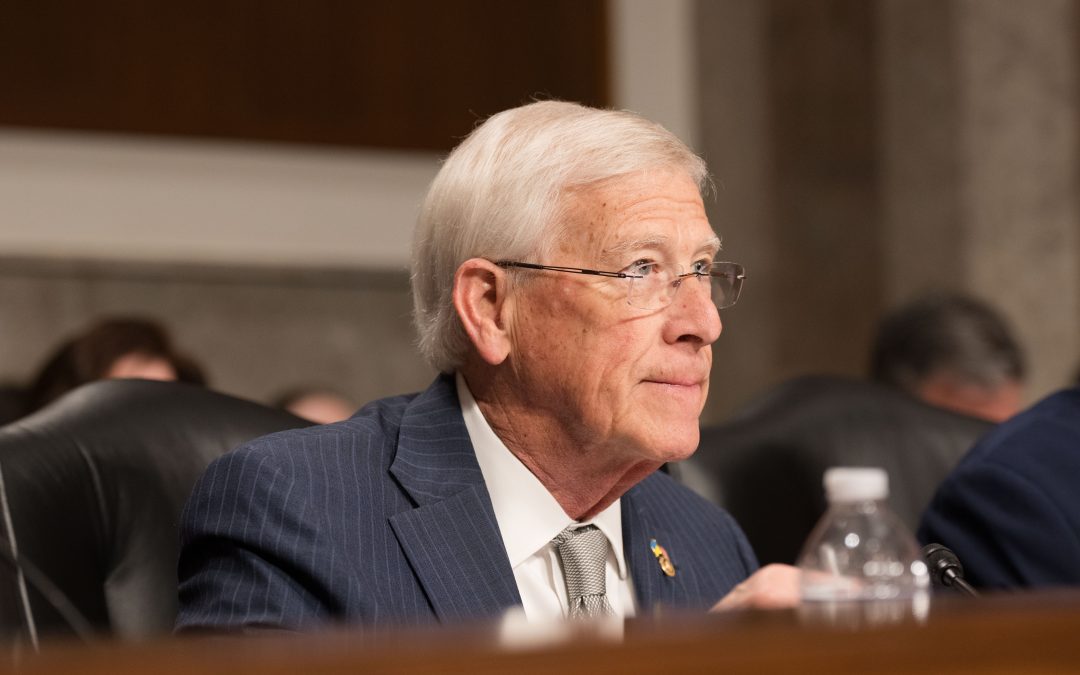
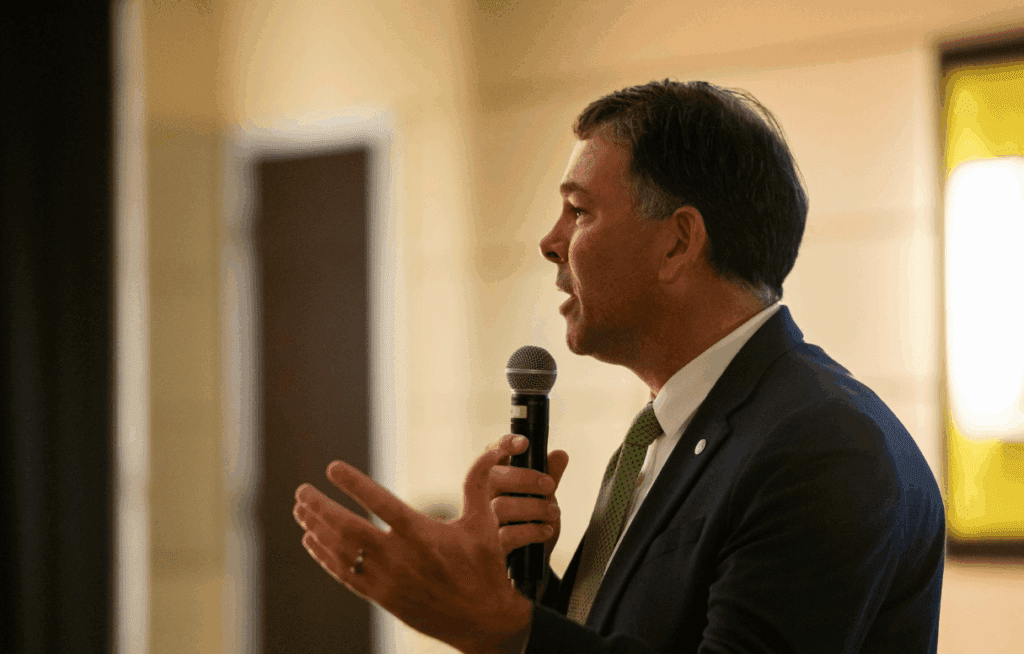
State Senator Johnny DuPree (D), October 5, 2026 (Photo from DuPree's Facebook page)
- A sitting state senator has qualified to run for a special election in another district this December and qualifying for 2027 legislative elections are less than two months away. Lawmakers, attorneys, and constitutional scholars have much to consider in the days and weeks ahead.
Six candidates have qualified to run in the state Senate District 34 special election to succeed Senator Juan Barnett (D) who resigned last month.
Among the lot is current Senate District 45 Senator Johnny DuPree (D) who won a special election in November 2025 in a newly drawn district after a federal three-judge panel required special elections be held to increase majority-minority districts in both the Mississippi House and Senate.
Senate District 34 was also affected by the court ordered redistricting in 2025, as were other legislative districts, but Barnett retained his seat.
“Because the Secretary of State chose to move the district maps back to the 2022 lines, I am now required to run in the district where my family and I reside, which is District 34,” a social media post shared by DuPree said.
Secretary of State Michael Watson sent a letter in June that provided guidance to the Legislature that his office was preparing to revert to the 2022 legislative district maps in the Statewide Elections Management System. He noted that no redistricting changes can be made while an election is in process, meaning for 2026 elections changes are prohibited 60 days before an election day.
On Monday, after questions arose from DuPree’s entry into the race, Watson issued a statement seeking to provide clarity.
“The U.S. Supreme Court’s ruling in Louisiana v. Callais sent Mississippi’s pending redistricting case back to the lower court to start over. Rightfully so, Callais ruled racial gerrymandering unconstitutional, which directly affected the maps the Legislature was forced to redraw in 2025 due to the U.S. District Court’s original ruling in NAACP vs. The State Board of Election Commissioners (SBEC),” Watson said. “The Supreme Court vacated the District Court’s ruling regarding the 2025 maps, and since redistricting drawn with the intent to discriminate based on race violates Section 2 of the NVRA, the 2025 legislative maps are no longer legal.”
Watson said it was his duty “to ensure we follow the law.”
“Running an election on race-based maps is illegal under Callais. Given the time constraints within the Statewide Election Management System (SEMS) and our current election season, action had to be taken,” he said. “According to our decision and the legal application of the Supreme Court ruling, the Governor correctly called for the special election in SD 34 to be held under the lines adopted by the Legislature in 2022 and applied in the 2023 legislative elections. As to the current state of the NAACP vs SBEC case, it remains active. The Plaintiffs have repositioned and now desire to use the new Callais standards to reexamine the legislative district lines as drawn in 2022. Under the Callais ruling, inaction was not an option.”
There has been discussion in Capitol circles of lawmakers convening in a special session ahead of the start of qualifying for the 2027 election cycle to redraw legislative districts in the wake of the U.S. Supreme Court’s decision in Callais v. Louisiana. That ruling determined racial gerrymandering to be unconstitutional as it had been practiced under Section 2 of the Voting Rights Act. The Callais decision raised the evidentiary bar for proving a violation of the Voting Rights Act, requiring proof of actual discriminatory intent in drawing voting districts.
Lawmakers on the Joint Legislative Committee on Reapportionment and Redistricting have held listening sessions around the state in the lead up to the 2027 session.
If a special session is called, the Legislature could seek to redraw the legislative districts ahead of January 4, when qualifying begins. Lawmakers could revert back to the prior 2022 maps using the Callais ruling as justification or redraw districts altogether, not only in the areas impacted by the 2025 court ordered redistricting plan which led to DuPree’s election to District 45, as all previous maps predominantly took race into account.
Yet, as of now, Governor Tate Reeves (R) has not called a special session to redraw legislative districts.
It is possible that a legal challenge could be filed to stay the special election in Senate District 34, given the domino effect it could have if DuPree, a sitting Senator in District 45, wins.
The other candidates who have qualified to run in the Senate District 34 special election besides DuPree are Kenneth Keyes, Tiffany Anne Lindsey, Daryl A. McKines Jr., Brice D. Pilgrim, and Nellie “Cookie” Satcher.
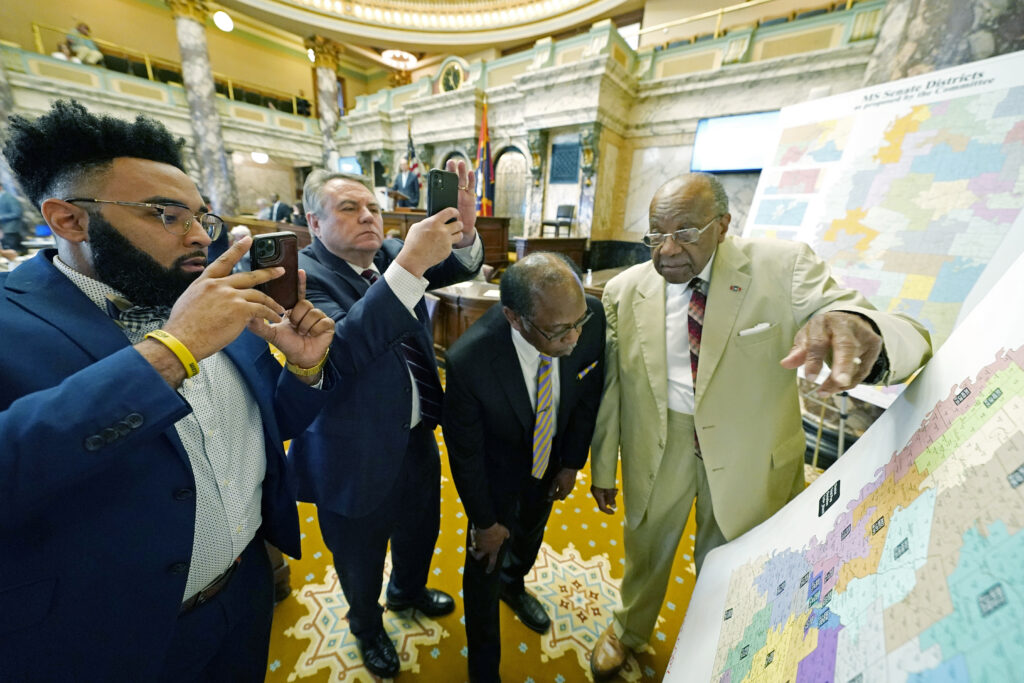
As for what this means for the other state Senate and House districts affected by the 2025 court ordered redistricting, that remains to be seen.
A legal challenge could also come in the other Pine Belt and North Mississippi districts affected by the 2025 court ordered redistricting, seeking clarity on the legitimacy of the maps used to seat the lawmakers in those districts now that U.S. Supreme Court vacated the District Court’s ruling.
Another scenario being bantered about at the Capitol is that the governor will call a special session after the November midterm election to set new legislative districts for candidates to run in come January 4 for the 2027 cycle. Then, should DuPree win the District 34 special election in December, he would vacate the District 45 seat and that district would be unrepresented during the upcoming legislative session given the time allowed to call a special election and the shortened 2027 session.
What is certain, however, is that lawmakers, attorneys, and constitutional scholars have much to consider in the days and weeks ahead.