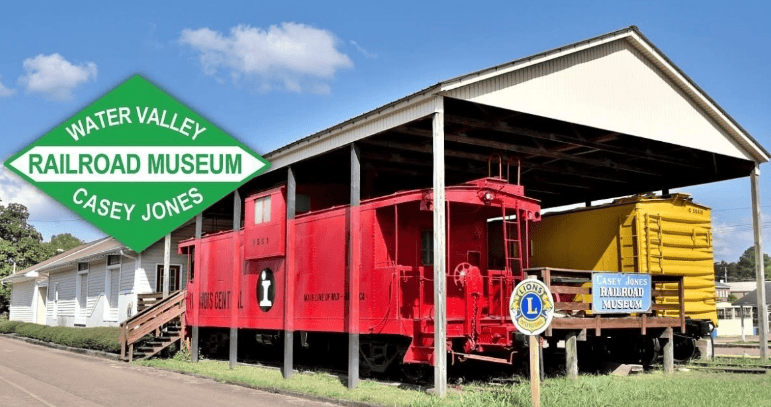
(Photo from Water Valley Casey Jones Railroad Museum)
- Make the Water Valley Casey Jones Railroad Museum part of a Water Valley afternoon. Spend some time downtown, visit the local shops, find somewhere good to eat, and then head over to Railroad Street.
Water Valley has gotten a lot of attention over the past several years for its downtown revival, local shops, restaurants, art, and historic buildings. It’s become the kind of place where you can spend an afternoon wandering around and always find something
But to understand Water Valley, you have to know what was here long before all of that.
For generations, this was a railroad town.
You can still see that part of its history at the Water Valley Casey Jones Railroad Museum, located at 105 Railroad Street in the town’s old Illinois Central depot. And between the depot, a caboose, an old banana car, and one very famous railroad engineer, there’s quite a story waiting there.
That engineer, of course, was John Luther “Casey” Jones.
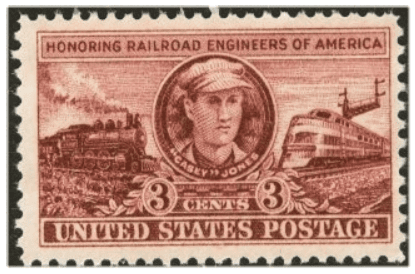
Born in Kentucky in 1863, Jones eventually worked for the Illinois Central Railroad and spent part of his career running trains between Jackson, Tennessee, and Water Valley. He was promoted to engineer in 1891 and became known for a distinctive train whistle that people living along his route reportedly recognized when they heard it coming.
His connection to Mississippi would ultimately make him famous.
On April 30, 1900, Jones was running a passenger train from Memphis toward Canton when he encountered freight cars blocking the tracks near Vaughan, Mississippi. Jones remained aboard, trying to slow the train before the collision. He was killed, but his passengers survived.
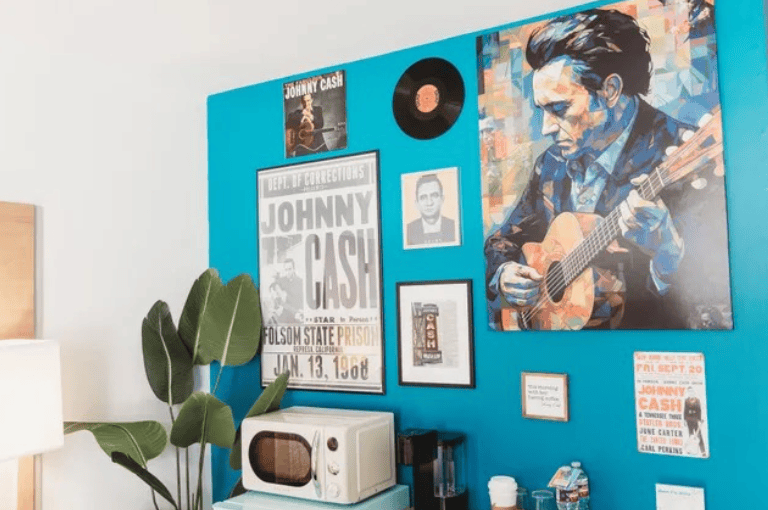
The story spread, songs were written, and Casey Jones eventually became much more than the name of a railroad engineer. Johnny Cash recorded a song about him, and decades later, the Grateful Dead introduced his name to another generation.
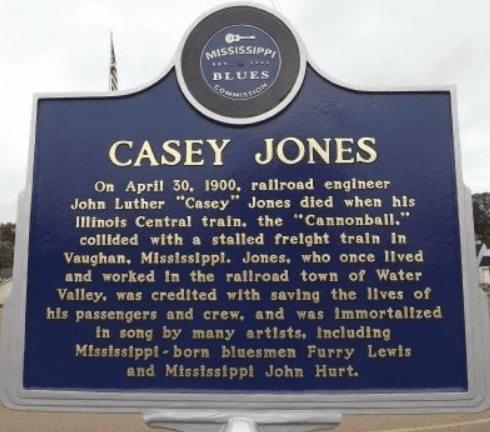
Water Valley, however, knew Casey Jones before he became a legend.
Today, the museum preserves that connection along with the much larger story of the Illinois Central and its importance to the town. Inside you’ll find railroad memorabilia, photographs, documents, and artifacts, many donated by families of former railroad employees. The Yalobusha Economic Development Foundation added to the collection in 1997 when it purchased railroad historian Bruce Gurner’s memorabilia collection.
As interesting as everything inside the museum is, I’m just as fascinated by how the museum itself came to be.
Why?
Because Water Valley almost lost the depot.
Illinois Central discontinued rail service to the town in March 1982, leaving the building empty. It began to deteriorate, and a 1984 tornado caused even more damage. The city eventually planned to remove it.
The Water Valley Lions Club had other plans.
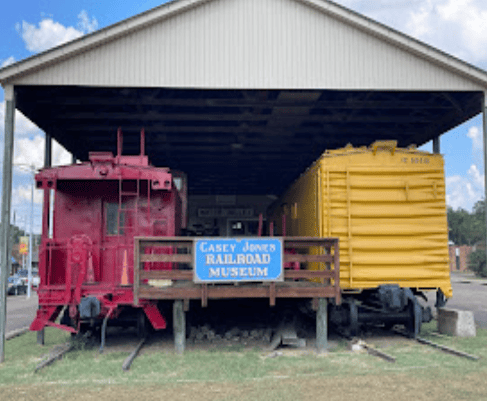
In 1985, club members reached an agreement with city officials for a 10-year lease on the depot and went to work. They restored the main floor, created a meeting space, landscaped the property, and began turning the abandoned building into something the community could use again.
A few years later, they added a caboose, and this may be my favorite part of the whole story.
Former Water Valley resident and Illinois Central executive Bill Knight helped the club obtain one from Centralia, Illinois, in 1988. The caboose traveled by rail to Coffeeville, but a slight problem arose: Water Valley no longer had rail service.
An Illinois Central section crew from Clarksdale laid short stretches of track beside the depot so the caboose could be moved into place.
The entire operation cost $2,800. The club had raised some of it, but not quite enough. Residents and business owners gathered to watch the caboose arrive and began donating money to cover the difference.
You go out to watch a caboose being moved through town, and before you know it, you’ve helped pay for it. I love that.
And apparently one railroad car wasn’t enough.
They placed an abandoned banana car from the old shop yard beside the caboose that same day. Over time, volunteers added steps and a connecting deck between the depot and railcars. They later covered the deck, installed heating and air conditioning, and made other improvements. More than $35,000 was eventually invested in renovations, even with volunteers completing much of the work.
Years later, visitors still benefit from what those volunteers started.
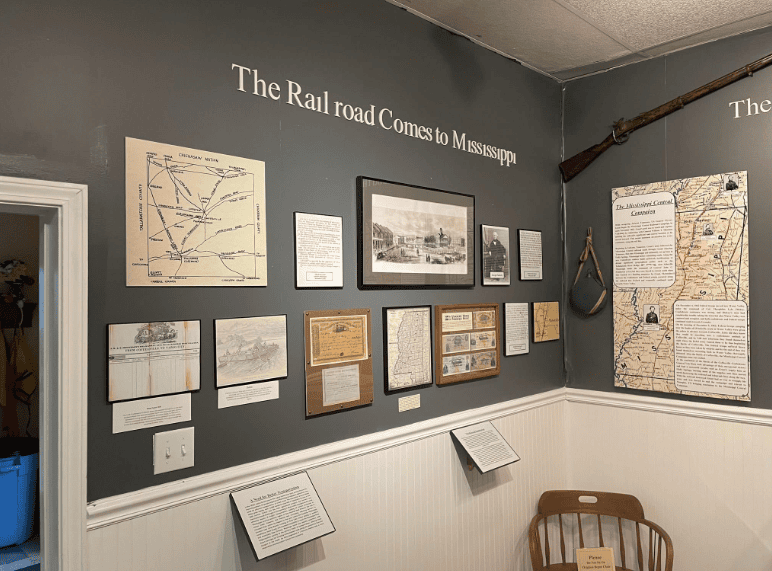
The museum is currently open Fridays and Saturdays from 2 to 4 p.m. Since the hours are limited, I’d recommend confirming them before making a special trip. Visitors can also see the historic railroad cars outside and the Mississippi Blues Trail marker honoring Casey Jones.
Better yet, make the museum part of a Water Valley afternoon. Spend some time downtown, visit the local shops, find somewhere good to eat, and then head over to Railroad Street.
Water Valley looks very different from what it did when Illinois Central trains regularly rolled through town, but the old depot offers a chance to see the town that came before.
Had the city torn it down in the 1980s, all of this might have disappeared with it.
Thankfully, a few people thought an old depot was worth saving.
I’d say they were right.

Meredith Biesinger