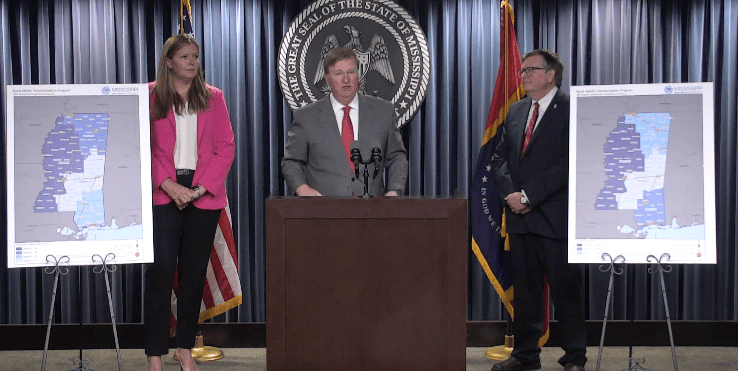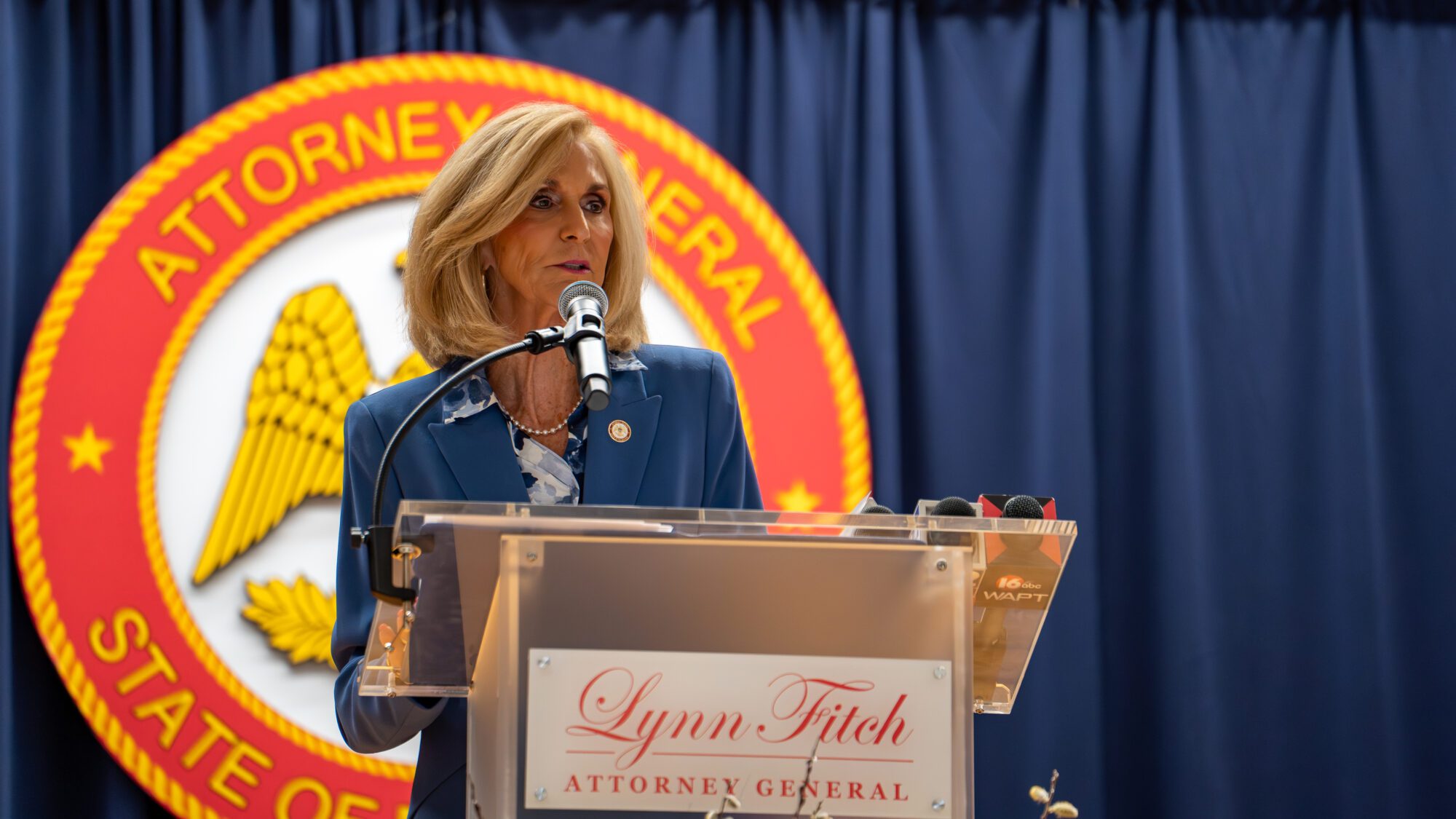
- Attorney General Lynn Fitch said the settlement with Facebook and Instagram requires “groundbreaking changes” to fundamentally change the way children engage online while protecting them from the harms to their mental wellbeing and physical safety.
Mississippi Attorney General Lynn Fitch announced Wednesday “a landmark” $17.1 billion multi-state settlement with Meta Platforms, Inc.
The settlement is one of the largest state consumer protection settlements in history outside of the Big Tobacco settlements of the 1990s. It is the largest settlement ever with Big Tech.
Fitch said Mississippi will receive $188,977,258 over 10 years, or $270,426,814.55 over 10 years if other platforms agree to comparable changes.
The Attorney General said the settlement requires “groundbreaking changes” to Facebook and Instagram to fundamentally change the way children engage online while protecting them from the harms to their mental wellbeing and physical safety.
“Big Tech has been conducting a social experiment on our children’s developing brains by making platforms that were purposefully addictive and preyed on children’s greatest vulnerabilities,” said Attorney General Fitch in a statement. “A generation of children have suffered, but with this settlement we spark transformational changes to protect children from harm. Meta is setting a new standard here for the way children engage with social media, and we will seek to hold other platforms accountable to it.”
In an interview with Magnolia Tribune, Fitch said the first of the payments to Mississippi under the settlement agreement are expected to be received this year.
“We’ll be looking to use these settlement dollars for things that are really important for our children,” Fitch said. “Like utilizing them for youth mental health, after school or summer programs, outdoor activities public health awareness and digital literacy.”
Fitch expects similar results in the lawsuits filed against YouTube, Tik Tok and Snapchat.
The Meta settlement comes after the state of Mississippi passed the Walker Montgomery Protecting Children Online Act, a measure passed by lawmakers in recent years. Attorney General Fitch said the bill that created that act was filed in response to the death of the bill’s namesake, whose family said their teen son took his own life as a result of sextortion.
“This Meta agreement got all the parameters and components of the Walker Montgomery Act, as well as a number of others,” Fitch added. “So this is a very solid, well-versed settlement agreement.”
Methods to implement proper age verification will use the “best standards,” Fitch said.
To ensure compliance with the settlement, Meta will be required to submit annual reporting on the “best standards” used to protect children while on the social media sites. According to the Attorney General’s office, the settlement requires Meta to implement a series of safety features on Instagram and Facebook, including:
- Hard cap daily time limits and “Productive Pauses” for children:
- For its two platforms, Instagram and Facebook, a combined two-hour daily time limit with mandatory pauses after 15 minutes of continuous use and again at 60 and 90 minutes to interrupt endless scrolling.
- “Nighttime blocks” restricting children’s access from 12:00 a.m. to 6:00 a.m. and disabling nighttime notifications from 10:00 p.m. to 7:00 a.m.
- Limited school-time access for children, eliminating push notifications on weekdays from 8:00 a.m. to 3:00 p.m. from August 15 to June 15 each year.
- Robust age assurance measures to more effectively verify the age of young users.
- Safer, age-appropriate content controls, including stronger safeguards against bullying, content promoting eating disorders, and content related to suicide and self-harm.
- Stronger, more user-friendly parental controls.
- Limits on social comparison features, including beauty filters and visible “like” counts, that have been linked to poor mental health outcomes in children and teens.
- Both the implementation and efficacy of the features will be regularly assessed by an independent auditor and the settling states.
In addition, if other social media platforms such as Snapchat, TikTok, and YouTube adopt comparable terms, Meta agrees to drop the daily time limit to 60 minutes and the nighttime block will extend to 10:00 p.m. to 7:00 a.m.
The settlement agreement resolves claims filed by 47 States along with Washington D.C., Puerto Rico, American Samoa, and the Northern Mariana Islands that alleged that the company designed Instagram with addictive features, knowingly exposed young users to serious mental harms, and intentionally misled the public about the safety of its platforms, among other things.
Nearly every attorney general in the country cooperated to investigate the social media industry for designing and promoting platforms to children and teens despite known harms.
Fitch said a bipartisan, nationwide investigation began in 2021 found that Meta designed Instagram’s features to addict children while internally documenting the resulting mental health harms and failing to warn parents.
In October 2023, Attorney General Fitch filed a lawsuit against Meta and, on the same day, seven other states filed parallel state complaints and 34 Attorneys General filed two federal complaints.
Wednesday’s announced settlement resolves those cases and claims by the other settling states and territories.
Attorney General Fitch also filed a similar suit against TikTok in October 2024. That action and other investigations continue.

Frank Corder