(Photo from Visit Ripley)
- What makes Ripley’s public art movement so memorable isn’t simply the number of murals. It’s that every piece feels connected to the surrounding community.
Not every art gallery has a front door.
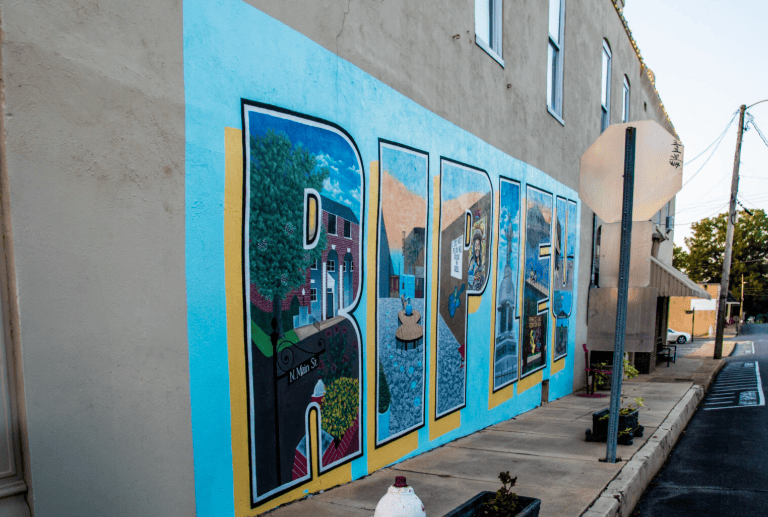
In Ripley, some of the state’s most meaningful works of art are waiting along sidewalks, tucked into alleyways, stretched across brick buildings, and painted where people pass them every day. What started as an effort to bring more people downtown has grown into something much bigger—a community-wide canvas celebrating the people, places, and stories that make Ripley unique.
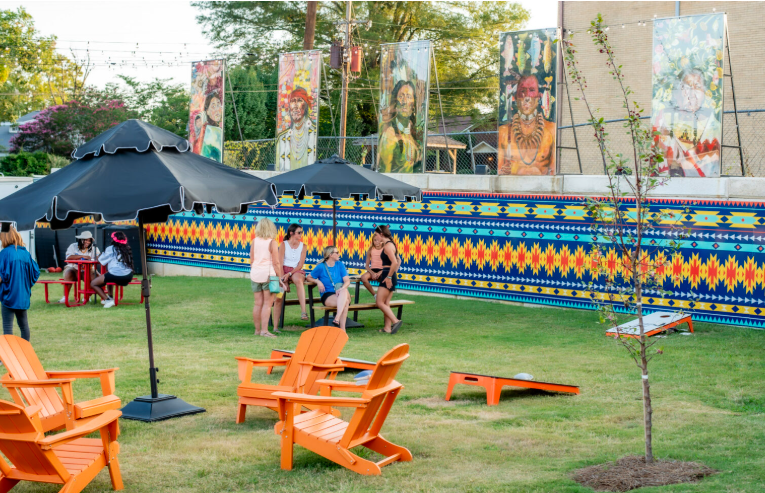
Today, visitors can spend an afternoon wandering through downtown, discovering between 25 and 30 public art installations. Some celebrate the area’s Chickasaw heritage. Others honor legendary musicians, literary icons, local history, and Ripley’s creativity. Together, they tell the story of a town that believes history belongs where everyone can experience it.
“I love public art,” said Elizabeth Behm, executive director of Ripley Main Street. “It brings so much to a town.”
That belief has transformed downtown in ways Behm couldn’t have imagined.
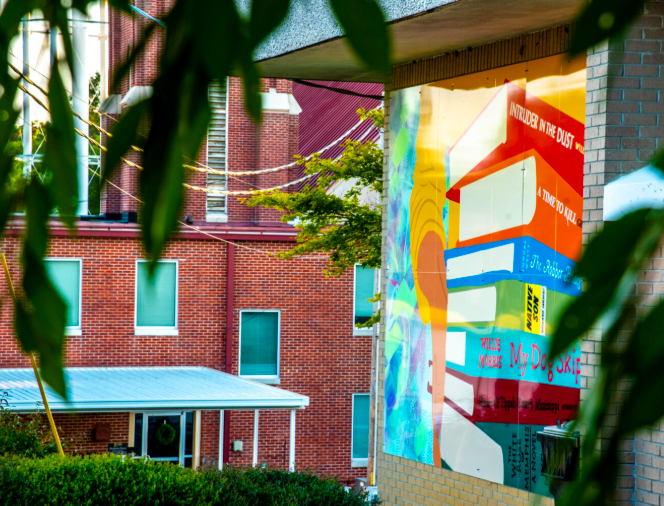
“We wanted downtown to become a place where people would visit and linger, not just pass by,” she said. “Now we have high school students coming downtown to take their prom pictures. One of them looked around and said, ‘I didn’t even know we had a downtown like this.'”
It’s the kind of story that says more than statistics ever could. The murals didn’t simply brighten blank walls. They changed the way people experience their own hometown.
As visitors make their way through downtown, one mural often sparks a double take.
A Tale of Two Fa(u)lkners, painted by Mississippi artist Anna Frances Ballard, celebrates two remarkable writers connected by both family and history. Most people immediately recognize Nobel Prize-winning author William Faulkner. Still, the second figure is his grandfather, Colonel William Clark Falkner, a Ripley native, Civil War veteran, railroad builder, and accomplished author whose own literary success inspired his grandson’s dream of becoming a writer.
“People don’t always realize there were two writers,” Behm said. “William even lived here for a short time as a child. We thought it would be fun to honor both of them.”
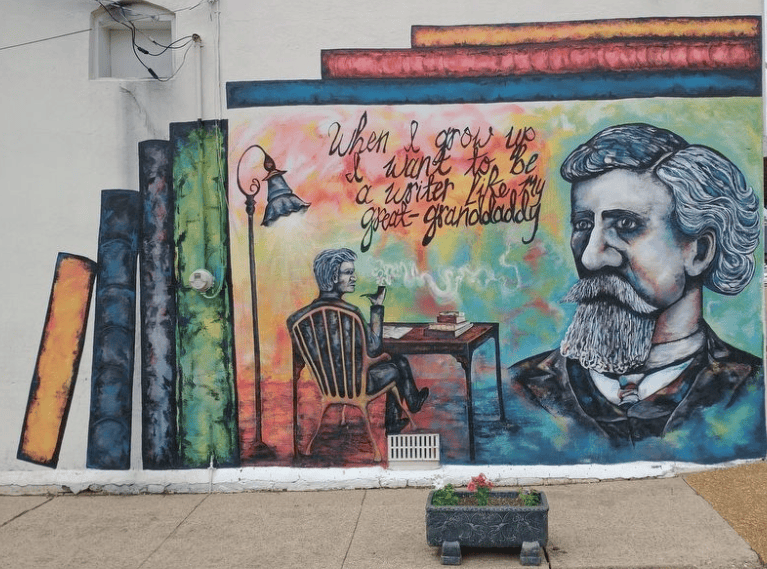
Even the title tells part of the story. The elder Falkner spelled the family name without the “u,” while William Faulkner later adopted the spelling now recognized around the world.
Just a short walk away, another chapter of Ripley’s story unfolds in Blues Alley.
String lights stretch overhead while colorful murals celebrate the musicians who helped define North Mississippi’s Hill Country Blues. While Delta Blues may be Mississippi’s best-known musical export, Hill Country Blues developed in the rolling red clay hills surrounding Ripley, blending deep African musical traditions with generations of local influences into a sound all its own.
The musicians featured throughout Blues Alley represent that rich musical heritage, honoring artists whose influence continues to reach far beyond North Mississippi.
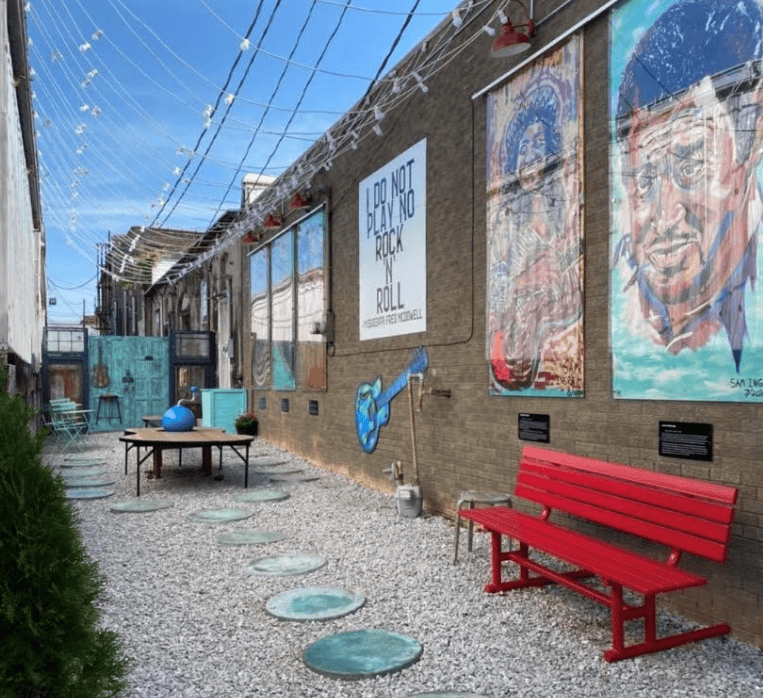
The alley itself carries its own history. During Prohibition, it was believed to have been home to a popular speakeasy, while nearby Gus Brown’s Café served as an important gathering place for Ripley’s African American community. Today, visitors stroll the same alley, pausing to admire artwork that preserves both the music and the stories that shaped this place.
Many of the murals were painted by Jackson artist Sam Ryan Ingram while he was still a college student.
“Sam Ryan painted several of these murals while he was in college,” she said. “Now his work hangs in the White House. We could never afford him now,” she shared with a laugh.
It’s a reminder that Ripley didn’t simply invest in public art. It recognized extraordinary talent before much of the rest of the country did.
Creativity continues around nearly every corner of downtown.
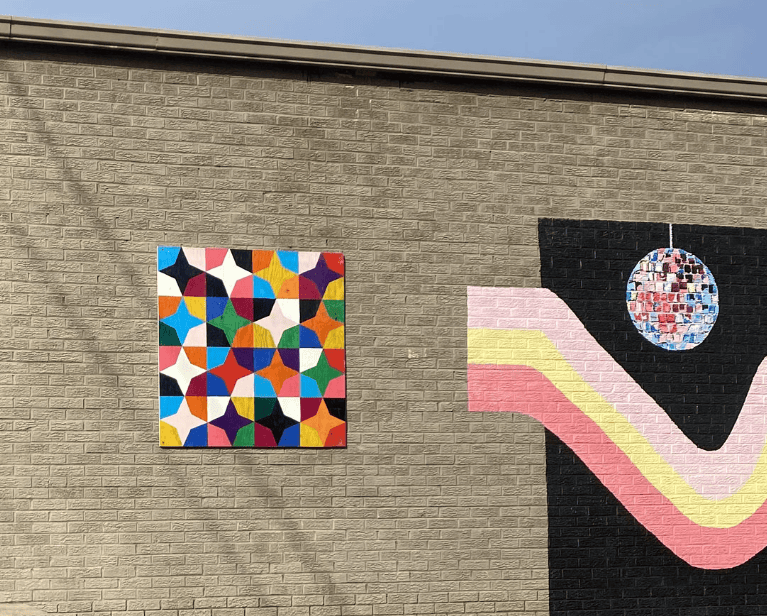
The Historic African American Quilt Trail features quilt-inspired murals created by Ripley High School art students and displayed throughout the community, honoring African American history while allowing young artists to leave their own mark on the town they call home.
Other murals celebrate Chickasaw heritage, brighten the Ripley Public Library, showcase Mississippi’s native beauty, and transform unexpected places—including an old car wash—into colorful landmarks that invite people to stop, explore, and stay awhile.
What makes Ripley’s public art movement so memorable isn’t simply the number of murals. It’s that every piece feels connected to the surrounding community.
Some tell stories that span centuries. Others celebrate local legends or the next generation of artists. Together, they have created something much larger than an outdoor gallery.
They’ve created a downtown where history lives in plain sight, where art is part of everyday life, and where visitors—and even longtime residents—find themselves slowing down long enough to see Ripley a little differently.
Sometimes that’s exactly what great public art does. It doesn’t just decorate a place, it tells a story.