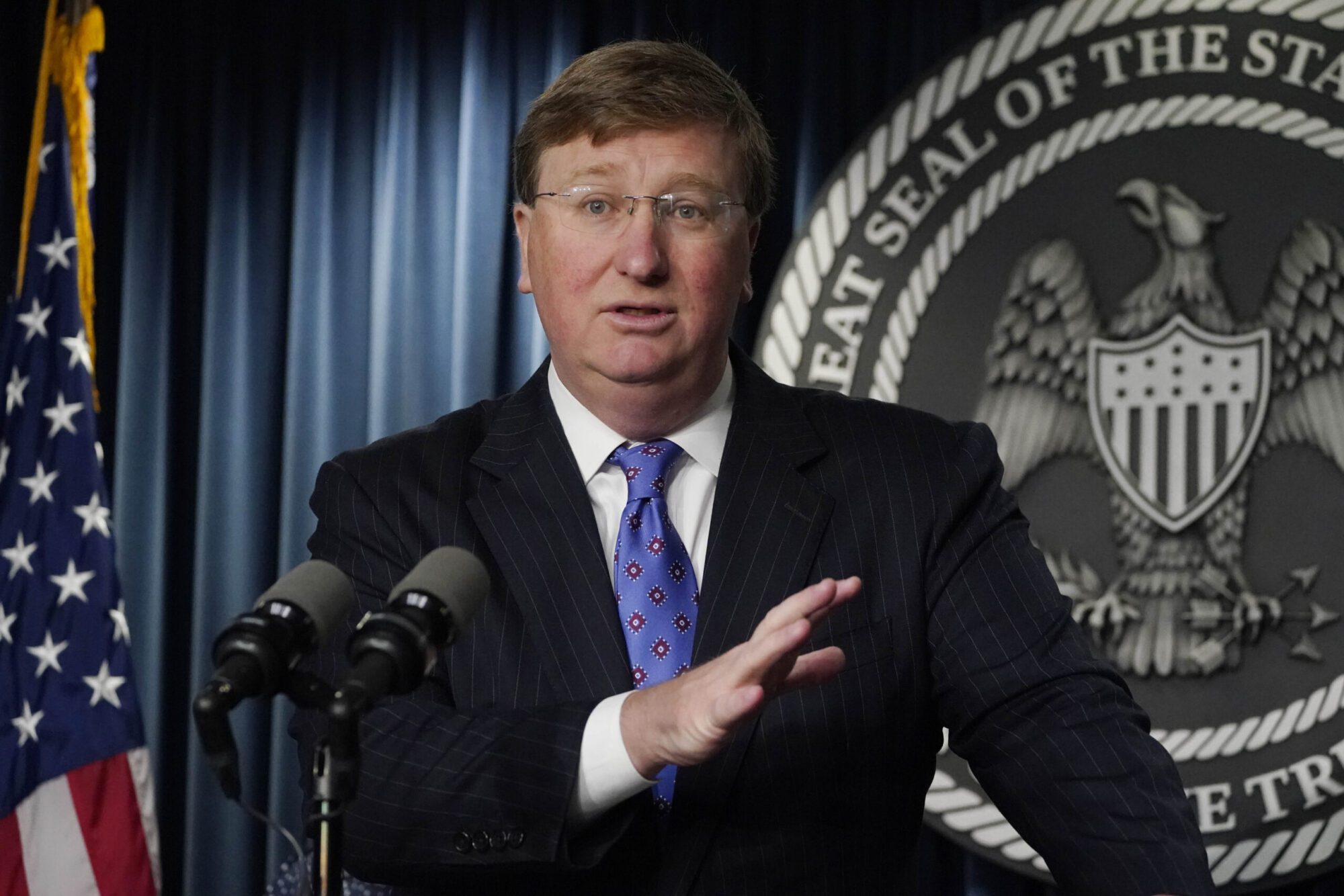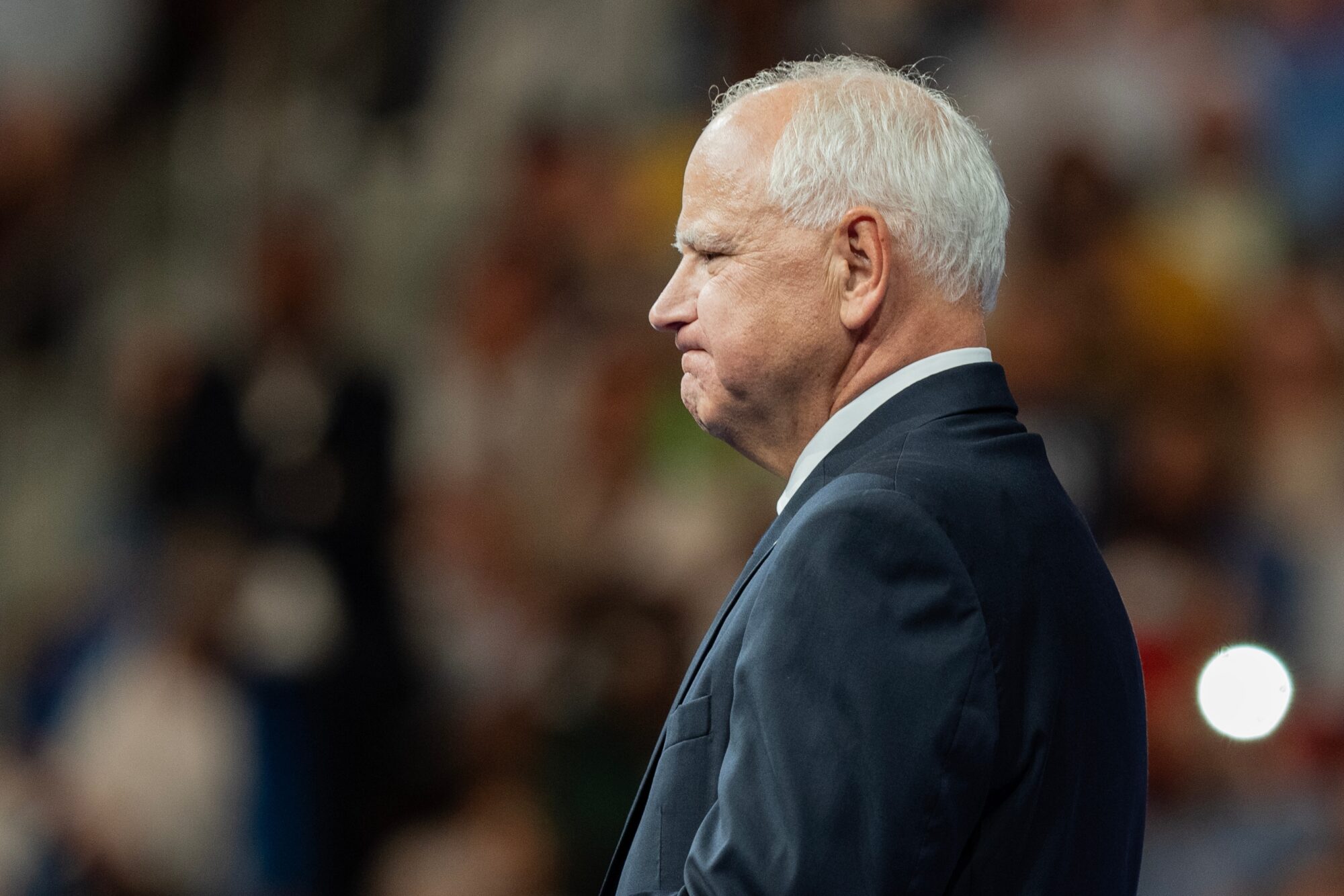
Governor of Minnesota Tim Walz attends the rally in Liacouras Center at Temple University in Philadelphia, PA on August 6, 2024 as he was introduced by Vice President Kamala Harris as running mate (Photo from Shutterstock)
- For all its faults, this country’s troubles still demand seriousness and restraint, not reckless talk of collapse.
Since the beginning of this new year, Minnesota has been stuck in the national spotlight. Federal agents from ICE descended upon the state in an effort to crack down on illegal immigration. It wasn’t long before organized anti-ICE activists started demonstrating and even clashing with these agents. In January, protesters Renee Good and Alex Pretti were shot and killed during separate encounters with federal agents. There has been wide speculation as to whether either shooting was justified. But as I wrote immediately following Renee Good’s death, loss of life is still tragic no matter the final legal outcome.
At the end of January, Governor Tim Walz sat down for an interview with The Atlantic to discuss all the turmoil within his state, and said the following:
Minnesota Governor Tim Walz worries that the violence in his state could produce a national rupture. “I mean, is this a Fort Sumter?” he mused today in an interview in his office at the state capitol. The island fortification near Charleston, South Carolina, is where Confederate forces fired the first shots of the Civil War in 1861. “It’s a physical assault,” Walz told me. “It’s an armed force that’s assaulting, that’s killing my constituents, my citizens.”
Walz’s musings on whether or not this is “a Fort Sumter” moment are just the latest, from both sides of the aisle, about the tumult in which we live. Not only do people think we are in a particularly rough stretch, but some go so far as to toy with the possibility and/or dread of a second civil war. These individuals are propelled by either a sense of horror or titillating glee depending on who you’re talking to and at what time. It would just be downright exhausting if it weren’t so disturbing. (Ironically, Governor Walz places his side, the side of the protestors, on the same side as the Confederacy of long ago. Back then, it was the Confederacy charging against federal forces trying to preserve the Union. So perhaps Walz would like to walk that one back as he lazily attempts to stitch the past to the present. Because the result is an awkward one.)
Given the tense political atmosphere at present, it can seem as though we’re careening toward the kind of conflict that defined a major part of our history as a nation. Our divisions are deep. The loyalties are, too. Too often, we view our fellow Americans as not just being ideologically different but active participants in and supporters of evil. Take for example the crackdown on illegal immigrants. Enforcing our laws is a good thing and should be encouraged. Of course, this enforcement should be carried out by experienced individuals with proper training. But the mere act of doing so is not criminal. The ICE agents are not evil. They are not Nazis, as some have categorized them. At the same time, Americans have a right to protest. The mere act of protesting isn’t a crime. It doesn’t and shouldn’t mark you for a violent death or even a physical encounter. This doesn’t mean interfering with agents is the correct course of action. But viewing activists as less than human just because they protest is also wrong. And right now, these two sides are clashing in the most public, violent way imaginable.
But does this current, toxic mix take us one step closer to a second civil war? We as a nation are so far removed from the horrors of civil war that the idea of another becomes a knee-jerk reaction to political and social chaos.
Anyone with even a cursory grasp of history should not be casually fantasizing about the country sliding into another civil war. That impulse isn’t confined to one side of the aisle. And while it’s not the dominant view, it’s disturbingly present and it reflects a profound lack of seriousness about what civil war actually means. Civil war is mass death, social and economic collapse, families and communities torn apart, and consequences that last for generations. Treating it as a political fantasy isn’t edgy or insightful, it’s historically illiterate and morally reckless.
A second civil war would not be like the first. It would be far more destructive. Advancements in technology, weapons of war, and communication mean widespread, covert attacks in a way no one is prepared for. We have new weapons, planes, drones, and social media, things that were unthinkable back when President Abraham Lincoln paced the halls of the White House. If the American Civil War brought decimation on a large scale in the 19th century, a modern-day equivalent would bring a kind of collective horror that we can’t even comprehend. Amazingly, broaching the subject of a second civil war is not only unheard of, it seems to be gaining in popularity. It’s an intellectually lazy reaction that is all too easy.
On September 17, 1862, near Sharpsburg, Maryland and Antietam Creek, General Robert E. Lee’s Army of Northern Virginia and General George B. McClellan’s Army of the Potomac met for what would become the bloodiest single day in American history. On that day, in 12 hours, there were nearly 23,000 total casualties including the killed, wounded, captured and missing. The battle was significant for many reasons. For one, the American public up to that point had been shielded from the horrors of the entire conflict. After Antietam, they experienced death and destruction through battlefield photographs. This marked the first time the dead had been photographed on the field. Those photographs were shared with the public and a new understanding of what civil war meant started to emerge. It wasn’t a distant skirmish in a faraway field. It wasn’t a list of the unknown dead you scan quickly whose lives mean little to nothing. Instead, the photographs revealed the hell of war. Americans saw bloated bodies that had been cut by ammunition. Rows of the Union and Confederate dead, waiting to be buried, silently waiting outside Dunker Church or at Bloody Lane. Frozen forever in the last pangs of life.
A review of photographer Matthew Brady’s exhibit called “The Pictures of the Dead at Antietam” appeared in the New York Times in October, 1862. It reads in part:
“We recognize the battle-field as a reality, but it stands as a remote one. It is like a funeral next door. Mr. Brady had done something to bring home to us the terrible reality and earnestness of war. If he has not brought bodies and laid them in our door-yards and along the streets, he has done something very like it.
“These poor subjects could not give the sun sittings, and they are taken as they fell, their poor hands clutching the grass around them in spasm of pain, or reaching out for a help which none gave. Union soldier and Confederate, side by side, here they lie, the red light of battle faded from their eyes but their lips set as when they met in the last fierce charge which loosed their souls and sent them grappling with each other battling to the very gates of Heavens. The ground whereon they lie is born by shot and shell, the grass is trampled down by the tread of hot, hurrying feet, and little rivulets that can scarcely be of water are trickling along the earth like tears over a mother’s face. It is a bleak, barren plant an above it bends an ashen sullen sky; there is no friendly shade or shelter from the noonday sun or the midnight dews; coldly and unpityingly the stars will look down on them and darkness will come with night to shut them in.
“There is one side of the picture that the sun did not catch, one phase that has escaped photographic skill. It is the background of widows and orphans, torn from the bosom of their natural protectors by the red remorseless hand of Battle, and thrown upon the fatherhood of God. Homes have been made desolate and the light of life in thousands of hearts has been quenched forever. All of this desolation imagination must paint—broken hearts cannot be photographed.”
The reality of what civil war means is so horrific that it should not be entertained lightly. In a country that feels like a tinderbox in 2026, the argument can almost sound reasonable for a moment. But it isn’t. Civil war is a devastation that none of us alive have experienced firsthand. It leaves behind a long-term ruin and a country that never fully recovers from what it has done to itself.
Whether you’re Governor Tim Walz speaking publicly or an anonymous user posting online, none of us should go there. Our current problems would not be solved by a second chapter of national bloodshed. Nor do the actions of the government justify it. For all its faults, this country’s troubles still demand seriousness and restraint, not reckless talk of collapse. We should pray that America, for all its divisions and failures, never starts down that path again.

Kimberly Ross