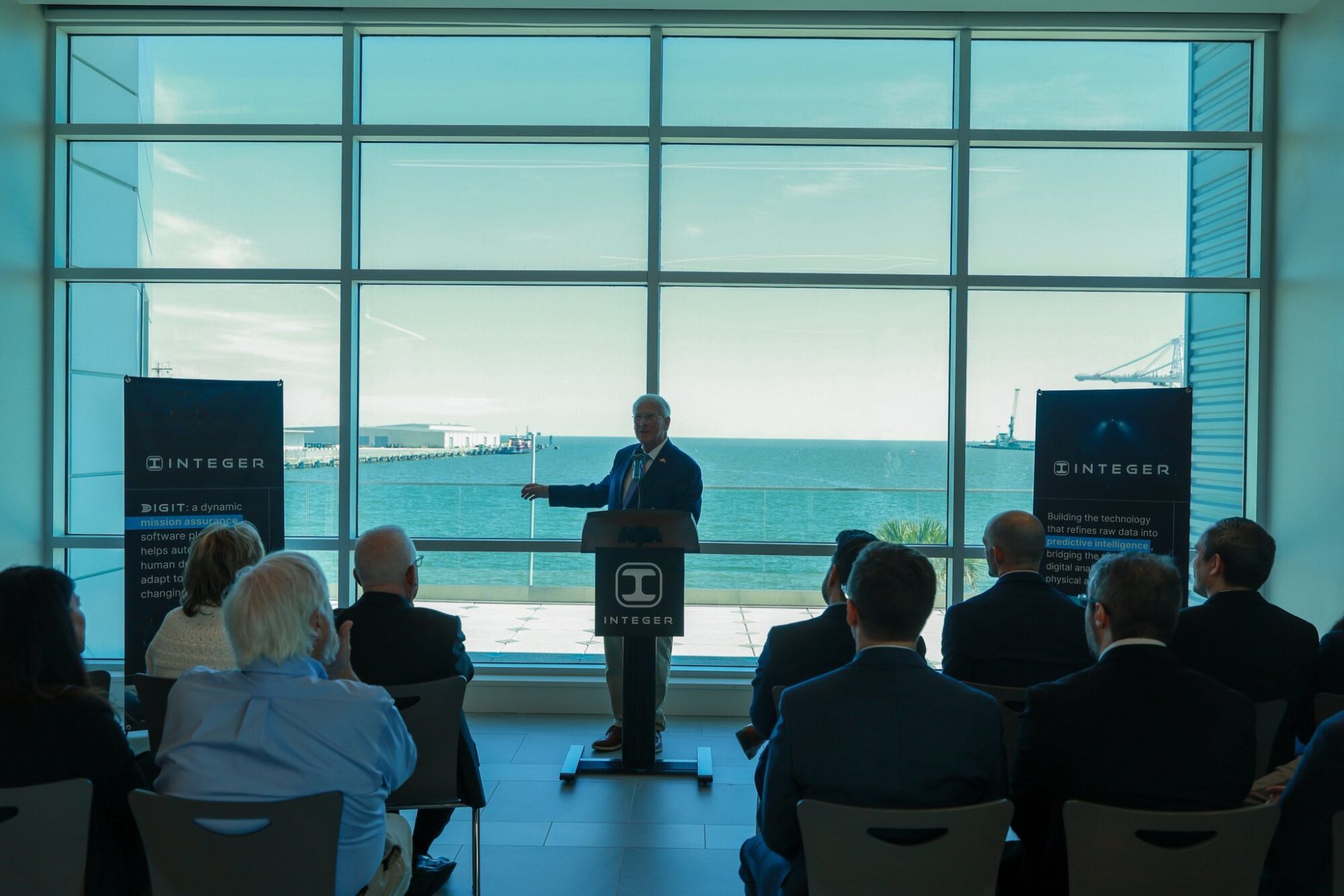
(Photo from Speaker Jason White’s Facebook page)
Listen to the audio version of this article (generated by AI).
- If the Mississippi Legislature is attempting to “defund” or “pillage” Mississippi’s public schools, they really suck at it. Per pupil spending, via state appropriations, has increased by a whopping 73 percent in a decade.
Listening to the national teachers’ union PR machine, which includes many a friend in the press, our schools are “chronically underfunded.” They’ve been “defunded.” And legislators who believe — as President Donald Trump does — that families deserve education options, are attempting to “pillage.” Pillage!
Only it’s a lie. Not a small one, either. But oft repeated, a lie can become a mindless, droning truth.
State appropriations to support K-12, including both general and special fund support, have risen from $3.427 billion for the 2016-2017 school year to $5.216 billion for the 2025-2026.
Included in that 52 percent increase in state appropriations to fund education is a nearly $700 million annual increase in state general fund support.
These recent investments include the largest teacher pay raise in Mississippi history, a new school funding formula that is pumping considerable new dollars into the system, and in HB 2, proposed this year, an 18 percent increase in teachers’ assistant pay.
In that same decade timeframe, Mississippi’s public K-12 enrollment has declined by nearly 60,000 students, from 483,150 to 424,534.
On a per pupil basis, this translates to an even larger increase in state education appropriations over the last decade — of 73 percent. We’re spending a lot more on a lot fewer kids.
If the Legislature is attempting to “defund” or “pillage” Mississippi’s public schools, they really suck at it. They’ve done the opposite.
The line works, though, because few people bother to look for themselves. All they know is that their trusted local superintendent says things are tight and their kids have to sell wrapping paper and chocolate bars.
Mississippi’s education spending boon is not an outlier and the trend line is not just recent.
Our nation’s average per pupil expenditure since 1970, adjusted for inflation is up 2.6X — from $6,354 in 1970-71 to $16,560 in 2022-2023 (in constant 2023 dollars).
Get What You Pay For?
Meanwhile, the national average ACT composite score has been on a pretty steady decline since the early 2000s. We’re now going on our 8th straight year with a drop in the U.S. The ACT’s college readiness benchmarks are an 18 in English, a 22 in math and reading, and 23 in science.
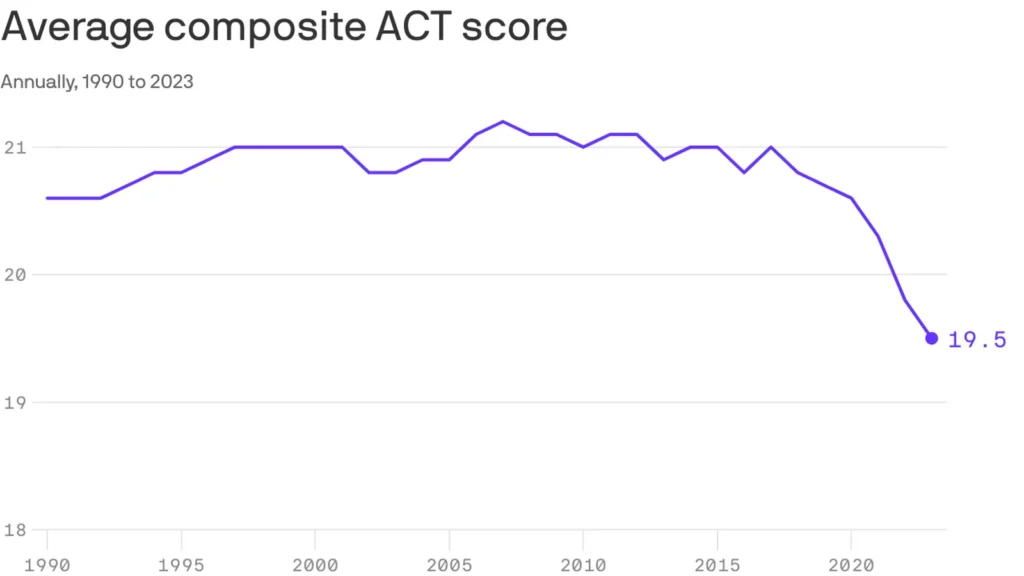
As of 2023, only 21% of test takers meet all four benchmarks. 43% meet NONE of them. These numbers mark 30+ year lows in college readiness. Universities have literally adopted “test optional” policies so kids don’t have to submit their scores. Talk to administrators at any of Mississippi’s universities, and if they’re honest, they’ll lament the level of remediation that must be done with incoming students.
Our nation’s 8th grade NAEP scores are nearly back to where they were in 1970, having experienced a 14-point decline in math in a little over a decade and a 7-point decline in reading in the same period.
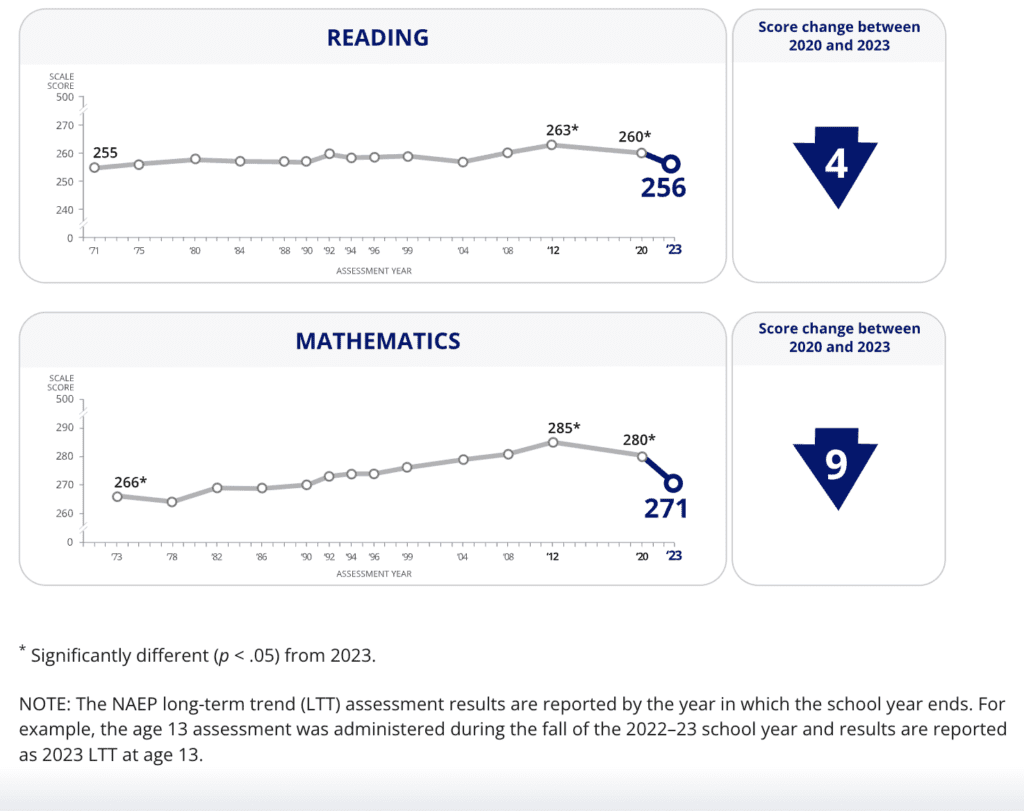
Mississippi has, to a degree, bucked the national trend at the fourth grade level of NAEP testing — a fact which has earned the state some national acclaim.
It is impressive, but deserves context. 32 percent of the state’s 4th graders now test at or above “proficient” in reading. 38 percent test at or above “proficient” in math. Speaking of math, if you’re doing it at home, that means 68 percent test below proficient in reading and 62 percent test below proficient in math.
Additionally, much of the improvement is lost by the 8th grade. Our 11th graders test 2-points beneath the national average ACT composite score.
A Final Note on HB 2’s “Pillaging”
One important admonition to consider in the fight over school choice, or really, any public policy fight, is to be weary of the side that embellishes with apocalyptic predictions.
Despite Marshall Ramsey’s cartoon, House Speaker Jason White is not driving public education funding off a cliff.
House Bill 2 creates a whopping 6,250 scholarships for kids currently enrolled in public schools in Year 1. That’s less than 1.5 percent of all kids enrolled in Mississippi’s public schools. At only $6,800 per scholarship, that’s roughly $43 million — measured against billions in new public education spending in recent years.
You’re being lied to right now, some by people who don’t know any better repeating the fabrications of people who do. Understand the game afoot is fundamentally about ensuring parents don’t gain control over their own kids.

Russ Latino