- When readers finish one of Eliot Parker’s books, he hopes they walk away with more than entertainment.
“I never thought I would be a writer, even though I was an avid reader,” Dr. Eliot Parker admits.
That assessment changed the day Speck, a literary journal of Mary Washington University, published one of his short stories. “The editors gave me great feedback and encouraged me to keep writing. That was the moment I got bitten by the writing bug.”
Raised in West Virginia, Parker credits the storytelling culture of Appalachia for honing his narrative perspectives.
“West Virginians, and Appalachians as a whole, are wonderful storytellers,” he says. “So much of the culture is embedded in stories about work, about living in geographic isolation, ghost stories, urban legends; it is almost impossible to grow up in West Virginia and not be fascinated and interested in stories and storytelling.”
Finding surprising parallels between his Oxford home and his Appalachian roots, Parker notes that Mississippi and West Virginia share many cultural norms.
“Some of them are unfortunate—poverty, political corruption, limited opportunities.”
However, both possess a strong sense of place and majestic typographies filled with kind, interesting people.
Parker’s early writing inspirations came from childhood series like Encyclopedia Brown and the Scholastic “Choose Your Own Adventure” mysteries.
“Those books moved at a brisk pace, and I found myself not wanting to stop reading until the end,” he says.
That affinity for pace and tension became a characteristic element of his later work in the thriller category.
With degrees in English, Creative Writing, and English Pedagogy, Parker says he learned good reading and writing skills through these programs of study. They taught him to question what he read, identify the core argument, and study supporting evidence and underlying theory.
“I learned to no longer just consume information but evaluate its effectiveness.” He also learned that writing is an iterative process of drafting, receiving critical feedback from peers and advisors, and revising extensively. “For me, it demystified the writing process and helped me see the value in revision as a core component of quality work.”
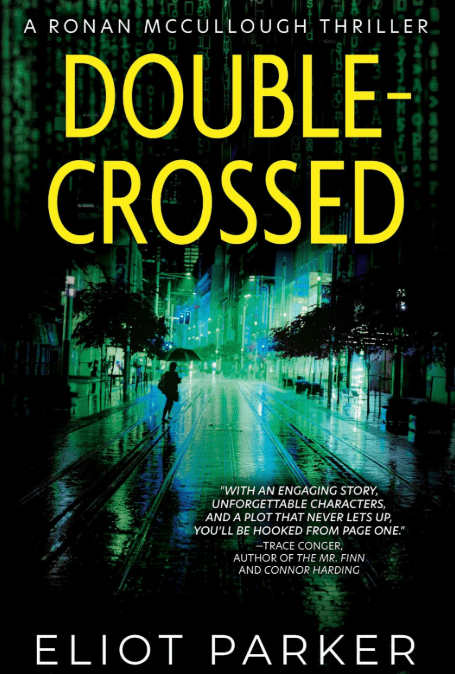
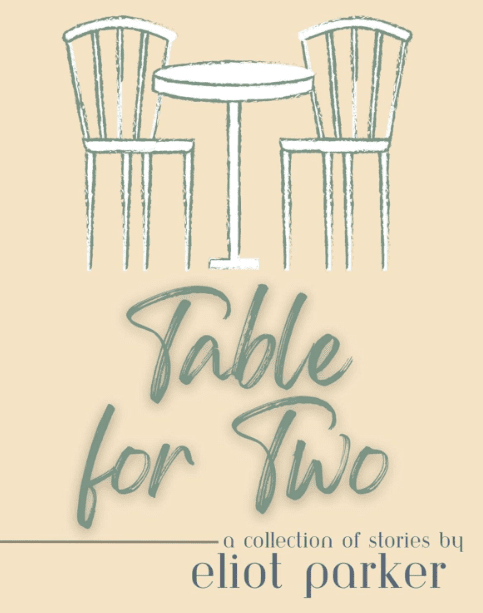
Parker transitioned from journalism to fiction, and his writing became impressively varied. From the award-winning short story collection Snapshots to works such as Table for Two and Double-Crossed, his writing frequently explores themes of manipulation, silence, and psychological coercion.
“These are themes we all experience,” he says. “People who coerce someone else, for example, are often skilled with language and motivational techniques. I think they are, in some ways, dangerous people because they can coerce someone into doing something without the one being coerced realizing they’ve been manipulated.”
When asked whether he writes with a message in mind, Parker is clear.
“Theme is more important to me than messaging. It gives a story lasting impact beyond just plot events.”
This symbolic richness is perhaps most visible in his short fiction. Parker sees short stories as “a low-stakes creative playground” that is ideal for experimenting with voice, structure, and genre.
“Writing short stories helped me practice specific skills—dialogue, characterization, setting—that ultimately strengthened my novels,” he says. “When I am thinking about stories to include in a collection, I look at stories where I’ve experimented in some ways with character, dialogue, pacing, etc., and those are the stories that end up in a collection.”
On the other hand, Parker’s thriller novels evolve from a more specific, rigid structure that must be followed for them to be classified as thrillers.
He brings a layered understanding to his work as a writing professor at the University of Mississippi. His advice to students is that no two writers traverse the same paths.
“Some writers do their best work at 4 a.m., while others do their best work at 4 p.m. Some people write with structured outlines. Some sit down at the keyboard with an idea and begin typing.” Whatever the processes are for emerging writers, he says, “the important aspect to remember is that there is no substitute for sitting down and writing. A writing project can’t be discussed or thought about into existence.”
Parker continues to pursue writing as a career, seeking fresh opportunities. His latest project—a stand-alone thriller told entirely in first person—departs from his usual style.
“I’ve never written in first person before,” he says. “It’s been fun and challenging.”
His definition of success has also evolved. “It used to be about sales and bestseller lists. Now it’s more about writing good stories and finding ways to share those good stories with readers, which can be done in a variety of ways now.”
When readers finish one of Eliot Parker’s books, he hopes they walk away with more than entertainment.
“I want them to feel like they’ve been taken to another world, that they forget their own lives for a while. And maybe, they fall back in love with reading.”
Parker’s success as a teacher and an author will be ingrained in literary history, in both Mississippi and West Virginia. But Parker hopes that what people remember most is “that I tried to always do what was right. That I was kind to people. That I took time to turn around and help new writers along their own writing journeys.”

Richelle Putnam