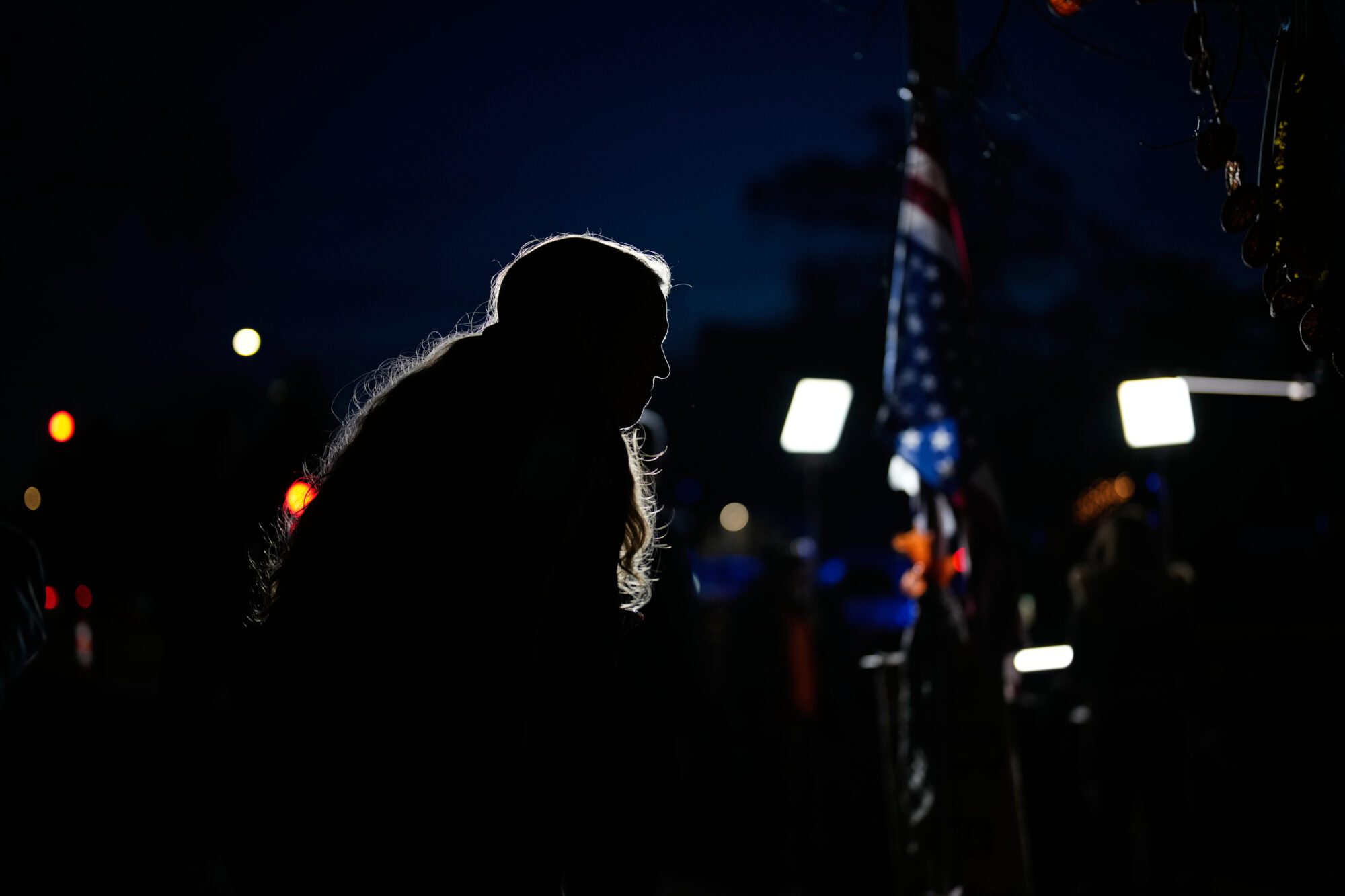
Monica Travis visits a makeshift memorial for Renee Good, who was fatally shot by an ICE officer last week, Monday, Jan. 12, 2026, in Minneapolis. (AP Photo/John Locher)
- Neither Renee Good nor Jonathan Ross should be political pawns. One person is dead, the other person has to live with the knowledge he took her life, and a country that has been sitting on a tinderbox inches ever closer to explosion.
Only one week into January, on a street called Portland Avenue South in Minneapolis, Minnesota, ICE Officer Jonathan Ross shot and killed 37-year-old Renee Good. This type of breaking news became what it usually does: a tool for partisans to advance their talking points. A chance to expand or support narratives. The specifics of the shooting mattered little.
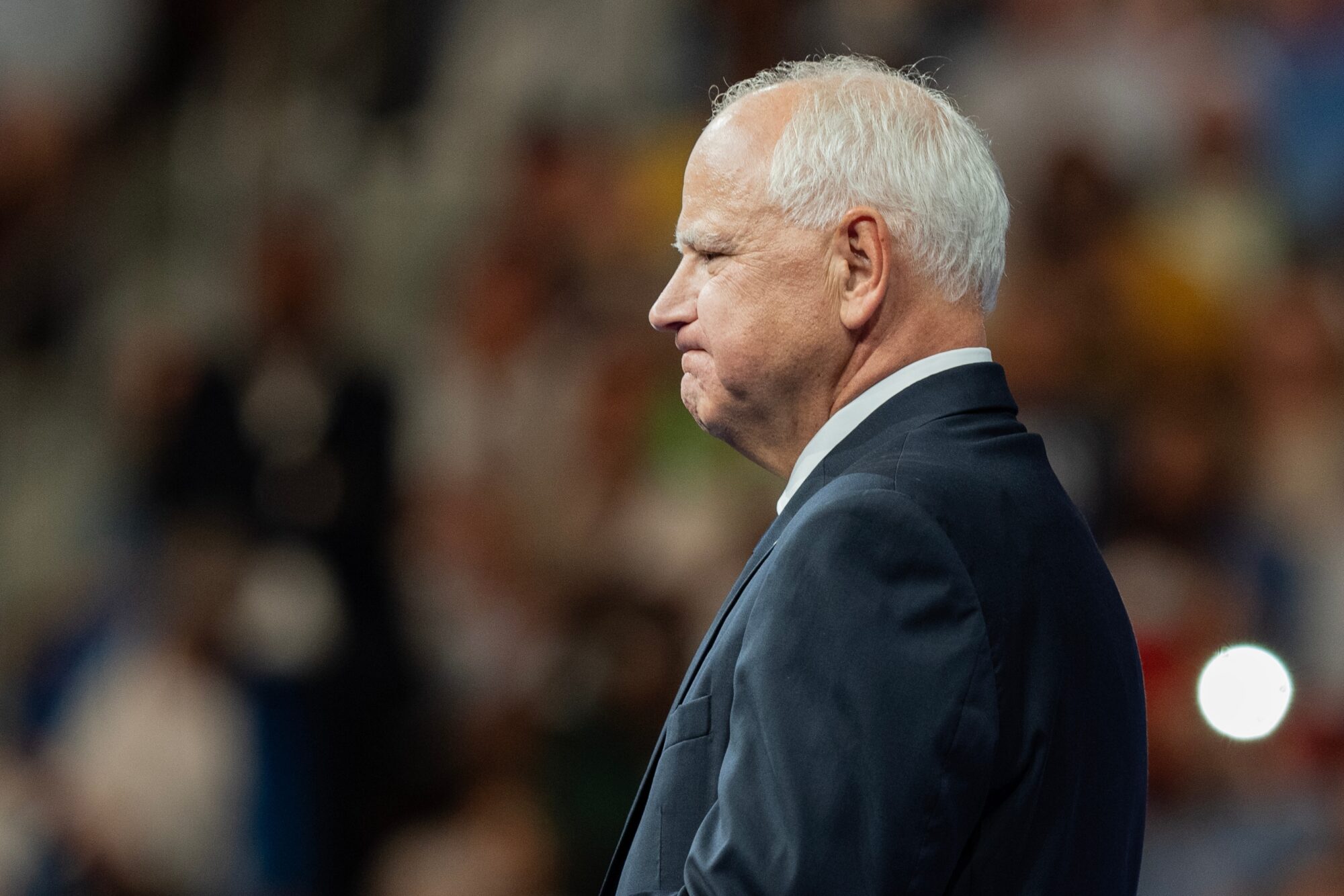
Immediately, those who already view ICE agents as the Trump-era Gestapo felt vindicated in their previous assessments. Surely, the tactics were cruel and unnecessary given that a woman was dead. It didn’t take long before video of the incident from several angles was distributed and consumed by the public. Then, the usual course of events began to unfold. Social media blew up as people argued both sides. Minneapolis Mayor Jacob Frey spoke directly to federal immigration officials during a press conference, saying, “Get the f*** out of Minneapolis.” Minnesota Governor Tim Walz named Friday, January 9th as a “Day of Unity” in Renee Good’s memory.
In these moments, it is the human urge to view tragedy through a black and white lens. But real life is complex. Discussions about the shooting of Renee Good require a sober head and a commitment to intellectual integrity. Unfortunately, both are lacking among politicians, media, and onlookers alike. Everyone has their biases. And everyone wants the comfort of confirmation.
According to the multiple videos of the encounter, Ms. Good was parked in the street in an attempt to block ICE agents from doing their duty. When she was approached by officers, and subsequently told to exit the vehicle, she instead sped away. The agent in front of the vehicle, Officer Jonathan Ross, who presumably feared for his life, fired shots at her. She was hit, her SUV slammed into another vehicle on the street, and she was pronounced dead at a hospital a short time later.
From all indications, it appears the officer’s actions could be defined as justifiable homicide. We will never know Ms. Good’s intentions. But intentions matter little. What the officer did was react to her actions and a sense of danger. All of this took place in a matter of seconds. Monday morning quarterbacks love to say what they definitely would have done. This is nothing more than the privilege of hindsight.
While Officer Jonathan Ross appears to have made the correct but difficult decision, one truth remains: this is not a desirable outcome. The noise coming from left vs. right, protesters, provocateurs, online rage curators, and pundits drowns out the fact that the situation remains awful. This holds true even in a case where an officer does his job. There is nothing to celebrate. There should be no “she deserved it.” The death of a person you don’t know doing something you don’t like isn’t a point in your favor. Neither Ms. Good nor Jonathan Ross should be political pawns. One person is dead, the other person has to live with the knowledge he took her life, and a country that has been sitting on a tinderbox inches ever closer to explosion.
I wish Renee Nicole Good were alive and well, and a complete stranger to me. But that’s not reality. And if we are to move forward in any healthy way as a nation, we have to grapple with what’s in front of us.
ICE agents are not the enemy. This holds true whether or not you like President Donald Trump. This holds true whether or not you are ever critical of their work in removing illegals and enforcing our laws. Also, Ms. Good was not the enemy. She didn’t deserve her death. At the same time, she made poor choices in a short span of time that had deadly consequences. She did not need to insert herself into the situation and defy agents. It was not mere rudeness, as some claim. She was behind a vehicle with agents around and one in the way. She represented a threat at that very moment.
In the course of discussion surrounding Ms. Good’s death, many have brought up Ashli Babbitt’s death at the Capitol building on January 6, 2021. On that fateful day, Ms. Babbitt joined the throng of protestors who entered the Capitol erroneously believing the 2020 election had been stolen. As the crowd she was in assembled outside the Speaker’s Lobby, a fellow protester smashed a window. An officer on the other side had a gun pointed at the window. Despite calls from Secret Service and police to get down, Babbitt proceeded to climb through the window. She was shot in the shoulder by Lieutenant Michael Byrd and later died. She has been hailed as a martyr by many in the MAGA crowd.
The deaths of Renee Good and Ashli Babbitt are comparable because they put themselves in dangerous situations for political reasons and ignored calls to comply. This is an uncomfortable truth for committed partisans. Many who view Renee as a victim of ICE believe Ashli deserved her death. Conversely, many who think Ashli was a hero believe Renee had it coming. The consistent position holds that both made extremely bad choices and as a result, it led to their deaths. There should be no celebrating, no “gotcha!” when talking about each incident. But there should be lessons learned both for present and future protestors and their supporters. Life isn’t a video game. You don’t come back. So choose wisely.
Disturbingly, Renee Good was encouraged in her actions by none other than her wife, Becca Good. This video, first published by Alpha News, wasn’t released on social media until Friday, January 9. It shows the incident from the perspective of Jonathan Ross, the officer involved in the shooting. Renee is in the vehicle while the latter walks around with her camera out, quite clearly working to agitate. Becca Good looks at Jonathan Ross as he walks around the vehicle, and says, “You wanna come at us, you wanna come at us, I say go get yourself some lunch big boy.” Then at the pivotal moment when ICE agents command her wife to exit the vehicle, Becca Good exclaims, “Drive, baby, drive!” Renee does just that, and we know what happens next. The sad conclusion is that Becca Good was willing to escalate the situation for political effect, despite the obvious danger to her wife. Why knowingly put your partner in harm’s way? The desire to make some sort of statement is not a good enough reason. This holds true even if you think ICE agents are wrong. While the focus has largely, and obviously, been on Renee, Becca is a major player in this, too. Hers was a grotesque, cheap display of recklessness disguised as principle.
It only takes a few seconds to make life-altering decisions that can take a life. The decisions made by both Renee and Officer Ross on a snowy street in Minnesota have broad implications. It’s a flashpoint that sharpens existing national fractures between those who prize laws and enforcement and those who believe federal agents are monsters.
Moral consistency demands that we reject the celebration of death. Renee’s actions, however wrong, do not excuse a loss of basic decency. The encounter lasted only seconds, an all-too-human moment. This was not a simple story of lion and lamb, villain and victim, but of two people making split-second decisions that altered one life and ended another. We can – and I believe, should – affirm that the officer’s actions were justified without stripping Renee of her humanity. Those like myself who believe Officer Jonathan Ross acted correctly strengthen our case by arguing soberly, without triumphalism or cruelty.

Kimberly Ross