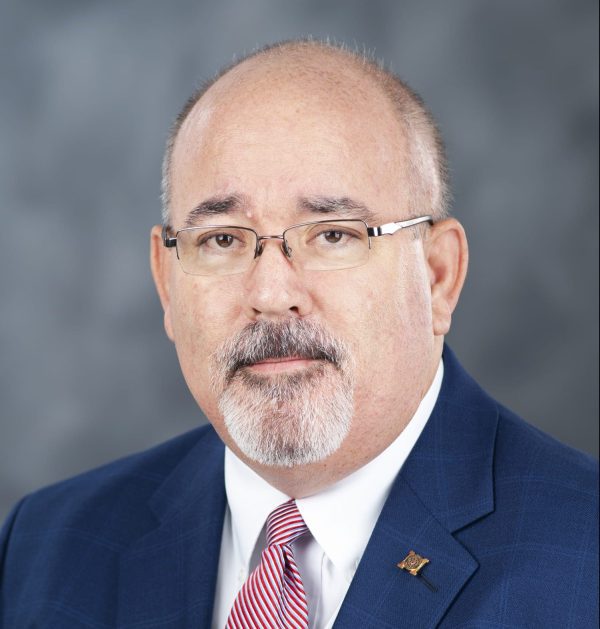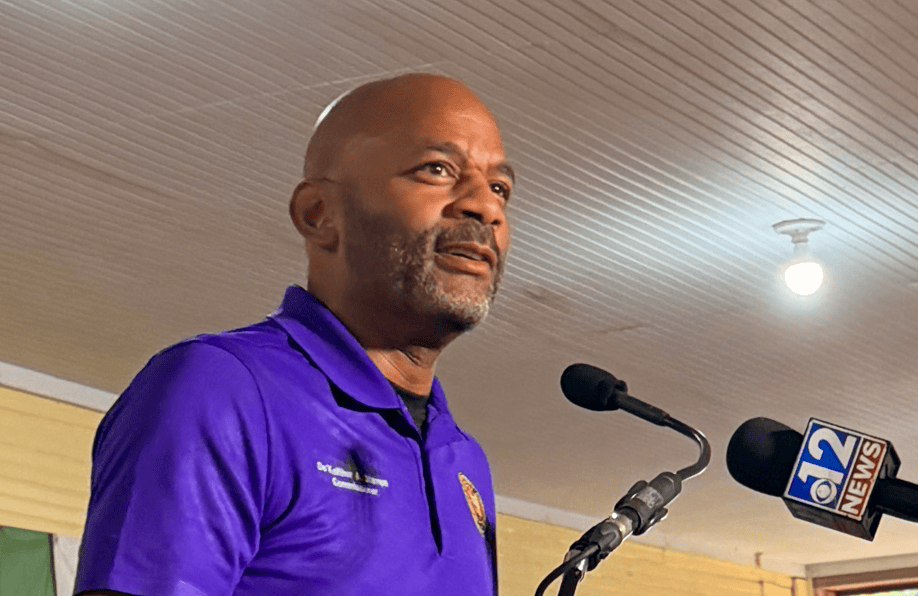
Central District PSC Commissioner De'Keither Stamps (D) speaks at the Neshoba County Fair (Photo by Frank Corder | Magnolia Tribune)
- Central District Commissioner De’Keither Stamps said he will continue to push for the idea by writing a letter to Governor Tate Reeves (R) to seek his support. Such a change would require federal action.
One of Mississippi’s three public service commissioners is pushing for a way for low-income residents to keep their water on by using Supplemental Nutrition Assistance Program (SNAP) benefits, otherwise known as food stamps, to pay their water bills.
Central Public Service Commissioner De’Keither Stamps (D) pitched the idea of a “SNAP H2O” program where recipients of the federally funded food assistance program would be able to use their benefits to pay water bills. Not only would that option keep resident’s homes connected to water, Stamps said it would support the state’s utility systems.
“We need every water system in this state to be at 100 percent collections in order to maintain our services,” Stamps explained.
When bills go unpaid, the entire system suffers as there is then a lack of funding to maintain lines, towers and other components involved in providing water to homes and businesses.
Stamps told his fellow commissioners this week at their monthly meeting that during a recent water drive in his area, he heard of people using their SNAP EBT cards to purchase bottled water to be donated for the cause.
“But they couldn’t pay for their own water bill themselves,” Stamps said. “So, this is just a way that they can do that.”
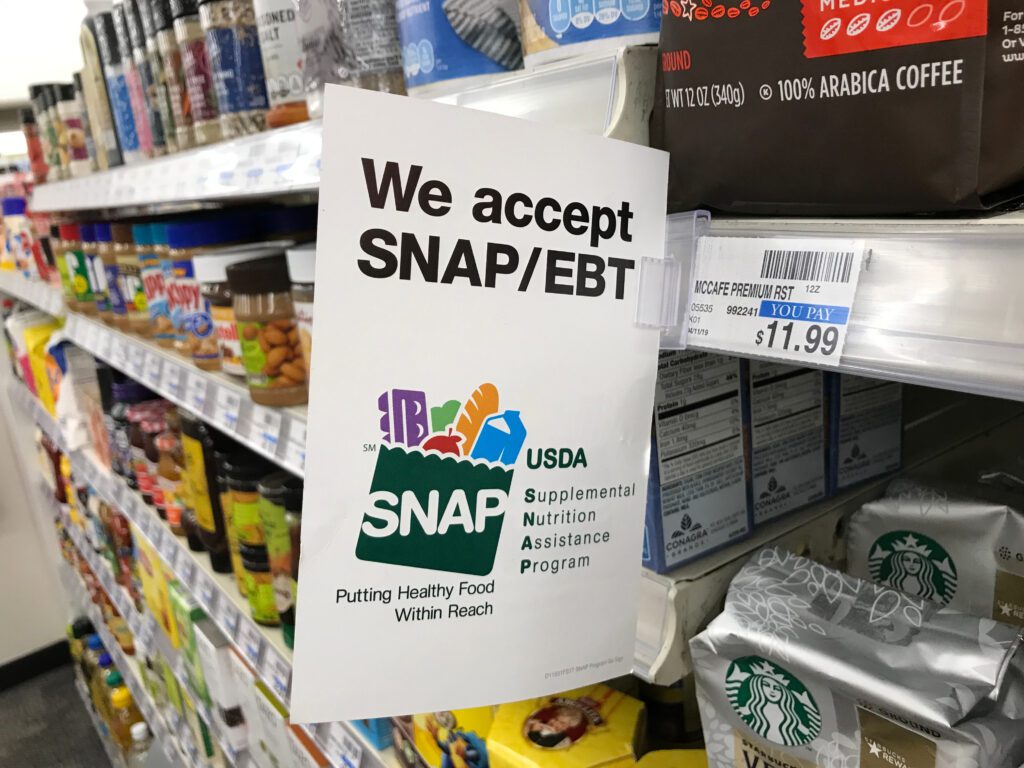
Implementation of Stamps’ plan would not require additional funding, since it would use the existing benefits through the SNAP program.
“It doesn’t require any new federal money. It doesn’t require any new assistance,” Stamps said. “Right now, SNAP EBT card holders are spending hundreds of millions of dollars, $950 million a year of their SNAP benefits, buying bottled water. Some are even selling their benefits to other people to get cash to pay a water bill.”
To Commissioner Stamps, providing the option to beneficiaries of the program would be easy to put in place, since it would only require a simple change in wording within the U.S. Department of Human Services.
“DHS would just classify water as food,” Stamps said. “This is a time where Mississippians can just go back to being a little bit rebellious. We don’t have to follow Washington D.C. all the time. We can spur them into action.”
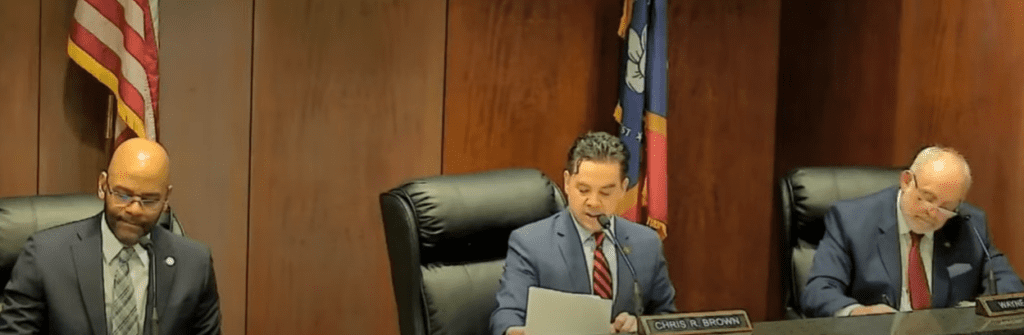
When his pitch came up for a vote, it died for a lack of a second by the other two Public Service Commissioners, Northern Commissioner Chris Brown (R) and Southern Commissioner Wayne Carr (R).
Stamps said he will continue to push for the idea by writing a letter to Governor Tate Reeves (R) to seek his support.
“I don’t know when Mississippi got to a point where it worships presidents, where it worships people in Washington D.C.,” Stamps said. “Washington D.C. does not run Mississippi, Mississippi runs Mississippi.”
National Preparedness Month
In another matter, Commissioner Carr reminded Mississippians that September is National Preparedness Month, the goal of which is to ensure residents have a plan for their family and pets when a disaster strikes. The aim for the designation is to reduce a family’s reliance on emergency responders in the immediate aftermath of a major disaster such as a tornado, hurricane or other crisis situation, allowing those personnel the ability to focus on bigger issues at hand.
“If you’ve ever been around a crisis, or a tornado or a hurricane, you see that Mississippians come together,” Carr said. “It’s unbelievable.”
As such, families and stakeholders in the state are urged to attend a summit, “From Recovery to Resilience,” set for next month at Mississippi Gulf Coast Community College. During the event, attendees will be able to see the phases of disaster response. The summit will be held on October 8 and start at 9 a.m. Registration is required but there is no cost to attend.
Community leaders, representatives of utility companies, local elected officials, schools, hospitals, emergency response professionals and the general public are invited and urged to attend, Carr said.
“A community expo will run through the day, and lunch will be provided,” Carr described.
As a longtime Mississippian Gulf Coast resident, Carr said he was 8 years old when Hurricane Camille struck. He still recalls the devastation it brought to his family.
“I saw chickens flying 150 miles an hour,” Carr described of his family’s chicken houses. “It’s amazing what a storm will do.”
Hurricane Katrina in 2005 also caused historic damage along the Mississippi Coast, leaving only slabs along much of the 80-plus mile coast line.
“You know how the old timers said, ‘Go down and see that red mailbox, take a right’? there was no mailbox, there was nothing there,” Carr said of the landscape after Katrina.
While the rebuilding process has been strong over the past 21 years, Carr said it is not complete, adding that Mississippi Power is still about 250 meters short of pre-Katrina numbers.