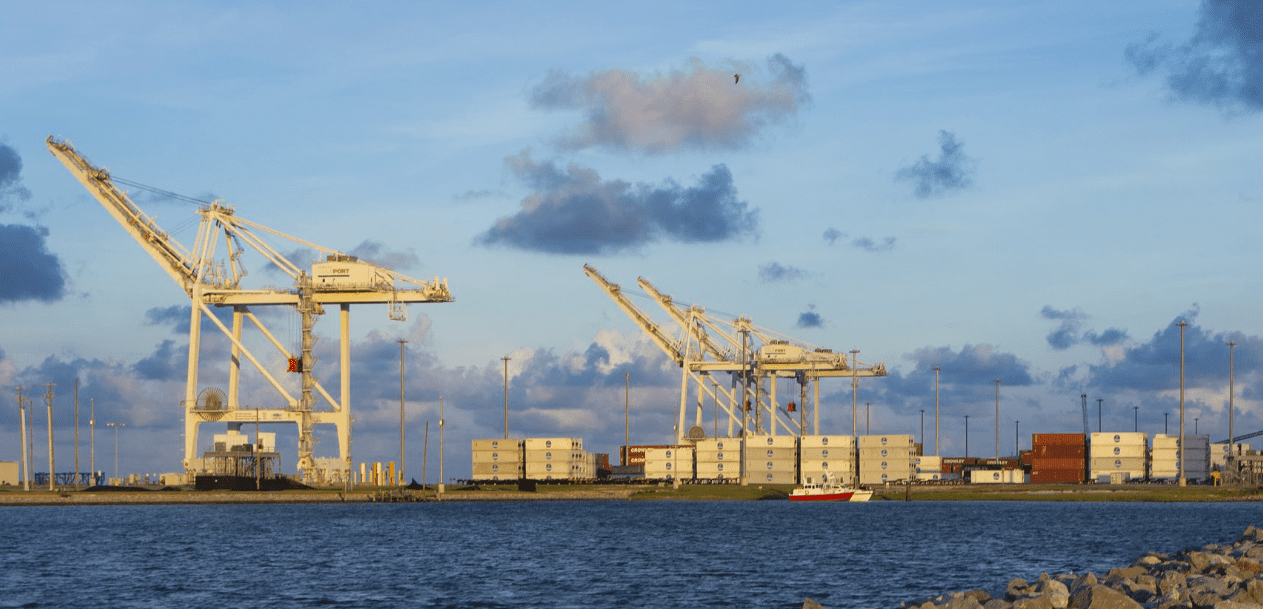
Port of Gulfport (Photo from shipmspa.com)
- Rob Maness says Mississippi needs a comprehensive, independent Mississippi Maritime and Ports Authority.
President Donald J. Trump just delivered the most ambitious blueprint for restoring American maritime dominance since the Merchant Marine Act of 1936. Released in February 2026, the White House’s Maritime Action Plan (MAP) isn’t just another Washington wish list—it’s a battle plan to rebuild our shipyards, reassert our industrial might, and ensure that American workers, not foreign competitors, build the ships that carry our trade and defend our nation.
For Mississippi, this isn’t a distant federal initiative. It’s a once-in-a-generation opportunity knocking on our Gulf Coast door. With world-class facilities like Huntington Ingalls in Pascagoula already building Navy destroyers and amphibious ships, and the Port of Gulfport primed for growth, our state is perfectly positioned to ride this wave. But we won’t capture a single new job, contract, or investment unless we get our own house in order—and fast.
Right now, Mississippi’s maritime governance is fragmented and limited. The Mississippi State Port Authority (MSPA) does solid work at Gulfport, but it’s a single-port operator with a five-member board and a narrow mandate. We have no unified state entity coordinating our Gulf Coast assets with inland river ports like Vicksburg and Yellow Creek, no aggressive strategy to chase federal dollars from the Maritime Security Trust Fund, and no dedicated voice marketing Mississippi to allied shipbuilders looking for American partners under the MAP’s innovative “Bridge Strategy.”
That has to change. Mississippi needs a comprehensive, independent Mississippi Maritime and Ports Authority—a centralized public authority that owns and develops infrastructure while leasing operations to private industry for maximum efficiency. This “landlord” model is proven by our regional competitors: Alabama’s State Port Authority runs Mobile and coordinates statewide, Georgia and South Carolina dominate container trade, and Virginia has turned its ports into economic engines. They’re eating our lunch because they’re organized for success. We can do better—and we must.
Here’s what a robust Mississippi Maritime and Ports Authority would look like:
- A stronger board of 7–9 commissioners with broader representation: a majority appointed by the governor, plus voices from the legislature, coastal and river counties, industry, labor, and business. Staggered terms, monthly public meetings, and real accountability to taxpayers.
- Dedicated divisions for port development, economic promotion, inland-river coordination, workforce training, environmental resiliency, and security—all working together to turn federal opportunities into Mississippi jobs.
- Aggressive pursuit of the MAP’s game-changing tools: Maritime Prosperity Zones to attract private capital with tax advantages, partnerships with Korean, Japanese, and European yards under the Bridge Strategy, and a fair share of the billions flowing from the proposed Maritime Security Trust Fund.
- A laser focus on workforce development—expanding existing partnerships with community colleges and leveraging the MAP’s Military-to-Mariner pipeline to put Mississippi veterans and skilled tradespeople back to work in shipyards and on the docks.
This isn’t about growing government. It’s about growing Mississippi. A unified maritime authority would be self-sustaining through port fees, leases, and bonds, while aggressively chasing federal grants from MARAD and the Army Corps. It would create thousands of high-paying jobs, boost exports, harden our coast against storms, and strengthen national security—all while making our state the go-to destination for the American shipbuilding renaissance.
Governor Tate Reeves and the Mississippi Legislature have a clear path forward: pass legislation this session to expand the MSPA’s mandate, broaden its board, and give it the tools to coordinate every maritime asset in the state. Start with phased integration of other ports through partnerships, then build from there.
President Trump has laid the foundation with hundreds of billions in potential investment. Allied shipbuilders are watching. Private capital is ready to flow. Mississippi can either lead the Gulf Coast in this revival—or watch Alabama, Louisiana, and Texas take the contracts and the jobs.
I’ve spent my life serving this country, I know what superior leadership looks like and we have it in our Governor and Legislature. This is our moment to build something great. Let’s seize it now.

Rob Maness