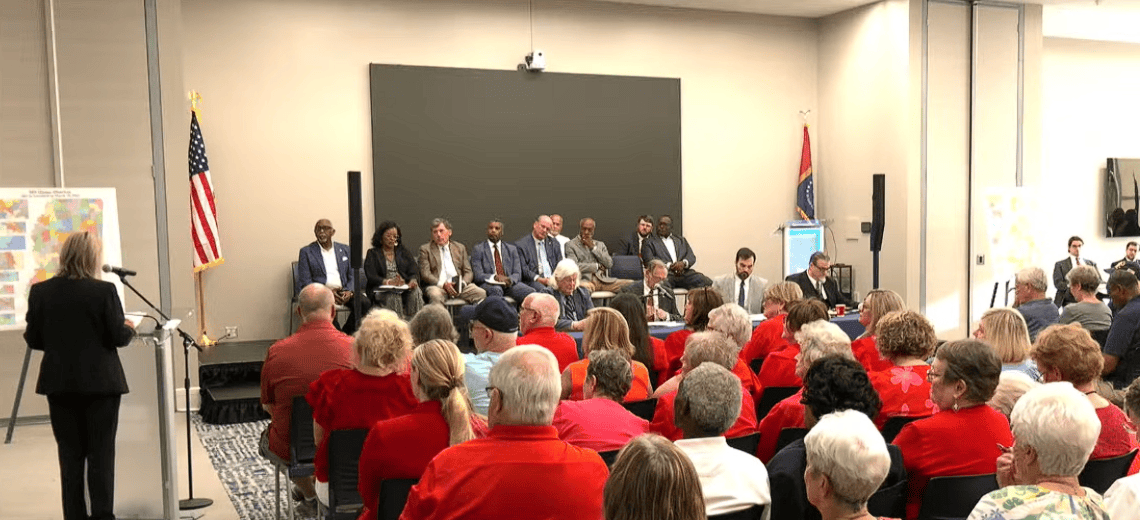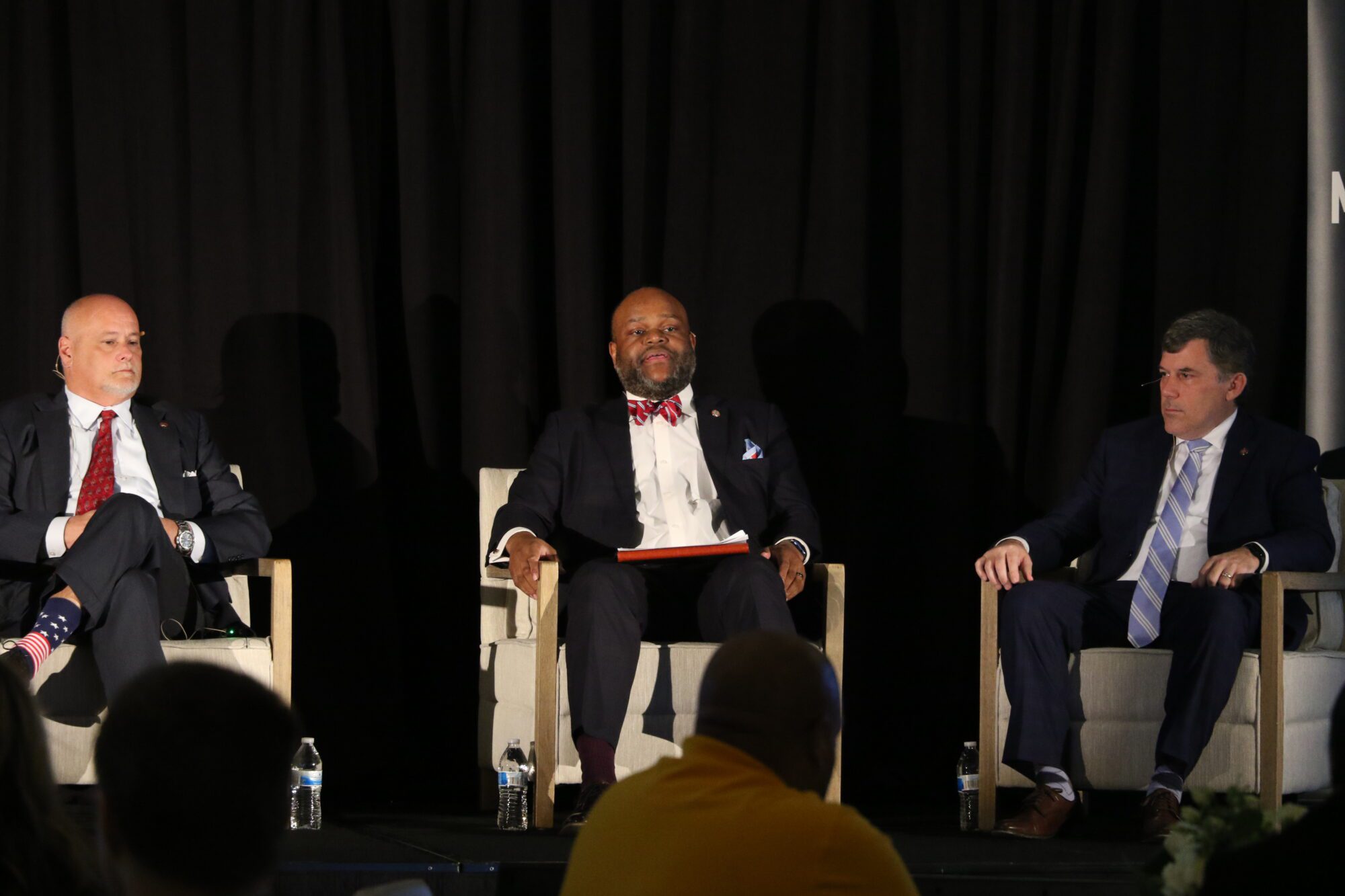
From left, Rep. Donnie Bell, Rep. Otis Anthony and Senator Daniel Sparks speak during Empower Mississippi's fifth annual Solutions Summit. (Photo by Jeremy Pittari | Magnolia Tribune)
- The Legislature is considering ways to integrate social safety nets and workforce development in a manner that moves people off of welfare and into a sustainable job.
The importance of work on the psyche and society as a whole was a topic of discussion during Empower Mississippi’s fifth annual Solutions Summit this week.
During a panel presentation titled “One Door to Opportunity: Continuing Work, Support and Purpose,” attendees gained insight into how work not only provides a person with the sense of accomplishment but also leads to better outcomes for families.
It has been reported that Mississippi’s workforce participation rate is below the national average, last reported to be about 55 percent.
State Senator Daniel Sparks (R) told attendees that there is some “silliness” in how those figures are determined. He contends the rate does not take into account families who willingly opt for one parent to stay home and care for their children, especially due to the high cost of childcare or other familial or societal factors.
“We have some people that choose to have a single parent in the home working and maybe another to be a stay-at-home parent. So, there are things that would impact that [rate]. Also, we have a high disability population,” Sparks explained.
The workforce participation rate counts everyone from age 16 and older, meaning older people who are not working are also counted.
State Rep. Donnie Bell (R) agrees that the high cost of childcare lends itself to more people opting to just stay home to care for their children, since if they went to work, they would essentially break even. He said the Mississippi House is working on a bill that aims to address that issue.
“That’s so expensive for a young family that a lot of times it’s easier for family members to stay home and not work,” said Bell.
Senator Sparks said that is why companies who offer childcare support for families are better positioned to retain employees due to the value of those benefits.
Government welfare programs are also leading to the low participation rate, such as the Supplemental Nutrition Assistance Program (SNAP), formerly the federal food stamp program. Sparks said the government is good at spending lots of money inefficiently.
“If that’s a citizen of Mississippi, I want to know why they need assistance to get food on the table for their families, because nobody sets out to have to rely on somebody else,” Sparks said.
That is where the One Door Policy initiative is working to connect people not only to assistance, but aid that can help them find work.
Sparks added that the committee’s work is important to ensure that when a person comes to an state or federal office seeking aid they not only find that aid, but also opportunities for work and additional assistance for which they may qualify.
As previously reported, the Legislature has been compiling information for potential legislation through the “One Door Policy” Task Force. Hearings were held during the fall of 2025 to consider how Mississippians could have easier access to aid through various state agencies.
The ultimate goal of the task force, advocates have said, is to integrate social safety nets and workforce development in a manner that moves people off of welfare and into a sustainable job through a one-stop-shop holistic approach.