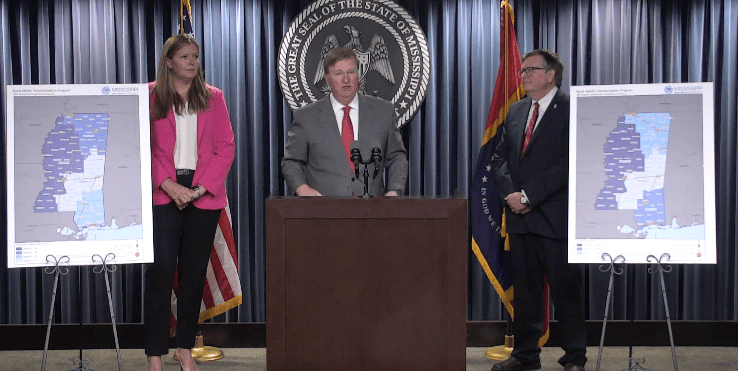
(Photo from Sean Tindell Facebook)
- Last week, Magnolia Tribune broke a story on ITS approving a sole source contract requested by the Department of Public Safety for the use of AI cameras in traffic enforcement. Facing public backlash, DPS now says it will not execute the contract and had not intended to use the technology to write tickets.
Last Thursday, Major Scott Henley with the Mississippi Department of Public Safety (DPS) presented a request for approval of a sole source contract to the Department of Information Technology Services (ITS) Board.
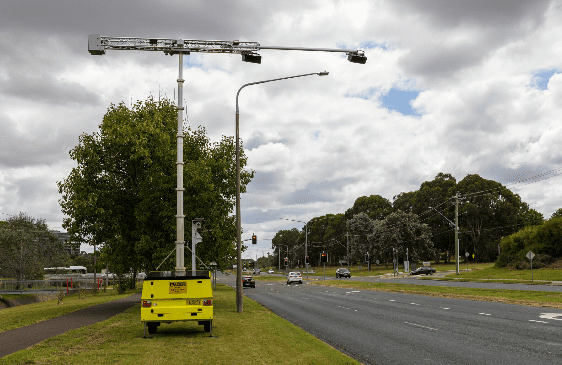
Henley explained to the ITS Board that the AI camera technology under the prospective contract would be used to identify traffic violations in high crash corridor areas where officers cannot routinely work due to construction zones or other impediments to patrolling.
Henley spoke explicitly about how the technology would be used to issue citations:
“It will catch driving behaviors. The AI will actually capture it and send it downstream to an officer sitting downstream. The officer will determine if it is a valid violation for a stop and at that point the officer will actually stop the car and issue a citation in real-time.”
On Monday, in a video posted to social media platforms, DPS Commissioner Sean Tindell said the agency would not execute the contract for which it had sought ITS approval. He also said the agency would not have used the technology for the issuance of traffic citations.
The video came after widespread public backlash to Magnolia Tribune’s breaking report on the contract’s approval.
The ITS Board approved the sole source contract with Acusensus Inc., permitting DPS to execute the contract and lease the mobile, multi-violation detection, and real-time enforcement systems. The contract was to be for a total 3-year lifecycle with a cost of $2,052,000, funded through federal grants acquired by DPS.
READ MORE: Mobile camera units using AI coming to Mississippi roadways
Commenters on social media late last week expressed overwhelming opposition to the cameras.
“The technology will aid the government in watching every single move Americans make,” one citizen commented on social media. “There that’s the real truth, I fixed it for you!”
“Any excuse to surveil us,” said another.
“Is reviewing the capture footage enough to issue citation? Or does the officer have to witness it happening in real time?” asked yet another commenter. “There’s not much difference in automated mail citations and getting a ticket in person if they don’t have to see it with their own eyes.”
Lawmakers were equally skeptical of the AI traffic cameras.
“Cameras armed with AI, peering into your car and processing your actions, invading your privacy, and then signaling a live officer down the road to pull you over and issue citations and/or make arrests in real time. It’s a very slippery slope with frightening ramifications,” State Rep. Dan Eubanks (R) said.
“I expect the Legislature to investigate the use of these cameras to ensure that the constitutional rights of our citizens are not infringed upon,” State Rep. Trey Lamar (R) said.
A Reversal or a Clarification
In his social media post Monday evening, DPS Commissioner Sean Tindell said the agency “has not and will not” execute any contract to use AI cameras to issue traffic citations.
Magnolia Tribune spoke with Commissioner Tindell Tuesday morning about the original request for approval of the AI camera contract, as well as the position asserted by the Commissioner on social media following the approval by ITS of the DPS requested contract.
Tindell said the idea of using the technology had been on the table “for many years,” dating back to two prior colonels in the department.
“They had presented this plan and it was focused on commercial trucks, part of a commercial trucking and supervision type program,” the Commissioner said. “So, they submitted this to ITS maybe a couple of years ago. I think it just got off of everybody’s radar and this came up suddenly [on the ITS agenda].”
The Commissioner said when he saw the article in Magnolia Tribune, he had to ask his staff where it came from, as the proposal had been sitting for so long.
Henley, who presented to the ITS Board on behalf of DPS last Thursday, said, “It will catch driving behaviors. The AI will actually capture it and send it downstream to an officer sitting downstream. The officer will determine if it is a valid violation for a stop and at that point the officer will actually stop the car and issue a citation in real-time. The whole goal is to change driving behaviors and reduce crashes.”
Henley went further by saying the officers on scene would be able to spot the truck driver on his cellphone or the children standing in seats unbuckled.
Tindell acknowledged that Henley had the authority to speak on behalf of DPS at the meeting.
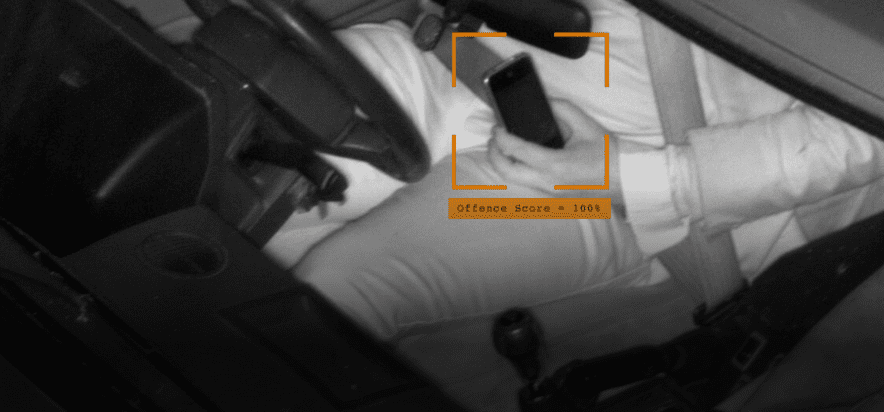
The commissioner also acknowledged the technology may be capable of sending images downstream to an officer who was monitoring the cameras and could write a ticket, but downplayed Henley’s statements. He said, “that doesn’t mean it was how we were going to implement it.” The Commissioner later added, “this technology was not going to be utilized for that,” referring to the issuance of citations.
“When it comes to the contract, certain things like that would have been hashed out and detailed out,” Tindell said, noting that the ITS approval allowed for the sole source provider designation but did not lock DPS into the contract.
However, now the commissioner says, “At this point, I don’t know if we’re going to enter into the contract at all.”
“I don’t necessarily think there was a change of heart. Until I see something, I can’t approve it or not. We were presented with a presentation that said we have the ability to use some of this technology in a portable manner by this company that helps reduce traffic accidents and fatalities. The first step of that is getting approved as a vendor. Then you can look at the details of the contract and say this is how you can utilize that technology in the field,” Tindell said. “But I think at this point though we’re just going to step away from it.”
He said the nearly $2 million in funding for the contract will not be lost. The plan would be to shift the funding to support overtime and other enforcement efforts.
Technology and Law Enforcement
Commissioner Tindell sees a bigger question for law enforcement and the public to consider going forward: “How do we utilize technology in a way that obviously protects people’s 4th Amendment rights but also works towards making our roadways safer?”
Mississippi law restricts local governments from using cameras to issue citations but as Tindell notes, “I don’t know if there’s anything in state law that would prevent state law enforcement from utilizing that.”
There is also a question of whether a camera that merely notifies law enforcement, which then writes an in-person ticket for a violation, runs afoul of the current statute.
The commissioner said he fully understands citizens’ privacy concerns but noted that technology like Flock cameras and license plate readers (LPRs) has proven useful in high profile cases, such as when children have been kidnapped. There are established guidelines as to how and when that information is accessible.
“If you use it for an inappropriate purpose there are ramifications for that for the agency and for the individual,” Tindell explained.
He added that the agency is focused on using technology to assist them in knowing where to better deploy their assets.
“If we know that in certain work zones or in certain areas people are speeding more, then we might deploy more assets. If we see incidences and things in a construction work zone that are causing accidents and we have cameras to see this is what’s happening that this intersection, this is what’s happening in this work zone and that’s what’s creating the accidents then we’ll deploy more assets,” Tindell said.

Frank Corder