Listen to the audio version of this article (generated by AI).
- There are more teachers serving a lot fewer students than just a decade ago. They are being compensated at higher levels than the average worker with a four-year degree. These are verifiable facts. No one cares.
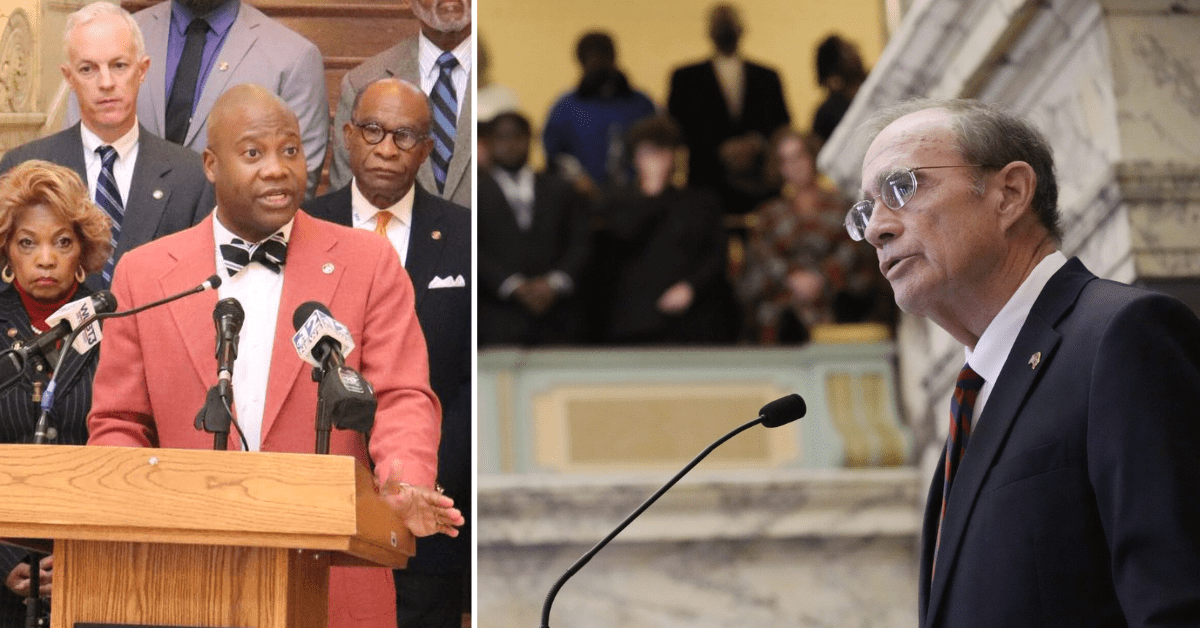
Amid pressure to “do something” and with “free ice cream on Fridays” vibes, the Mississippi House of Representatives and Mississippi Senate have traded competing proposals for budget-stretching teacher pay raises.
As these proposals head to conference, the chambers have painted themselves into corners. The House passed a $5000 bump in a single year earlier this session. The Senate responded with $6000 over three years. Additional raises for special education and teachers’ assistants have also been proposed. In my head, I hear a fast talking auctioneer. “Do I hear $7000?”
For legislators, emerge from conference with anything under these sums and the previous jockeying will look like window dressing pretense. And yet there are people in both chambers that know the math doesn’t work. In some respects, each chamber would be better off politically, and as a matter of policy saying, “we tried, but those jerks down the hall wouldn’t cooperate.”
On salaries alone, the currently proposed increases would cost in the range $200 million annually, with another $30-$40 million tacked on for PERS. It comes at a time when the Division of Medicaid is requesting $390 million more than its previous year funding and legislators are already grappling with filling a billions of dollars hole in state retirements.
It also comes on the heels of a $5100 bump in pay in 2022, with built in annual increases and a larger increase in every fifth year of service. In this respect, teachers find themselves uniquely situated relative to almost all other public employees — who have seen nowhere near the raises and also do not receive automatic bumps.
The facts call into question the prevailing narrative that there’s a teacher shortage driven by poor compensation and poor financial support for Mississippi’s public schools. The “solutions” appear disconnected from market data. Legislators would be wise to pause and work to get it right versus doing it fast.
The Teacher Shortage
The public has been told there’s a massive teacher shortage in Mississippi. A release from the Mississippi Department of Education last December put the number at nearly 4,000, raising crisis-level alarm bells. The vacancies are most often attributed to pay and the Legislature’s alleged “underfunding” of education.
The message is so drilled into the minds of the general public that they reflexively repeat it without question. But what if I told you that there are more teachers in the system now than 10 years ago and that those same teachers are serving nearly 60,000 fewer students than they did 10 years ago?
| Categories | 2014-2015 | 2024-2025 | +/- |
|---|---|---|---|
| Teachers | 32,230 | 32,540 | +310 |
| Students | 490,225 | 431,931 | -58,294 |
| Student-Teacher Ratio | 15.2 to 1 | 13.3 to 1 | -1.9 |
| Average Teacher Pay | $43,308 | $54,975 | +$11,667 |
| Per Pupil Funding | $9,394 | $14,530 | +$5,136 |
These are MDE’s own reported annual statistics over the last 10 years.
How is it possible that the teacher shortage exploded when MDE’s own numbers show an improving student-to-teacher ratio, with nearly 2 fewer students per teacher in the system? Seems dubious.
That, of course, doesn’t mean there aren’t vacancies in particular subjects, grades or locations. It does mean the concept of “vacancies” is a moving target dictated by how many jobs administrators say they need, not by constructive realities.
In that same decade span, per pupil spending has increased by 55 percent and the average teacher’s salary by 27 percent. That’s not to say teachers may not still deserve a higher starting point that is market competitive, but it is to say that the Legislature has been responsive to both compensation and funding demands in a way that they have not been for virtually any other public sector worker or department.
How Does Teacher Compensation Compare to Other Workers with 4-Year Degrees in Mississippi?
Proponents of large across the board teacher pay raises often point to Mississippi lagging behind average salaries in other states. The problem with that analysis is that you could pick almost any profession, public or private, and Mississippi’s average salary would be below national average. That’s a byproduct, in part, of lower cost of living and, in part, of decades of endemic economic deficiencies in the state. There have been significant improvements in recent years, but the state still lags behind.
A more apt comparison is what someone with a similar education attainment level earns in Mississippi. It’s important when looking at compensation to consider not only salary, but also benefits, days worked and other factors. By almost every measure, teachers beat their four-year degree counterparts in Mississippi.
| Categories | MS Teachers | MS 4-Year Degree Workers |
|---|---|---|
| Average Salary | $54,975 | $50,820 |
| Employer Annual Retirement Contribution | $10,115 | $2,541 |
| Days Worked Annually | 187 | 247 |
MDE reported average teacher salary $54,975. When you factor in the 18.4% state contribution to PERS on their behalf, the annual compensation cost goes up $65,090. People in the retirement system pre-2011, that started teaching at 22, can retire and begin collecting benefits at 47. For people in the system post-2011, under same conditions, 52.
When you factor in the state covering 100% of base level health insurance for the employee only ($513/month), the average annual compensation package goes up to $71,246.
The average salary of someone with a bachelor’s degree in Mississippi is $50,820, more than $4000 under the average salary of a Mississippi teacher. A lot of employers offer a 3-5% 401k match. Let’s assume the high end. It raises total compensation to $53,316. Earliest standard eligibility to withdraw from a 401k plan is 59.5 years old and those benefits typically aren’t nearly as lucrative as a defined benefit plan.
Family Health Benefits, Work Days Annually
On average, large employers (50+ employees) offer partial coverage of employee health insurance premiums. Employees of large employers still contribute, on average $127/month for employee-only coverage. Only 30% of small employers cover health insurance premium cost. So this is harder to run a straight calculation on, but private employees pay more toward their own insurance on average.
There is one notable exception around family coverage. State employees pay the full freight of family coverage (minus the full amount of their employee coverage). Large employers typically underwrite some of the cost of family coverage. However, when you add what one of their employees contributes for themselves, plus the portion the employee pays for family coverage, it works out pretty much in line with what a public employee pays for family coverage.
Mississippi has a 180-day school calendar. During the school year most districts have four weeks of vacation (1 week fall, 2 weeks Christmas, 1 week spring break), plus 2-2.5 months of summer vacation, plus extraneous days during school year (MLK, etc). Mississippi teachers typically are on 187-day contracts — the instructional time, plus 7 days for planning and development. That’s not to say that good teachers do not use some of their free time outside of that 187 days.
By contrast, the average private sector worker in Mississippi has 13 days of paid vacation a year, which works out to roughly 247 work days a year. If you’re doing the math, that’s 60 days or twelve full weeks more.
Are there unique strains?
We also know that there are hardships unique to the job. These include less autonomy to run to the restroom or go grab lunch, increasing bureaucracy and expectation of teaching to prescribed curricula and tests, a spike in behavioral issues among students and an unwillingness on the part of administrators to impose discipline.
But there are unique strains to almost every profession. Being on a roof in July is hard. Turning a wrench until your hands no longer work is hard. Filing TPS reports in an insurance adjuster’s office all day, every day is hard. Working 70 hours a week drafting briefs in a law firm is hard. That’s why people who work get paid for their time.
If the legislature wants to reward teachers, or ensure they are being paid fairly relative to their training, qualifications and the nature of their job, that’s not a bad thing. They should do the market research to figure out the right number and structure.
If the legislature wants to address putative shortages, that’s not a bad thing. They should do the work of understanding precisely what is meant by a “shortage,” where they actually exist, and how to be targeted in creating incentives that fill those roles. Across the board pay raises because it’s hard to hire a calculus teacher is a very poorly designed and irresponsible approach. Calculus teachers may just be worth more in the market than someone teaching ABCs. (Only in the public sector would that last statement be controversial).