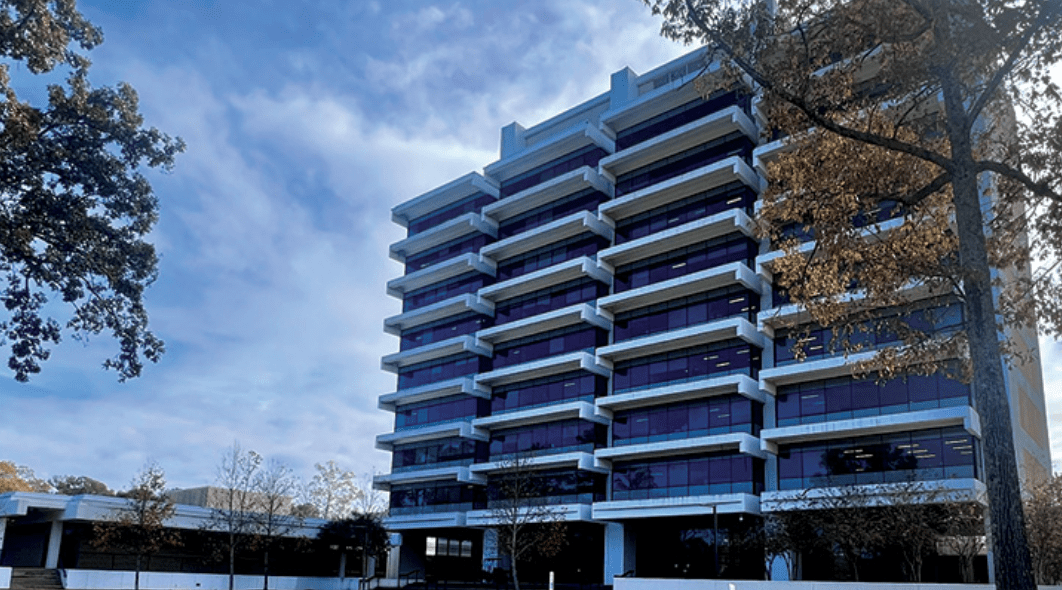
Mississippi IHL (Photo from IHL website)
- Lawmakers are debating financial literacy requirements at Mississippi colleges and universities as the session winds down.
As the Legislature is considering a bill that would mandate all post-secondary institutions in the state provide some sort of financial literacy education, the Board of Trustees for the Mississippi Institutions of Higher Learning has adopted a policy to that effect.
The new financial literacy policy was adopted as part of the discussion of academic affairs during Thursday’s meeting.
Dr. Casey Prestwood, Associate Commissioner for Academic and Student Affairs, said the policy will ensure all eight public universities continue to provide financial literacy instruction covering skills such as budgeting, saving, managing debt and investing. She said those topics are being covered through experience courses offered in the first year, seminars and workshops, learning objectives already included in the curriculum of specific programs and courses, and by way of several other avenues at the schools.
The new policy set forth by IHL will mandate annual reporting of continued efforts to ensure students receive instruction in financial literacy. The policy requires that financial literacy is effectively covered and available to all undergraduates, stating that it should establish “practical knowledge and skills relevant to students’ unique financial challenges, such as managing limited income, student loans, credit and long-term planning.” Each institution will maintain flexibility in reaching that goal under the policy.
“We’ve been looking at this for many months,” Board President Gee Ogletree said.
A bill working its way through the Legislature, HB 562, currently includes financial literacy language for IHL schools and the state’s community colleges through an amendment made in the Senate. Last week, the House declined to concur on the Senate’s language and instead invited conference on the bill.
Creating a new funding model for state universities
At the IHL meeting on Thursday, the Board also heard an update on the process of creating a new performance-based funding formula. The National Center for Higher Education Management Systems is working to create a new funding model for the state’s public universities.
NCHEMS Vice President Sara Pingel said the process so far has gathered feedback from stakeholders, which include legislators, university presidents, IHL Board members and Accelerate MS since October of last year. That information was used to create an objective statement that focuses on the creation of an allocation model based on data that ensures student success, includes performance aspects, and focuses on completion metrics.
“Everybody has told us they would really like to see a significant focus on performance,” Pingel added, saying the process will also take other aspects into consideration.
The model objective states, “Consistent with stakeholder input, the model will also recognize differences in institutional missions, student populations, and cost structures. The model will be designed to accommodate fluctuations and appropriation changes.”
Information and data collected from those meetings is being used to update the legacy framework created in 2012.
“And then off of that, we also developed four different draft models that work off of this base cost performance model that we looked at last month,” Pingel described.
Draft models were presented in-person to the IHL Board, university presidents and other high-profile faculty of each of the eight institutions last month. Concerns lodged on those drafts focused on student populations, mission differences between institutions, institution size, and performance metrics.
“We received concerns around institutional size and context, knowing the state doesn’t need eight flagship universities and it also doesn’t need eight small regional universities, right?” Pingel explained. “They need a diverse set of eight different types of institutions that can meet student needs.”
Requests were also made to ensure consideration was placed on the fact that each student has individual support needed to succeed in college, which results in additional costs that should be recognized and considered.
Pingel said it is clear students do not always fit the full-time student who graduates in the on-time model. Some students attend classes part-time while others may leave and then return to complete a degree. Consideration should also be placed on how graduation rates are calculated, which tend to focus on first-time, full-time incoming freshman.
“At some of the institutions first-time, full-time freshman represent a majority of the students that they enroll,” Pingel said. “And at other institutions first-time, full-time freshman make up less than a quarter of the students that they enroll.”
It should also be noted that smaller institutions operate differently and have varying cost impacts that should be considered, the Board was told.
For example, some universities face unique additional expenses in faculty recruitment and expenses, utility expenses in municipalities versus remote locations, or increased insurance rates due to being located along the Gulf Coast.
“There’s also concern with enrollment incentives present within any of the funding models,” Pingel added. “I think all of the institutions are eager to serve students well and are eager to serve as many students that would come through their doors as are qualified and prepared to attend.”
At the same time, the Board was told that the schools do not want to lose support for out-of-state student recruitment because those efforts help fight “brain drain” while contributing to the economy. As such, consideration of student residency status being included in the model has been abandoned.
Concern was also expressed over ensuring sensitivity towards providing degrees geared towards low earning but high importance fields such as education, public service and social work.
“These are fields where earnings are not expected to be particularly high, but they are expected to exceed those of what a high school graduate would earn, and the state of Mississippi needs people working in these fields,” Pingel stated.
Due to how reporting systems typically work a year or two behind, respondents also expressed concern about how that lag plays a part in appropriations.
Aspects that the respondents appear to agree upon include continuation of incentivizing the success of Pell grant recipients and adult students, including transfer students as part of the institution’s progression and completion data, elevating mission-aligned costs and integrating time to degree metrics along with post graduation outcomes.
While there was interest in tracking first-generation students to ensure they get the support they need, none of the state’s public institutions have a way to track it consistently, and there is no current method to share it with Board, Pingel said.
There are aspects that require more research, including how to include an institution’s research efforts as a performance component into the model, how to ensure post graduate outcomes are factual and comprehensive, and how to link tuition with appropriation policies.
Mississippi does have a strong student outcome tracking system housed at the University of Mississippi, that focuses on students as they move through high school to post secondary and/or on to the workforce.
“Not every state system is able to do that, so that’s a real asset to us in considering how we can use this data and this work,” Pingel explained.
That data includes comparisons of median earnings for high school graduates versus post secondary graduates and graduate employment rates within this state. Pingel said those metrics are reported at one, three and five years after graduation. She said that her team was able to acquire 10 years of historical data for most of the elements requested.
The update was for informational purposes only, and did not require Board action.