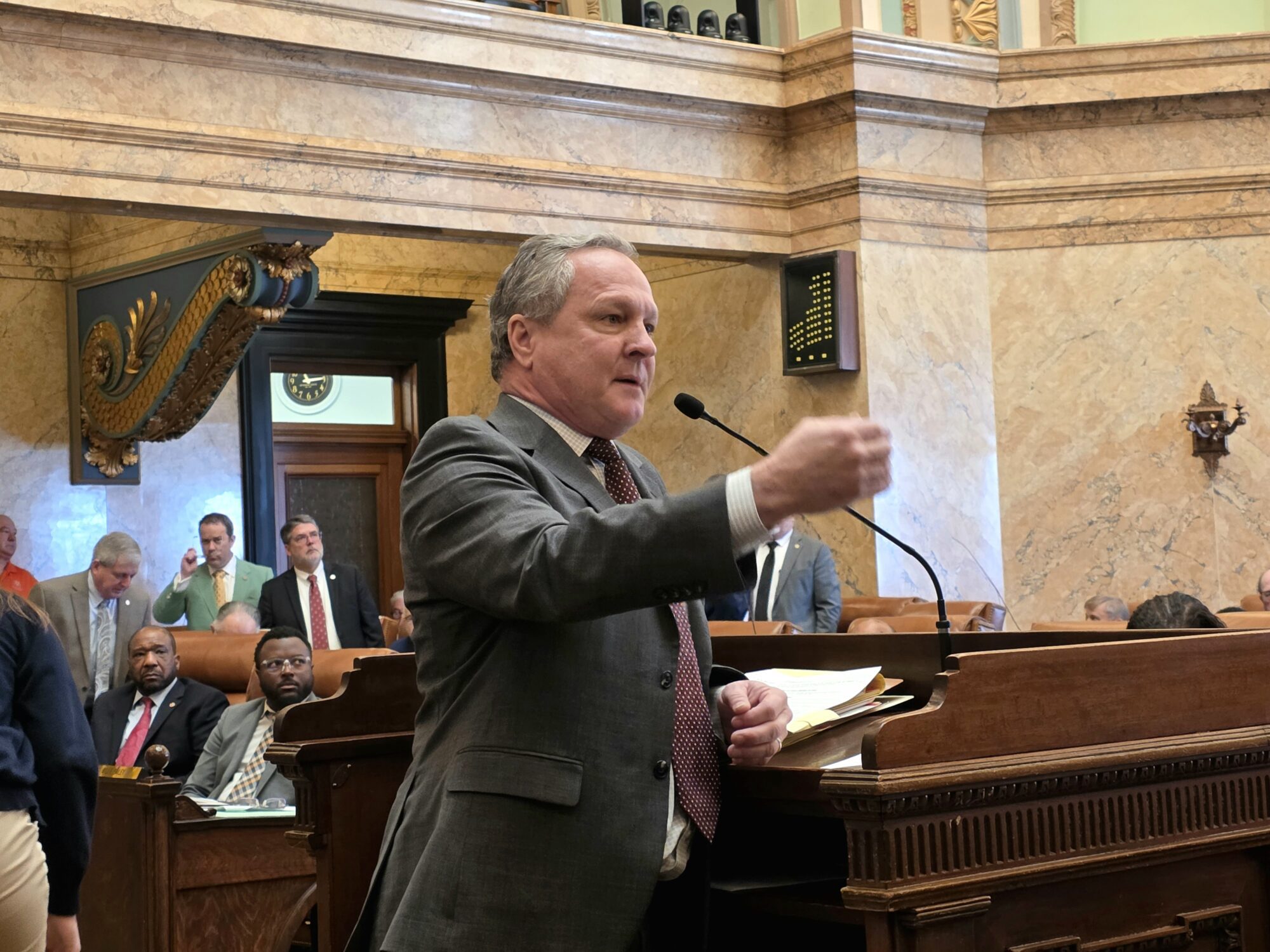
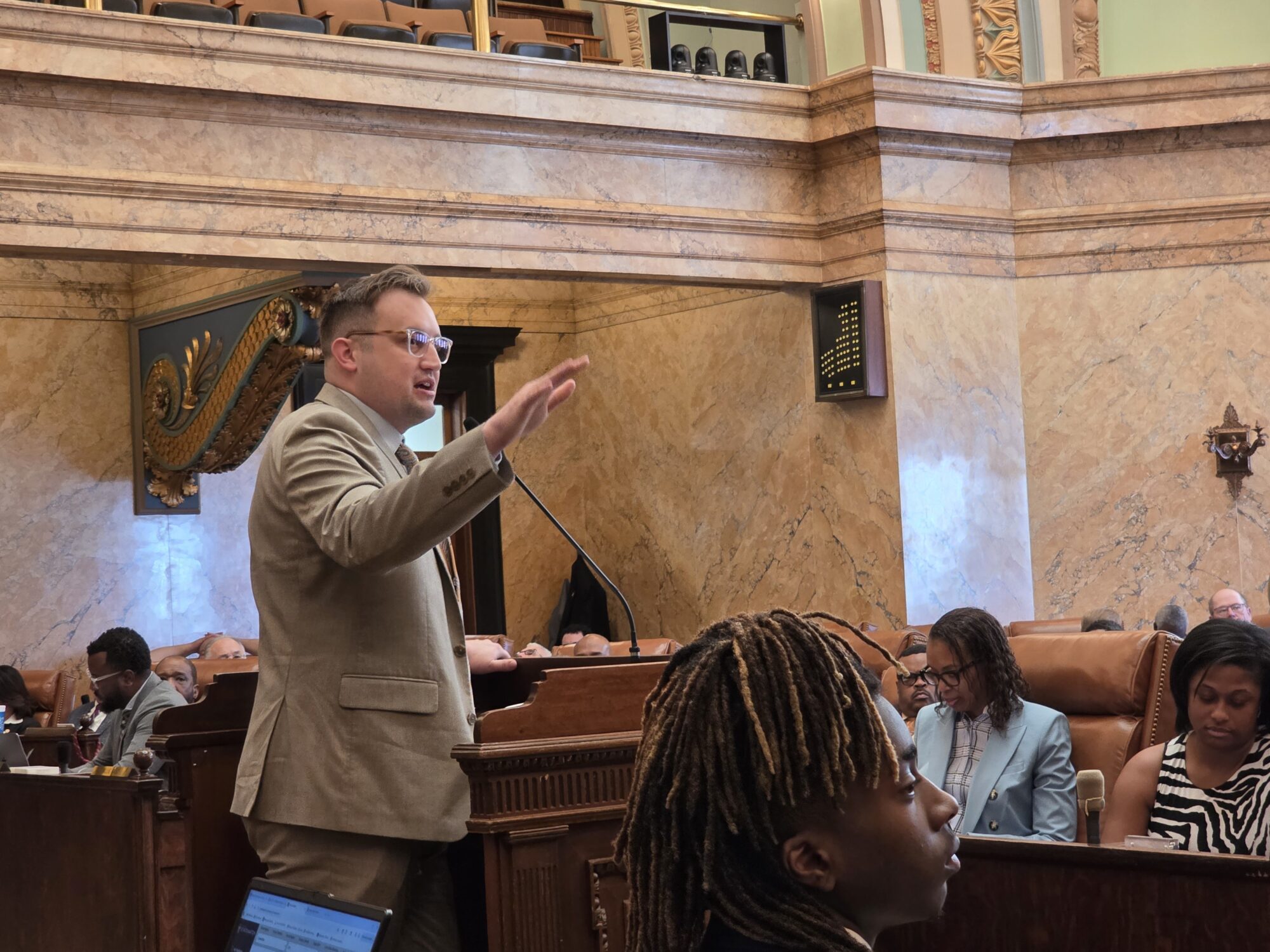
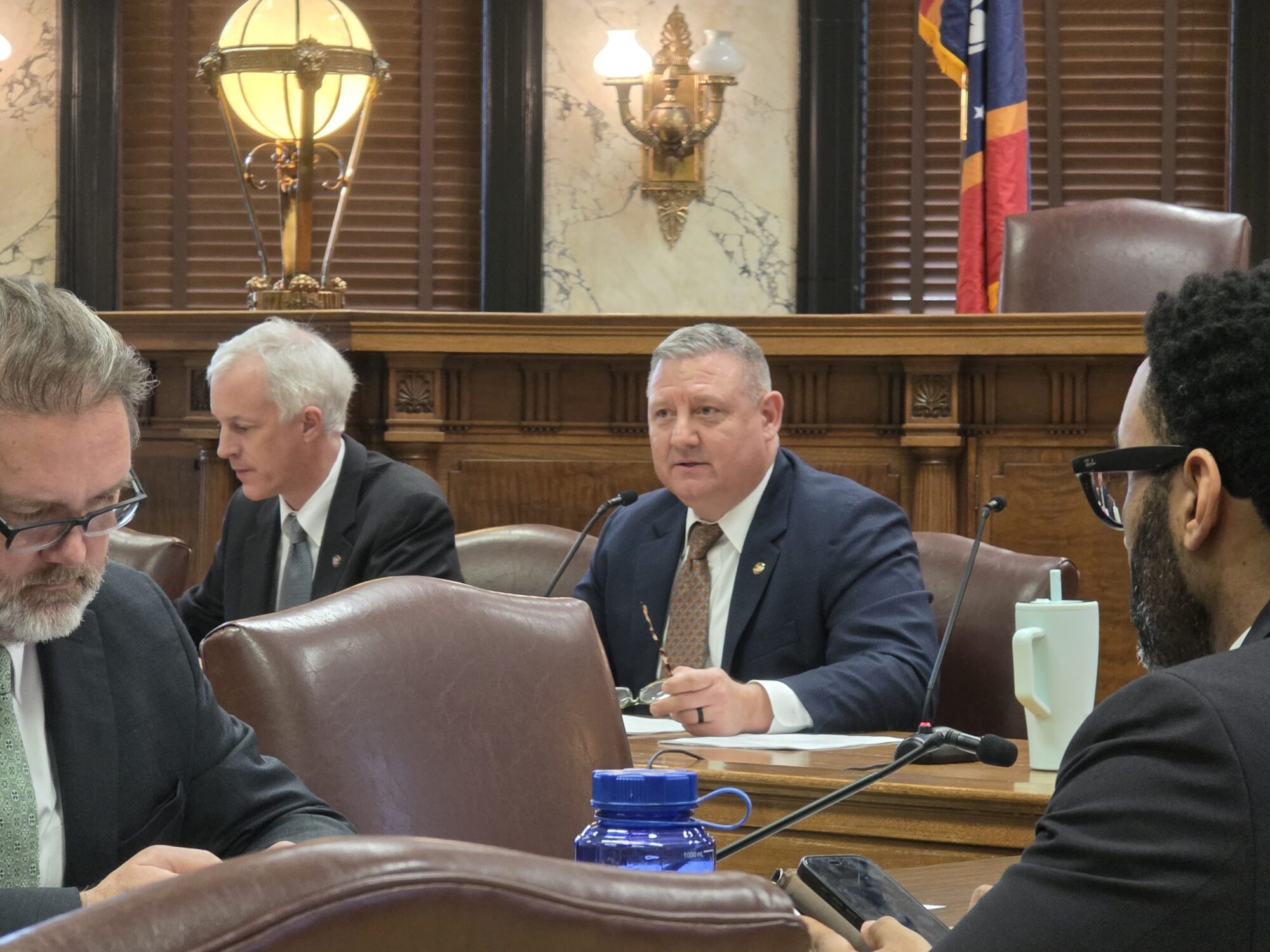
Senator Dennis DeBar (R) presents his amendment to a strike-all of HB 1395, which proposes teacher pay raises over the next three years. Photo by Jeremy Pittari | Magnolia Tribune
- Teachers would receive $2,000 annually for three years, for a total increase of $6,000. Special education teachers would receive $3,000 annually for three years, for a total increase of $9,000.
The Mississippi Senate is countering the House’s $5,000 teacher pay raise with a $2,000 scaled approach over 3 years.
Through a strike-all amendment to HB 1395, the Senate now proposes to provide $2,000 pay raises to teachers each year for three years, for a total pay increase of $6,000.
Senate Education Committee Chair State Senator Dennis DeBar (R) brought the amendment forward as it was proposed by State Senator David Blount (D)Wednesday.
Blount’s amendment to the House bill extended the time a charter school would have for last right of refusal on purchasing a shuttered public school building. His strike-all increased that time from the House’s language of 90 days to the Senate’s preferred 12 months.
Debar’s amendment included the $2,000 teacher pay raises over 3 years. It also included raises for special education teachers and teacher assistants. Special education teachers would receive an additional $3,000 increase over three years, for a total additional raise of $9,000 above the general teacher pay raise.
The House had proposed a one-time $3,000 annual raise for special education teachers.
Under the Senate amendment, assistant teachers, community college instructors, and university professors would see a one-time $2,000 raise.
“Now that is quite a bit, but however, keeping the budget in mind and how we had to focus on meeting our constitutional duty of a balanced budget, we are not doing that all in one year,” DeBar added when describing the bill.
This means the base teacher pay will increase from the current rate of $41,500 to $47,500 by the end of the three years. DeBar said estimates show the increase to the education budget would be about $328.5 million over the course of the three years, or about $109.5 per year.
“That way teachers have an idea for the next three years what their salary is going to be instead of doing a one year pay raise,” DeBar explained.
At the beginning of this session, the Senate introduced SB 2001, which proposed a one time raise of $2,000 to teachers. DeBar said the intention was to increase that amount as the bill worked through the process.
“On day two of this legislative session, the very first bill the Senate passed was a standalone teacher pay raise. Now, we are once again advancing a clean teacher pay raise for the educators who are shaping our future,” Lt. Governor Delbert Hosemann (R) said after the Senate gaveled out. “This phased implementation is critical to balance the budget as the Constitution requires us to do. Further, a teacher pay raise must not be held hostage by multiple other political issues.”
The strike-all version of the bill does not include any additional provisions.
“We put a lot of thought into this,” DeBar said. “Like I said, we would like to do more on the front end, but being cautious and prudent as we do over here in the Senate, this is what we came up with.”
The raises would go into effect July 1, if the House concurs with the Senate’s version of the bill.
Should school districts fail to provide the assistant teacher pay raises, penalties would be levied in the form of funding formula reductions for each day the law is violated. Additionally, the teacher pay raises are being left out of the state’s education funding formula to ensure the additional funds are not used improperly.
“We want to make sure the money goes to the teachers so that’s why we keep it outside the formula,” DeBar explained when asked why the money was separate.
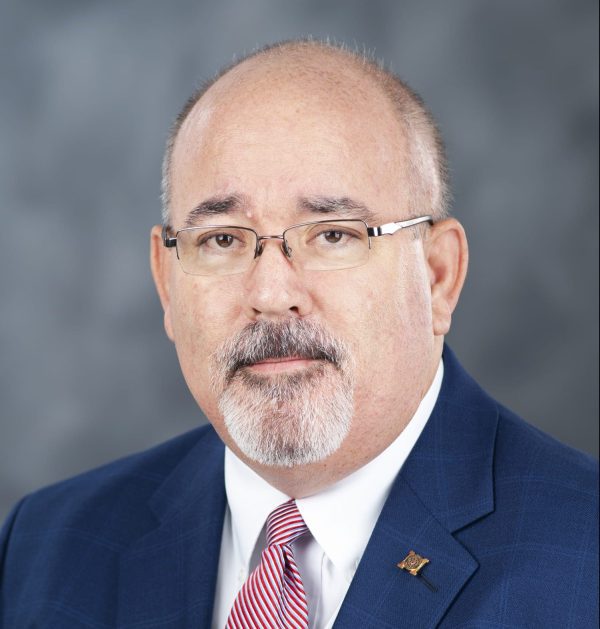
State Rep. Rob Roberson (R), Chair of the House Education Committee, said he plans to work with the Senate on this issue.
“I’m very pleased that the Senate has passed a meaningful teacher pay increase and I am looking forward to looking closer at their proposal,” Roberson told Magnolia Tribune on Wednesday. “I would prefer that it not be drawn out for three years, however we will look at it and work with the chairman and Senate leadership to find common ground.”
When asked if changes to the state retirement were also included in the bill during discussion in the Senate, DeBar said that topic is not included, but it is his understanding another committee chair is expected to take up that matter soon.
The included changes to PERS in their proposed teacher pay raise passed unanimously last week.
“We are not done with our work on PERS and remain committed to securing a large cash infusion to address the unfunded actuarial liability, lowering the years-of-service requirement for all state employees, increasing return-to-work benefits, and funding a cost-of-living adjustment for Tier 5 employees,” Delbert Hosemann said.