Sid Salter
- State Sen. Josh Harkins has introduced legislation to protect the investments of state and local taxpayers in economic development projects that rely on taxpayer incentives.
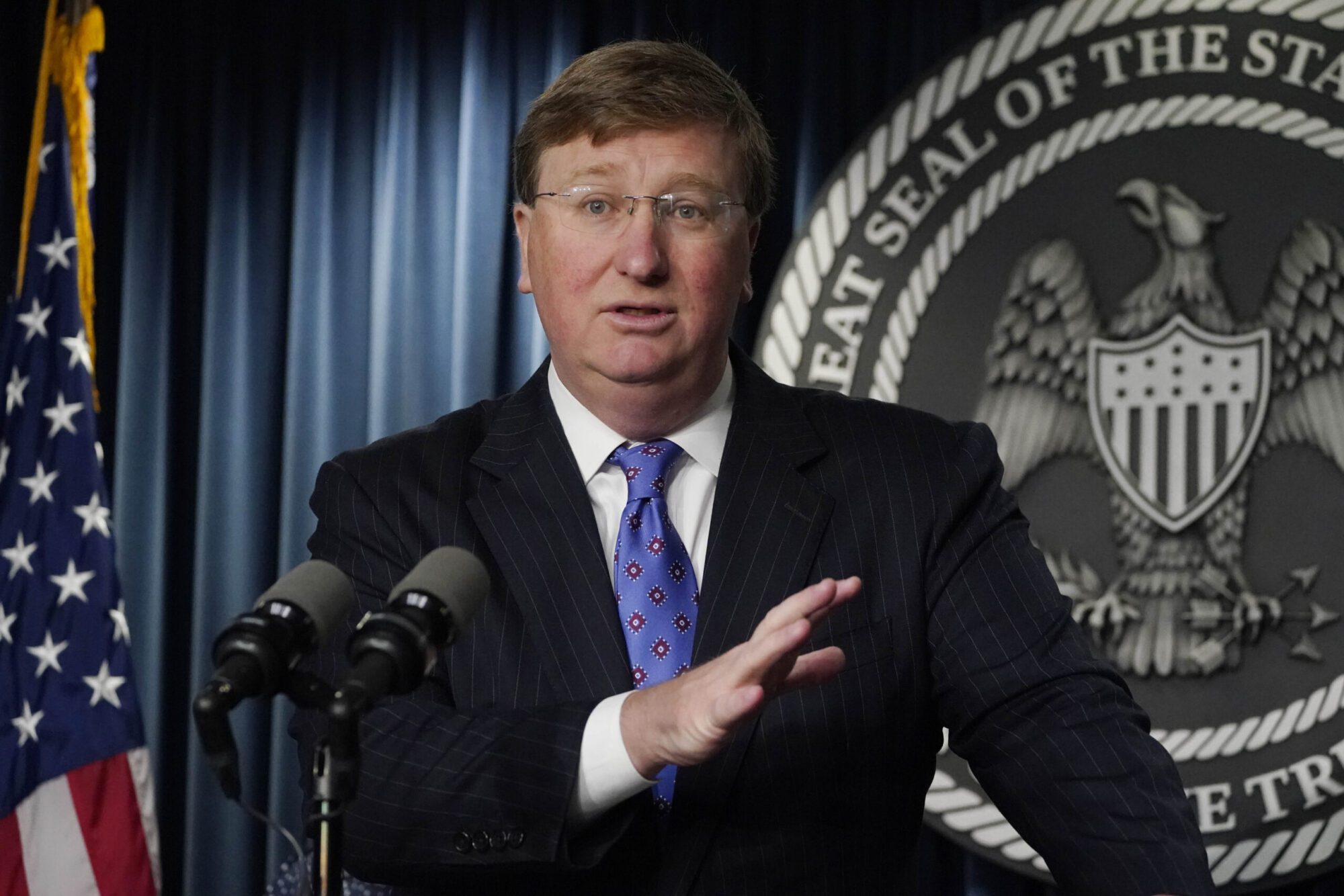
Mississippi Gov. Tate Reeves announced in December that the state will invest over $100 million in economic development projects—projects that have created record-breaking numbers of jobs—funded by Mississippi taxpayers.
As mentioned in a previous column, these projects include the $20 billion xAI Data Center in Southaven, the $10 billion Amazon Web Services project in Madison County, and the $10 billion Compass Data Center in Lauderdale County. Site Selection Magazine’s Alexis Elmore recently noted: “In less than two years, Mississippi has captured the three largest capital investment projects in the state’s over 200-year history.
“This wasn’t a matter of faltering on legacy industries—such as advanced manufacturing; aerospace & defense; agriculture; automotive; chemicals; distribution & logistics; energy; and forestry—but rather embracing a technology-driven economy…(t)he most enticing tool on hand when it comes to securing multi-billion-dollar investments? In Mississippi, it comes in the form of incentives,” Elmore observed.
The same was true when Mississippi competed with other Southern states for high-tech jobs in automotive manufacturing, as the old Detroit-based car-building jobs moved south partly due to rising union-influenced labor costs.
Democratic and Republican state leaders urged taxpayers to incentivize those jobs, and they did. Labor unions followed those jobs south, eager to replace the union dues they had lost in Detroit.
However, the U.S. Bureau of Labor Statistics reported in 2023 that “union membership in the South has been declining, reporting that unionization in the South was 4.5%, which is more than 8 percentage points lower than the national average. South Carolina had the lowest union membership rate in the country at 2.3%.
“Some states in the South, like Florida, Mississippi, Virginia, and Louisiana, have seen a decline in union density. Unions in the South face many challenges, including a culture that resists collective bargaining, right-to-work laws, and political leaders who are hostile to unions,” the agency said.
Mississippi is a right-to-work state. However, that hasn’t prevented Mississippi from thriving in developing automobile manufacturing over the past 25 years, producing well over half a million new vehicles annually, according to the Mississippi Development Authority.
Now, Rankin County Republican State Sen. Josh Harkins, who chairs the Senate Finance Committee, has introduced legislation to protect the investments of state and local taxpayers in economic development projects that rely on taxpayer incentives. The bill ensures that Mississippi workers are entitled to a private ballot for any unionization vote.
In a recent op-ed, Harkins explained: “Senate Bill 2202 is straightforward: for companies that choose to accept future state economic development incentives, any decision about union representation should be made through a private, secret-ballot election. The bill does not prohibit employees from organizing. It does not outlaw unions. It does not interfere with an employee’s right to choose union representation if a majority wants it. It simply sets an expectation that the decision is made in a way that protects (worker) privacy.”
The bill also addresses so-called “neutrality agreements” that restrict information during unionization efforts. Harkins says his goal is to “level the playing field.”
Georgia, Tennessee, and Alabama have enacted legislation to protect taxpayer investments in economic development projects. Organized labor criticized the leaders of those states, citing federal labor relations laws that previously protected union organizers.
Harkins’ bill requires companies that voluntarily accept taxpayer-funded economic incentives to ensure secret-ballot elections for union activities related to those incentives, or risk losing those benefits.
“It is limited to future incentive agreements and future organizing efforts tied to those incentives. Existing collective bargaining agreements, currently unionized workplaces, and subcontractors are not affected. The bill follows Mississippi’s long-standing practice of attaching performance and compliance standards to public incentive packages,” Harkins said.
“States regularly condition incentives on job creation thresholds, wage benchmarks, capital investment commitments, and regulatory compliance. These guardrails aren’t symbolic — they protect the integrity of the state’s return on investment and give policymakers and taxpayers a clear way to evaluate risk and accountability.”
Taxpayers on the hook for economic development incentives will welcome that protection.

Sid Salter