Lawmakers look to establish Hepatitis C, HIV Treatment Program for inmates
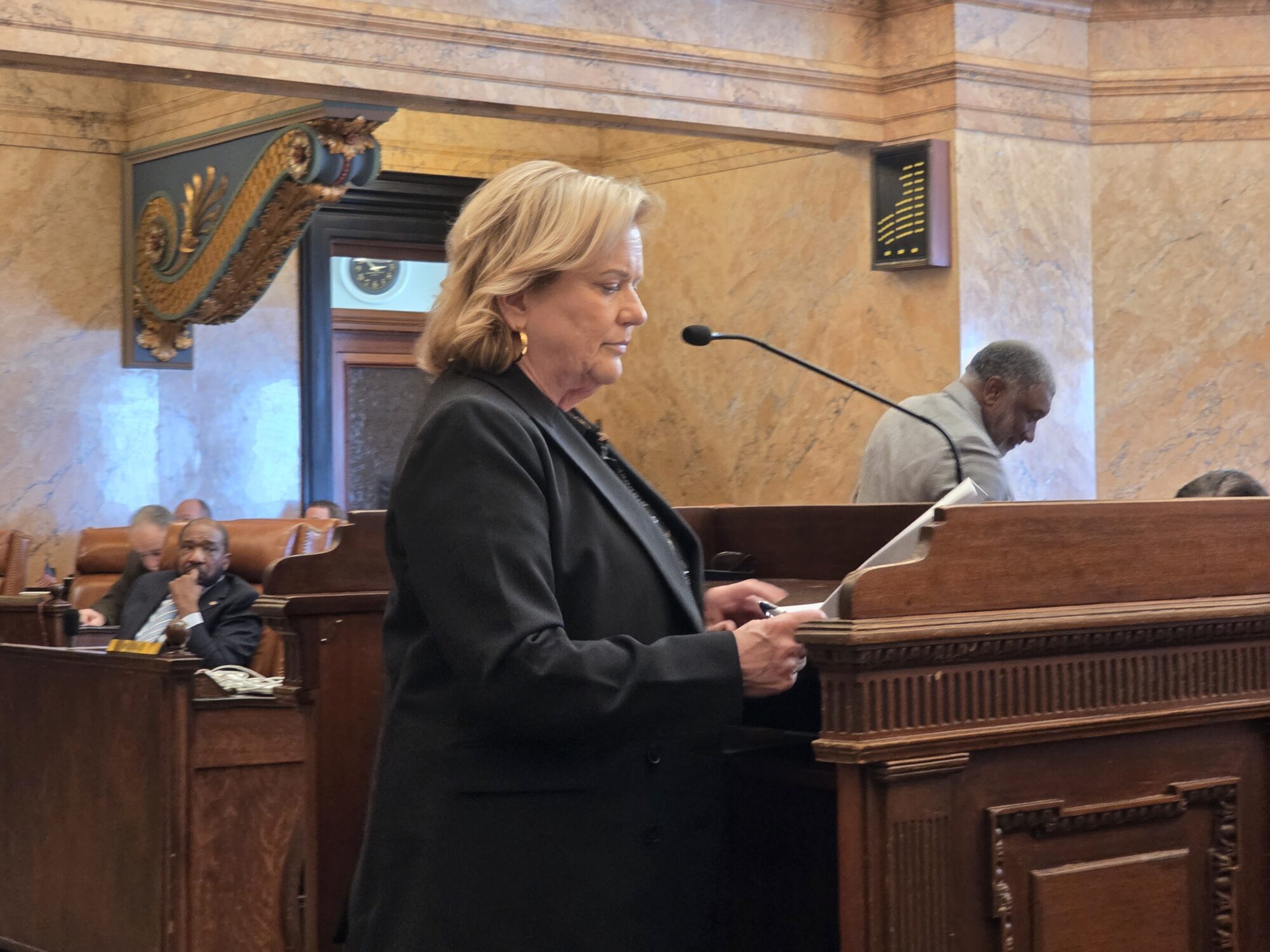
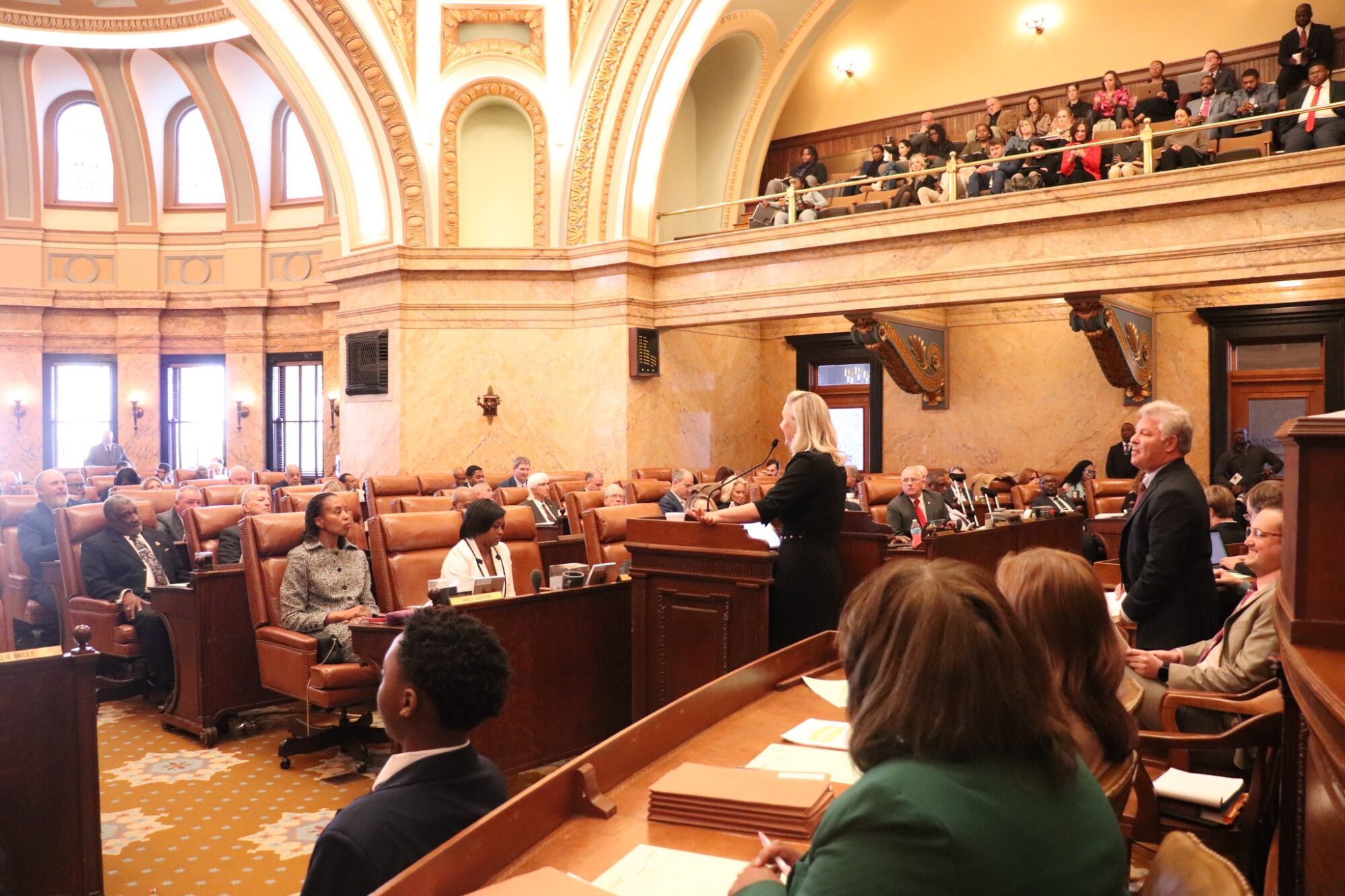
Rep. Becky Currie prepares to describe HB 1744 on the floor of the House of Representatives on Feb. 12. The bill aims for the creation of a comprehensive plan to provide care to state prison inmates who have Hepatitis C, HIV and a program to provide for the health of female inmates. (Photo by Jeremy Pittari | Magnolia Tribune)
- State Rep. Becky Currie said acting now is important as the spread of communicable diseases would cost the state more in the long run.
A bill that mandates the Mississippi Department of Health and Mississippi Department of Corrections to establish a comprehensive plan for the health of state inmates passed in the House of Representatives last week.
Under HB 1744, the two state departments would be required to develop a Hepatitis C and HIV program along with a women’s health program, with the intention of using grant funds to pay for the needed medication. The plan would be presented to the Legislature.
State Rep. Becky Currie (R), the bill’s author, said there are grant opportunities to at least help cover the costs of the Hepatitis C medication.
“There are so many grants out there. There was one this past year that a rehabilitation center got in Oxford from the federal government. They received $2.5 million for Hep C and I have no idea how they got that,” Currie told her colleagues in the House. “I mean, they were awarded the grant. I don’t know how they can spend money.”
State Rep. Kevin Felsher (R) asked how the bill ties in with VitalCore’s currently offered services. VitalCore is the company contracted with the state to provide medical services to inmates.
“Well, they’re supposed to be doing this,” Currie said. “I’m giving grace right now because after it came up last year, now they are treating 50 inmates a year that have Hepatitis C. The problem is we have over 5,000. So doing 50 a year is, it’s just nothing truly. They don’t want to handle the problem because it is an expensive problem.”
Currie said the Louisiana State Penitentiary, or Angola, in Mississippi’s neighboring state has been able to receive enough federal grant money to pay 100% for their medication program. She added that Mississippi currently pays $124 million for it’s state inmate medical contract.
“I think there’s ways to get this done that won’t cost the state any more money on the medical contract than we already pay,” Currie said.
Rep. Currie went on to say that there are also other aspects of the current contract not being met, potentially resulting in deaths.
“We had eight people die last week. We will never know what they died of, whether it’s overdose,” Currie explained. “I know two were stabbed, but I have no idea if these patients… if these inmates died from not being treated.”
Currie was also asked by State Rep. Dan Eubanks (R) if testing for communicable diseases is conducted on the inmates as they enter the prison system. She said when an inmate is brought into the prison system there is a timeline for examining the inmate and determining their medication needs. Currie contends that time frame is too long for some, such as those dealing with diabetes.
There is also a 14-day time limit on providing any medications to the inmate, she said. Currie hopes that is something the Legislature will consider when the time come to renew the current medical services contract, especially since the spread of communicable diseases would cost the state more money in the long run.
Currie added that 95% of inmates held in state prisons are eventually released.
“Most of them are getting out and coming into a community near you,” she said.
The bill unanimously passed the House and has been transmitted to the Senate for consideration.