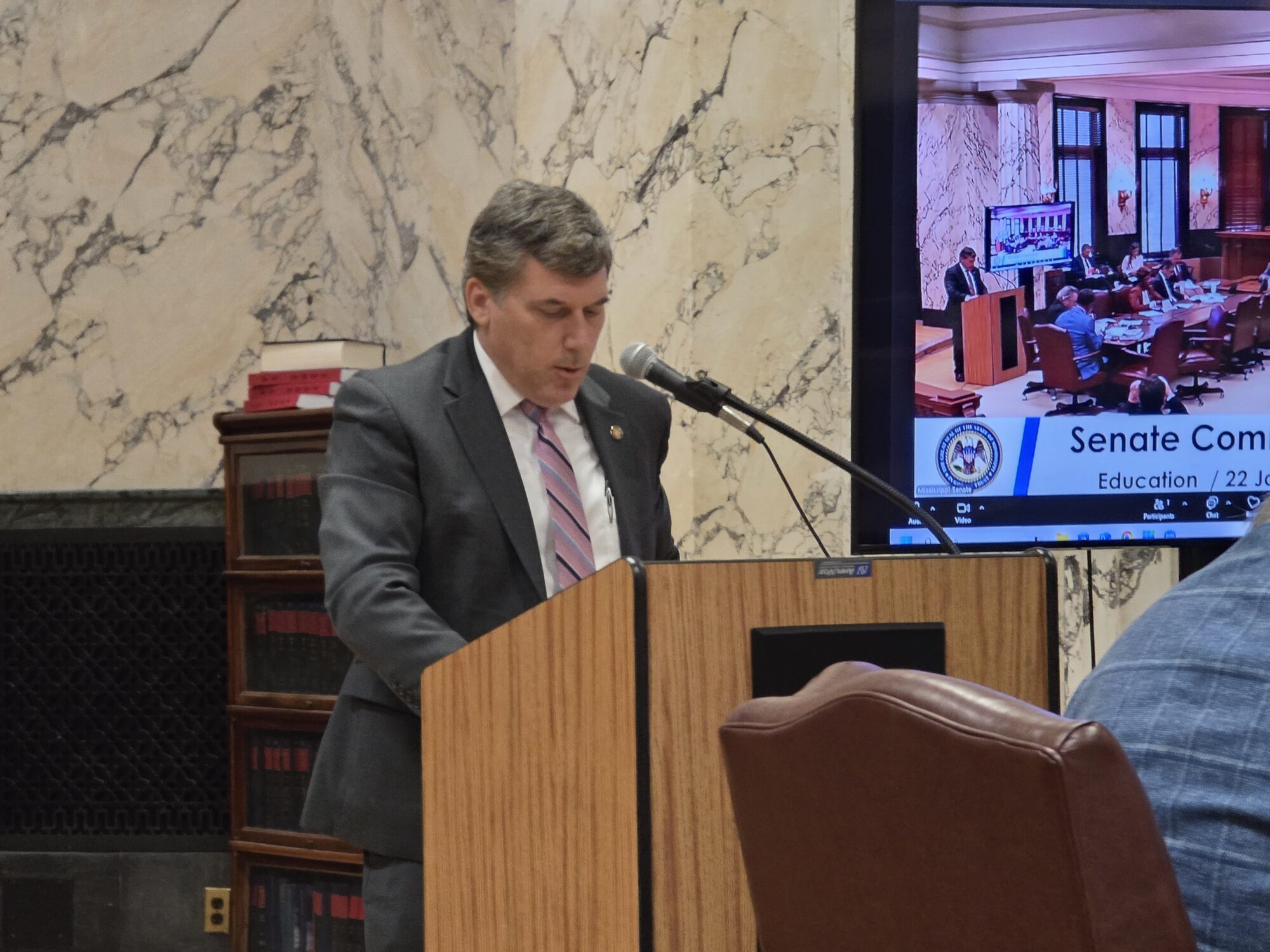
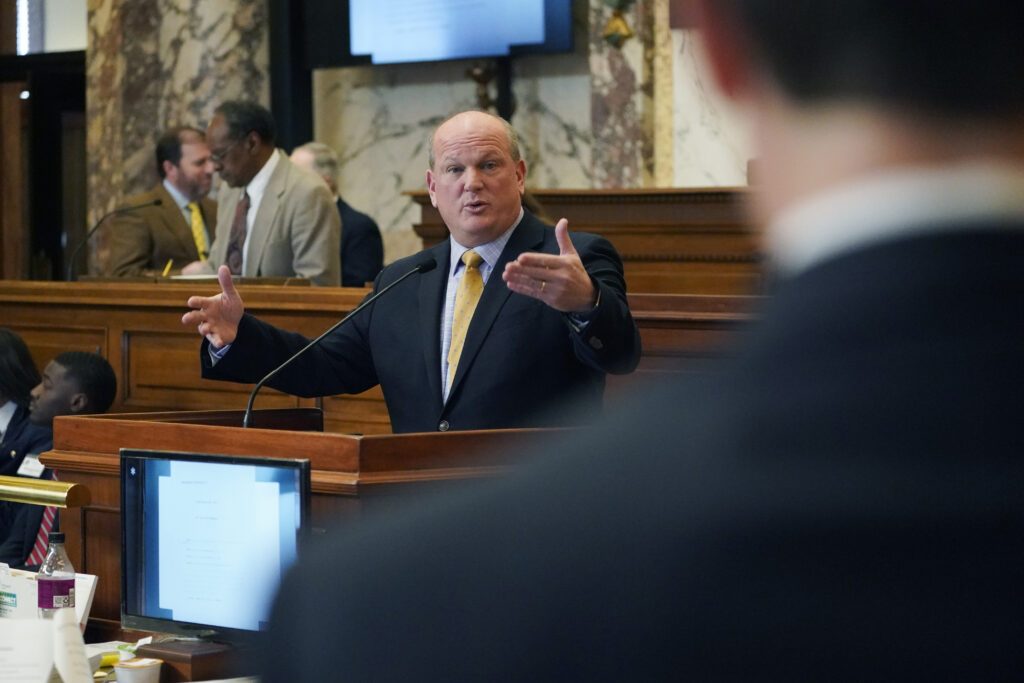
Senator Daniel Sparks (R) describes SB 2483, also known as the J.P. Wilemon Jr. Financial Literacy Act, during a Senate Education Committee meeting held on Jan. 22, 2026. On Thursday, Feb. 5, the Senate sent the bill to the House for consideration by that body's Education and Accountability Efficiency and Transparency committees. (Photo by Jeremy Pittari | Magnolia Tribune)
- Both bills aim to provide Mississippi’s students with valuable lessons in money management and how their government operates.
The Mississippi Senate passed two education bills late last week that aim to increase young people’s knowledge of finances and civics.
The J.P. Wilemon Jr. Financial Literacy Act, also known as SB 2483, would require all high school students to complete a half Carnegie unit course on financial literacy in order to graduate.
State Senator Daniel Sparks (R), author of the bill, said that the requirement would incorporate components of financial literacy into the curriculum for grades 6th through 8th to prepare the students to receive that Carnegie unit in a later grade.
“This is preparing them to complete a half Carnegie unit in either the 9th, 10th, 11th or 12th grade in financial literacy,” Sparks said of the middle school instruction.
Questions were posed during committee discussion of the bill about whether the half Carnegie unit would be in addition to current graduation requirements. Sparks said that will be left up to the Mississippi Department of Education.
“As it relates to a half Carnegie unit, I’m going to leave that to MDE to make sure how they implement that,” Sparks described. “We have a lot of students who when they reach 11th or 12th grade year seem to be going home at noon, and it doesn’t appear there is a lack of time to do these courses.”
Subject matter in the course should focus on earning an income, tax obligations, withholdings, personal savings, cash flow management, financial services, and understanding credit and how to use it.
“And then the last one is very important in today’s world, consumer rights, identity protection and fraud avoidance,” Sparks added.
He said that while it will be up to MDE to determine how the subject matter is taught, the intent is that those skills are not glossed over quickly.
“I don’t want you to roll this in to some existing course for one week of touching on all these subject maters,” Sparks described. “This maters. This is the difference between our people being financially successful. This is the difference between our people accumulating wealth. This is the difference between our people drowning in debt.”
Another bill, SB 2292, would require public schools to incorporate a civics course so Mississippi’s students are versed on how government works.
“This is unfortunately not being taught like it needs to be,” Senator Brice Wiggins (R) said. “It would be a separate course from the government course that is taught in 8th grade.”
Training teachers to provide this high school level course would begin in the 2027-28 school year if the bill becomes law. Content within the course would be determined by MDE, but would have to include factual information about the government and history of the United States, Wiggins added.
An amendment was adopted on the floor before the bill passed that removed “economic democracy” language from the bill and added the requirement that the coursework be factual.
Both bills passed unanimously in the Senate and were sent to the House for consideration.