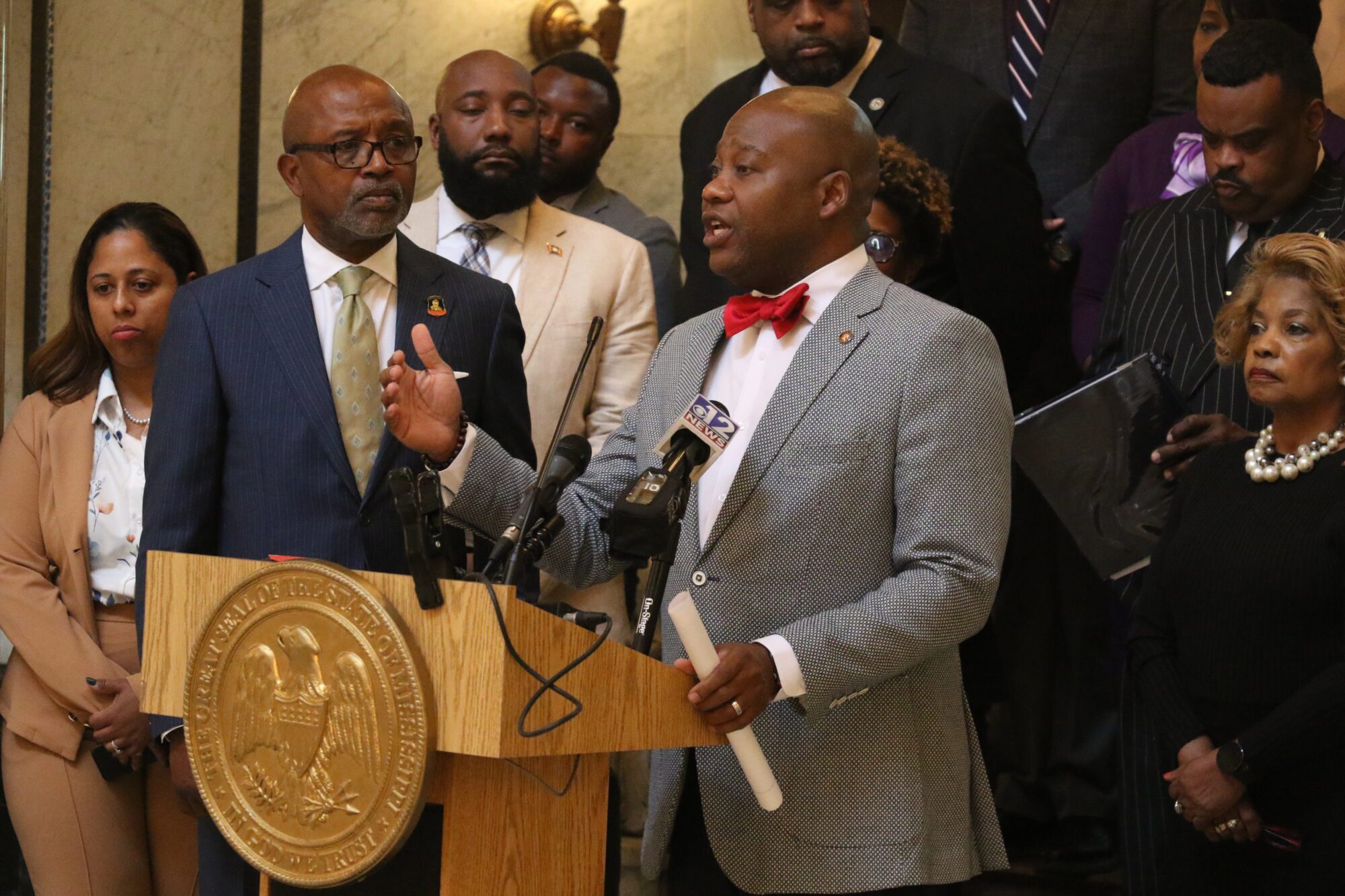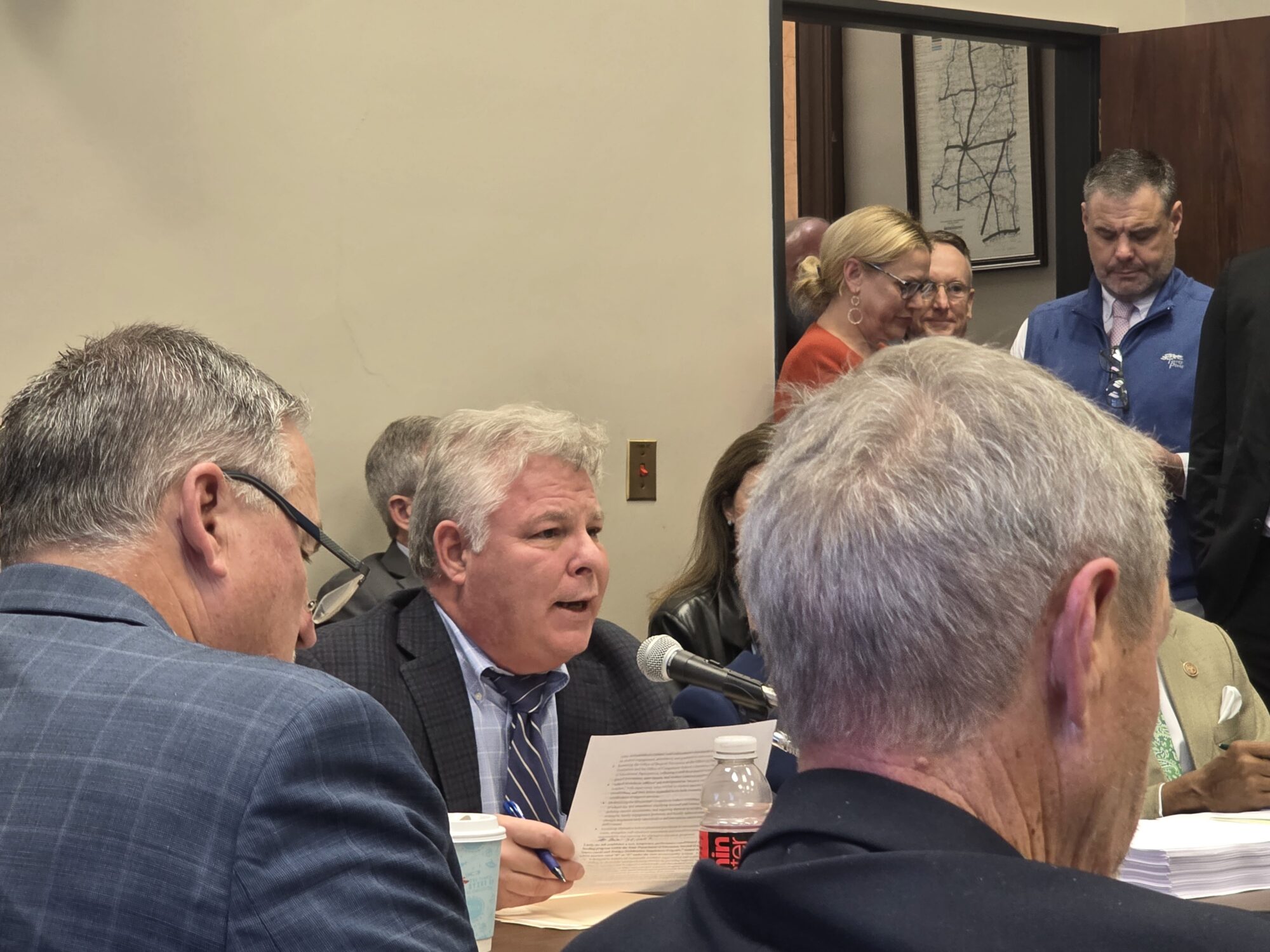
House Education Committee Chair Rob Roberson (R) discusses the changes HB 1126 intends to make to the state's education and retirement systems. Photo by Jeremy Pittari | Magnolia Tribune
- The bill would also revise the state retirement system’s new Tier 5, cap superintendent salaries, and increase pay for school attendance officers, among other provisions outlined in the measure.
A bill that aims to address the ongoing teacher shortage in the state and proposes to address problems with the state’s retirement system under the new Tier 5 system passed out of the Mississippi House Education and Appropriations Committees on Tuesday.
UPDATE: The bill passed on the House floor with a vote of 122-0 on Wednesday afternoon.
Not only would HB 1126 provide a $5,000 pay raise to all certified and licensed teachers in Mississippi, it would also provide an additional $3,000 to teachers working in a special education classroom.
In addition, the measure would create a fund the Mississippi Department of Education could utilize to assist low ranking school districts increase assessment rankings, cap superintendent salaries, revise the retirement system for all state employees, and increase the base student cost outlined in the Mississippi Student Funding Formula.
A pay raise for student attendance officers and a restructuring of the truancy system in the state is also included in the bill.
House Education Committee Chair State Rep. Rob Roberson (R) told Magnolia Tribune the bill is estimated to add an additional $276 million to the state’s education budget. He said the amount of the teacher pay raise was thoughtfully considered.
“This $5,000 number comes from what I felt like we could get as much out of the budget as we possibly could this year,” Roberson explained.
For the provision that adds an extra $3,000 on top of the extra $5,000 for licensed and certified special education teachers, Roberson specified that just having the certification does not result in the extra pay. Rather, the qualifying educator would have to be actively teaching in a special education classroom.
On the superintendent caps, the bill requires that superintendent salaries are structured “in relation to objective professional factors.” Those factors include any licensed credentials, endorsements, and years of relevant experience.
The cap on a superintendent’s salary, inclusive of the local supplement, cannot be more than 250 percent of the salary provided to licensed teachers who have equivalent licensing, credentials and years of experience, Roberson explained. School districts would retain the ability to set the salary at any level below that cap and it would not go into effect until the 2026-2027 school year.
“So, we’re not telling them what the amount is, but it needs to be structured in a way that it’s not something completely outrageous,” Roberson said.
There were no changes to the teacher assistant salary proposed in the bill, but Roberson pointed to HB 2 during the committee meeting which had a $3,000 salary increase for assistants. That bill died in the Senate Education Committee on Tuesday evening. Roberson said he intends to still fight for a pay raise for assistant teachers, but it might not be added into HB 1126.
“Those people deserve a raise, too,” Roberson said on Wednesday morning. “I’m doing everything I can to get them taken care of.”
Changes made to the state’s retirement system (PERS) under HB 1126 would not only apply to educators, but all state employees. The bill would reduce the time of service required to retire from 35 years to 30 for most employees. A special provision for law enforcement officers and other emergency responders reduced the years required from 35 to 25. Roberson said the years for those professions were reduced further due to the stresses to their mind and body.
“To suggest that they would have to work 30 or 35 years, it’s really not a reality,” Roberson said. “Your body is not going to last that long.”
Under the House bill, the base student cost would increase from the current amount of about $6,800 to $7,447.37 to keep up with the rising cost for schools to do business, Roberson said.
There is also a provision to increase the starting salary of school attendance officers to $32,000. The bill leaves those officers under the oversight of the Mississippi Department of Education and places a stronger emphasis on student engagement and graduation rates rather than punitive measures.
Another provision in the bill sets up a conditional supplement funding program that would be called the District Improvement and Teacher Stabilization Supplement Program. It would use about $18 million of the total anticipated funding to help districts that MDE identifies as in need, namely those districts rated a D or F under the state’s accountability system.
“MDE will administer this. They will choose the participating school to keep this out of the political dynamic,” Roberson explained.
The goal is to move those districts up to A or B rankings, in part by stabilizing instructional staff. Roberson said the non-recurring monies under this provision would be tied to benchmarks MDE establishes.
“It’s hard to comprehend, but you’ve got 30 percent of their regular teachers that are subs,” Roberson described of the districts in most need. “You can’t run a school system with subs.”
The intent is to provide assistance to those districts through teacher pay raises and assistance from MDE.
“These are districts that have legitimate issues that we’re trying to give MDE some money to be able to go in and help,” Roberson added. “We’re not just throwing money at the problem, we’re trying to find ways to find solutions for that district.”
Magnolia Tribune will update this developing story once the House takes up the bill.
UPDATE:
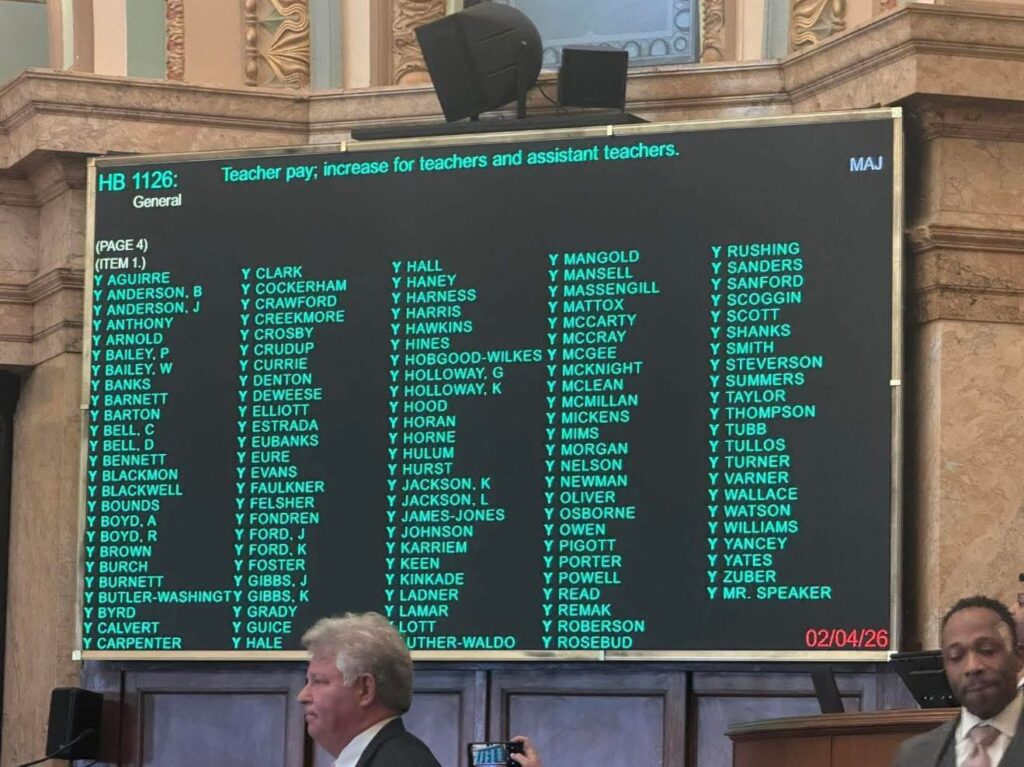
The House unanimously passed this bill on Wednesday afternoon.
It now heads to the Senate for consideration.
———
Editor’s Note: This story has been updated to reflect more accurate predictions on the cost of the bill to the state’s budget and the increase to the base student cost.