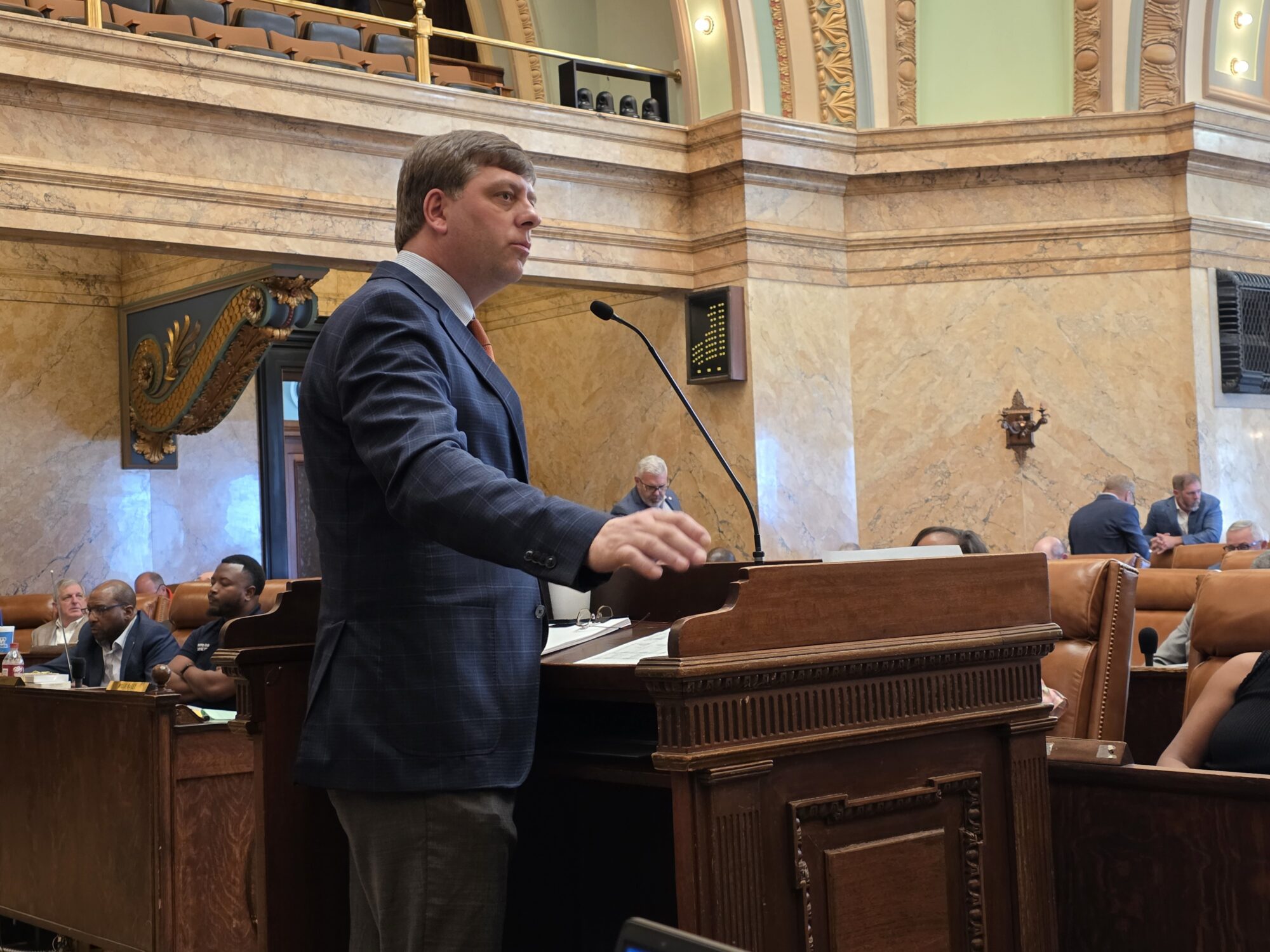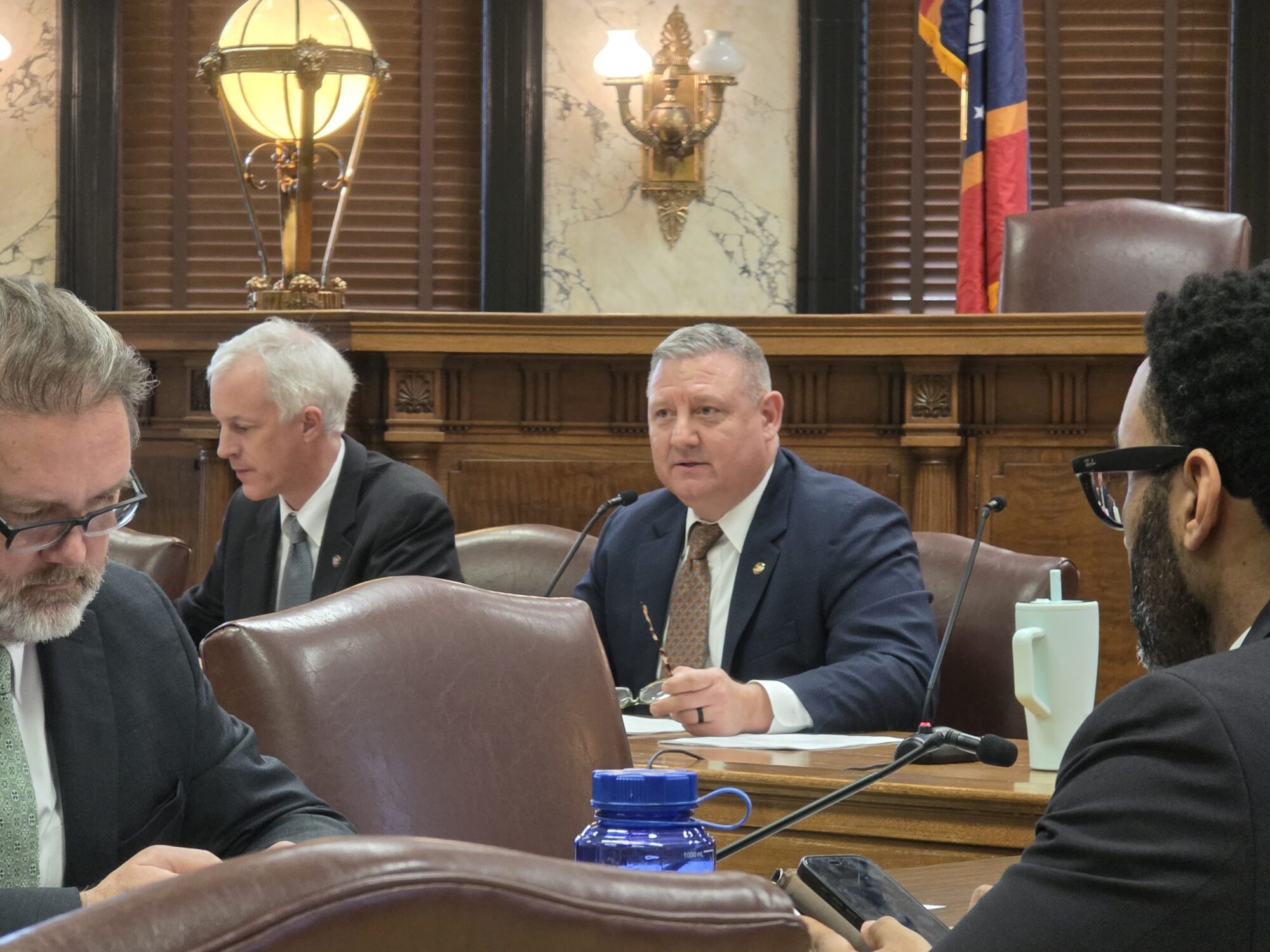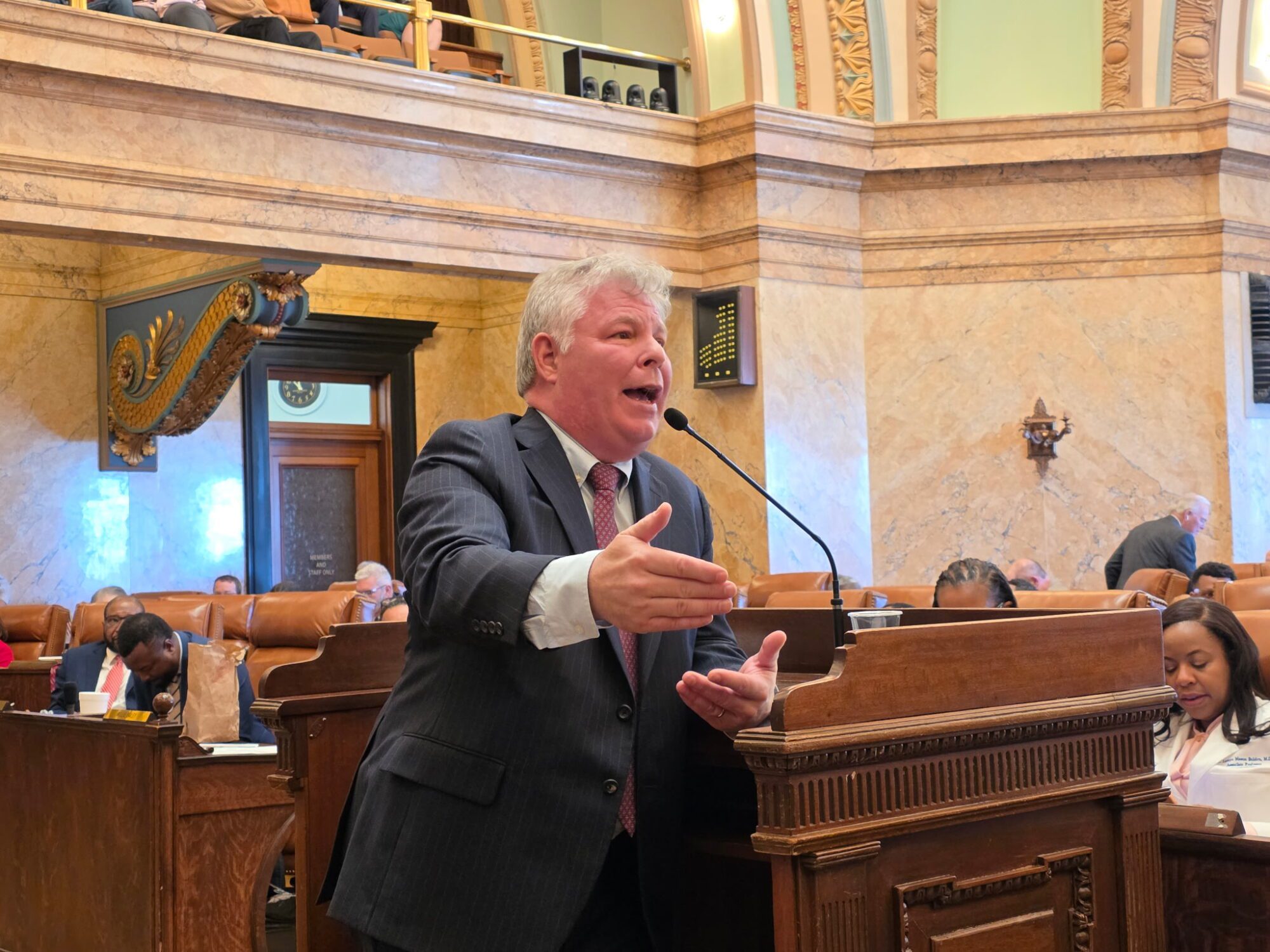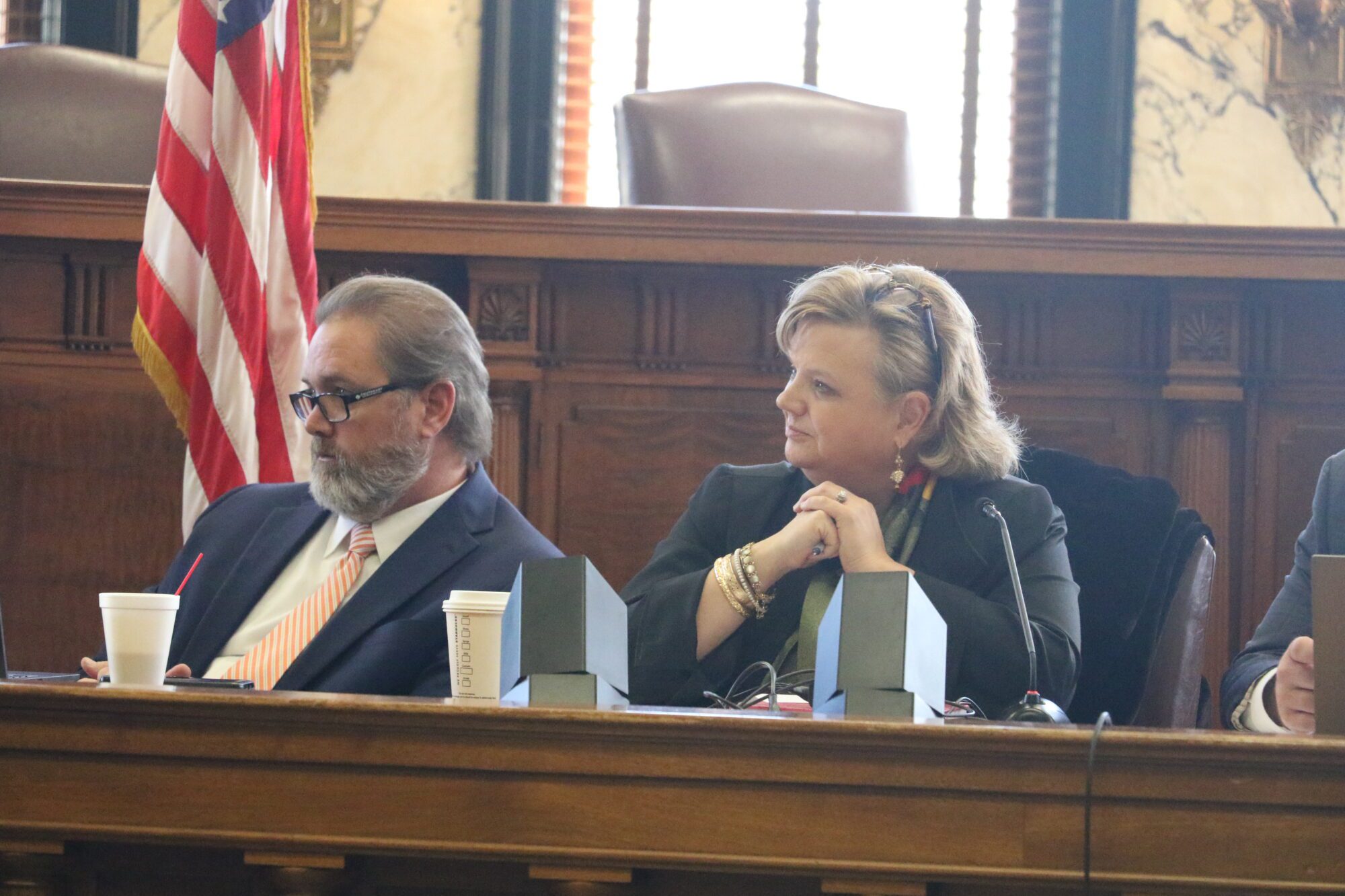
From Left, State Senators Scott Delano (R) and Nicole Boyd (R). (Photo by Jeremy Pittari | Magnolia Tribune)
- One state funded scholarship program focuses on traditional students, while the second is geared toward older, returning students.
Bills passed out of the Mississippi Senate Universities and Colleges Committee this week that seek to ensure the financial literacy of students, amend a current state funded financial aid assistance program, and address workforce shortages across the state by offering aid to non-traditional students.
Higher Education Legislative Plan Grant Program
To open a state-funded scholarship program to more students, SB 2368 removes one requirement from the Higher Education Legislative Plan Grant Program. If signed by the governor, the change to the state-funded scholarship program could open it up to less than two dozen more participants.
The program covers full tuition and fees for students attending community colleges and universities, Jennifer Rogers, Director of State Student Financial Aid, explained. To receive the scholarship, participants must earn a 20 on the ACT, have a 2.5 GPA, and have taken a college preparatory course while in high school.
“This bill would remove the curriculum requirement,” Rogers explained. “And the reason for this request is that more than 98 percent of Mississippi high school graduates already take the required college prep curriculum in order to graduate from their institutions.”
She estimates the requirement change will only add about 20 additional participants to the program, equating to an anticipated cost between $100,000 to $140,000.
Upskill Mississippi Grant Program
Another bill passed out of the Senate committee on Wednesday would address current shortages of key professions in the state by creating the Upskill Mississippi Grant Program.
“Upskill Mississippi is designed to be an incentive carrot, if you will, for students to encourage them into high value career and technical pathways in our community colleges,” Accelerate Mississippi Executive Director Courtney Taylor told lawmakers.
The creation of the program, as outlined in SB 2522, would incentivize non-traditional students to seek careers that are in most need within Mississippi, such as electricians, plumbers, HVAC technicians, industrial maintenance technicians and others.
With non-traditional students often being older than traditional college students, this program focuses on people who are 24 or older who want to change careers. The pilot program would cater to a limited number of participants.
Taylor described the program as a last dollar scholarship opportunity for those students.it would only kick in after they have applied for all other financial aid programs to attend a public community college to seek a degree or certificate. The program provides about $1,100 per student, on average.
“This is a population that does not have a lot of resources outside of federal financial aid if they decide they want to go back to school to advance their careers,” Taylor said.
Participants in the program would be required to seek certification or a degree in a high priority sector.
Rogers added that the program focuses on adults who face additional barriers in going back to college, such as child care, full-time work schedules, and other aspects of life most 18-year-olds do not face.
“We have plenty of Mississippians who are working, but they are working in a field that pays lower than a livable wage,” Taylor added.
Chair of the Senate Universities and Colleges Committee, State Senator Nicole Boyd (R), said the amount of actual funding set aside for the program would be determined by the applicable Appropriations Committee.
Financial Literacy
The committee also passed a financial literacy bill. Unlike previous bills introduced this session, SB 2344 focuses on ensuring college students are versed in the skill.
“One of the things that is abundantly clear in our state, we have a lack of financial literacy,” Boyd said.
Discussions with industry leaders have shown that there is a need for basic financial literacy skills, such as how to deal with student loan debt, fraud prevention, and preparing for retirement. Boyd added that while a number of post-secondary institutions in the state already provide financial literacy, it is not mandatory across all institutions.
“We are going to be asking both our IHL institutions and our community colleges to require their students to complete a financial literacy or demonstrate equivalent financial competency as a condition of graduation, credential completion or certificate attainment,” Boyd explained.
Topics would include budgeting, credit, debt management, how credit scores work, tax obligations, retirement planning, and credit card use, to name a few.
“We are asking that it include applied learning in regard to this and it has to be free of commercial endorsements from different sectors,” Boyd added.
The skills can be learned or demonstrated in a variety of ways, including online, in a hybrid format or even as part of existing courses.
“We are allowing great flexibility at each community college and each IHL system as to how they would choose to incorporate this,” Boyd said.
If the bill becomes law, it would not take effect until fall of 2027.

Jeremy Pittari