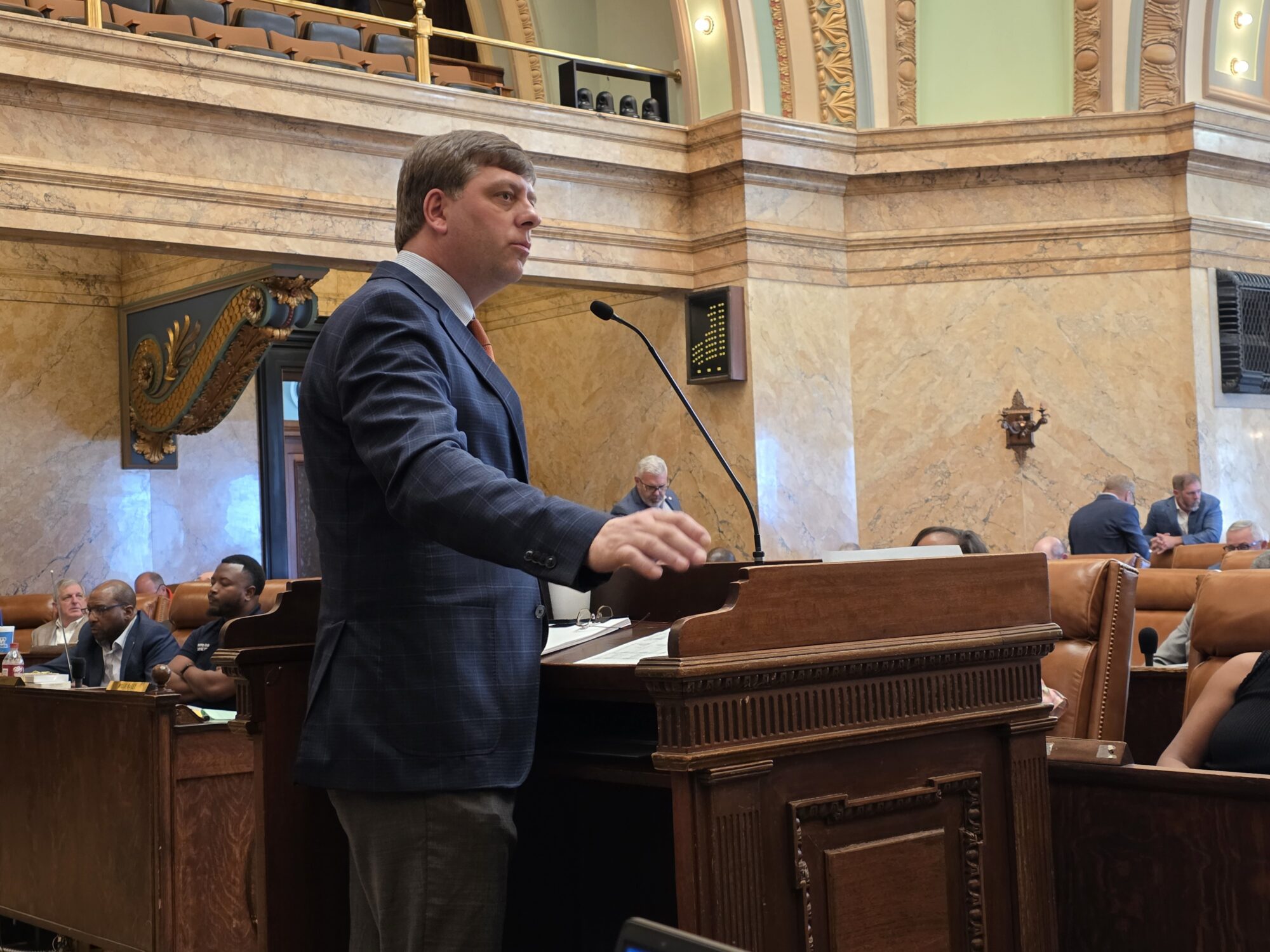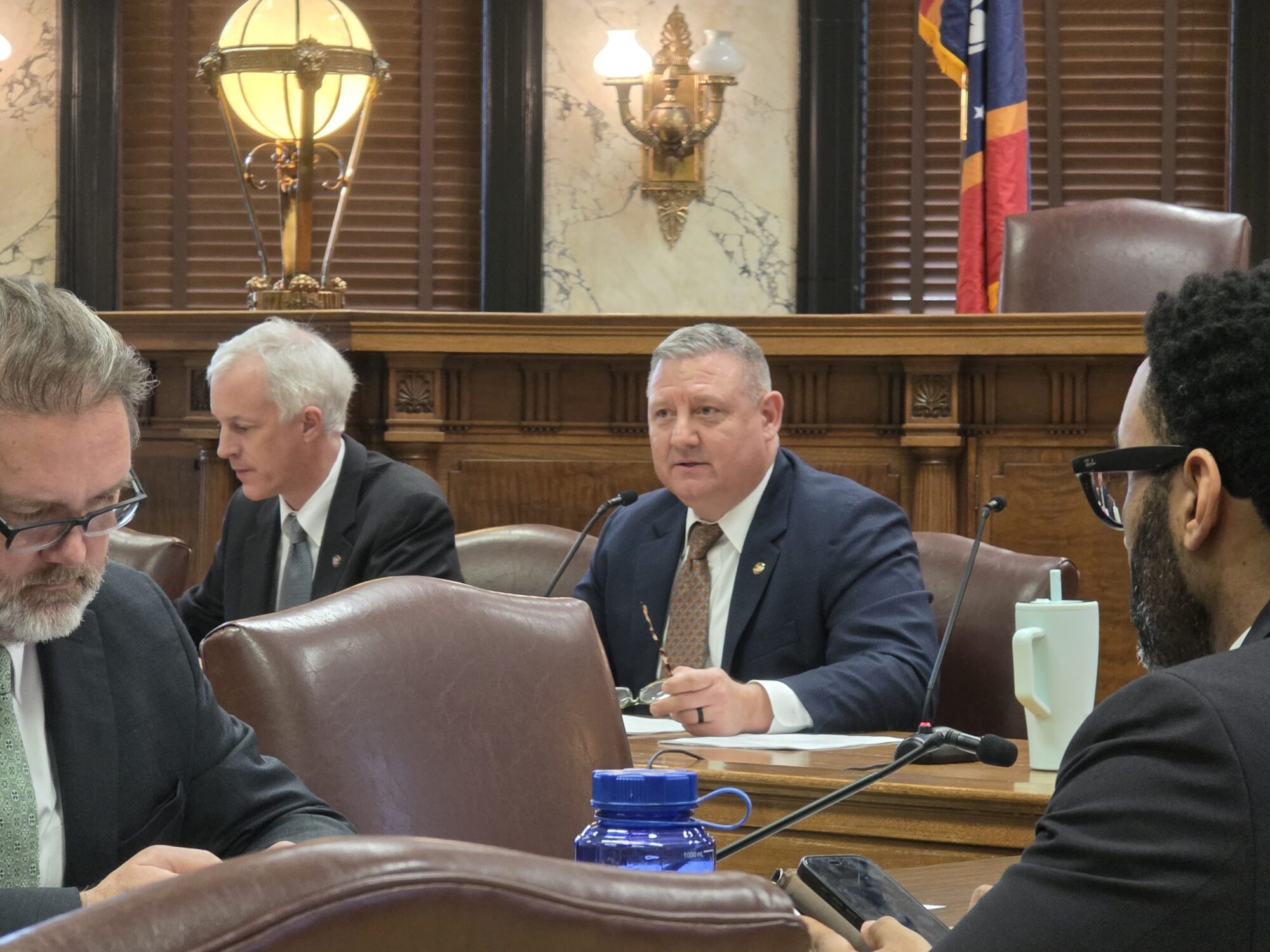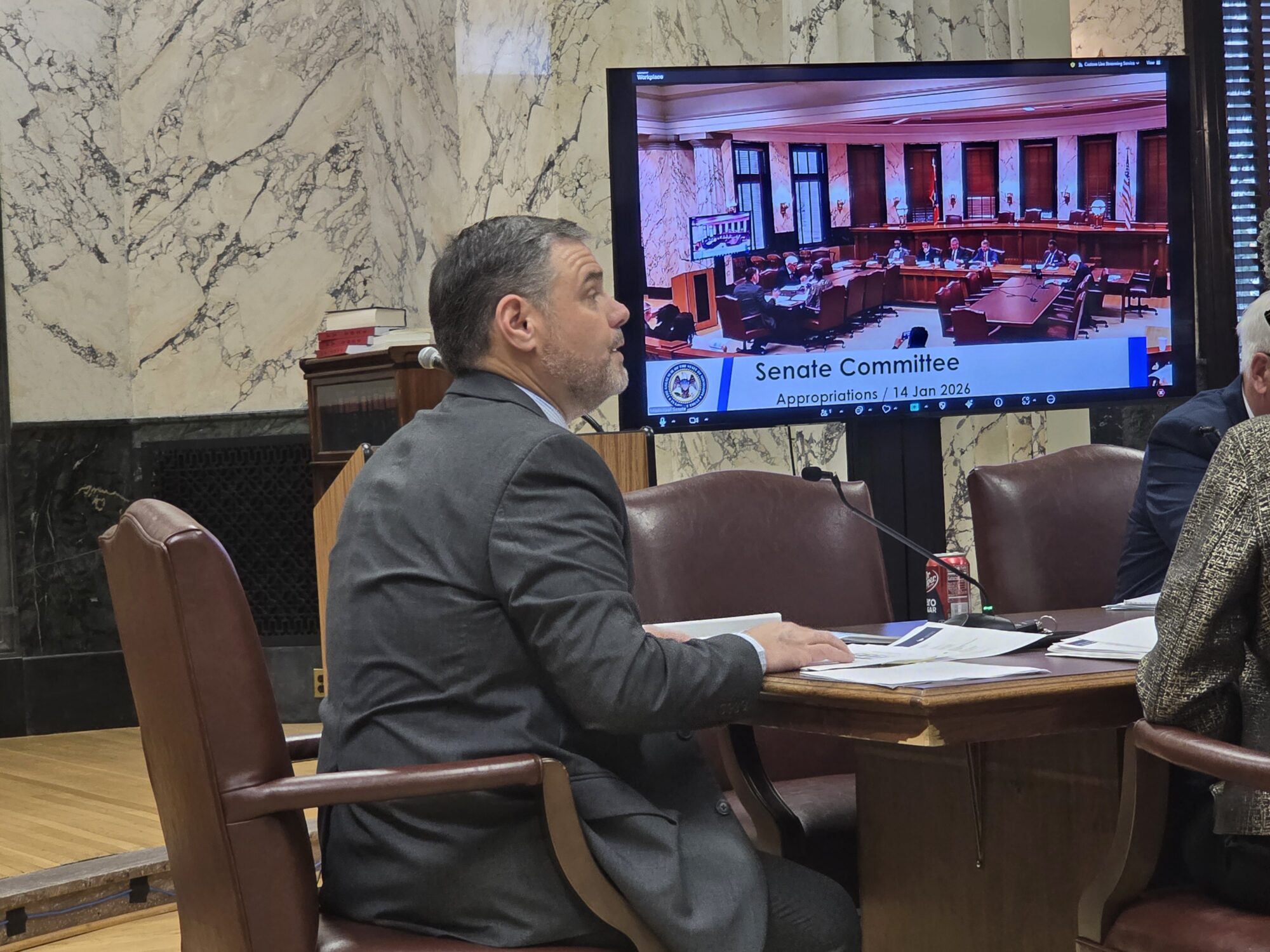
State Superintendent Dr. Lance Evans addresses the Senate Appropriations Committee to submit MDE's budget request during Wednesday's meeting. (Photo by Jeremy Pittari | Magnolia Tribune)
- While the agency requested an additional $50 million in funding for programs, it anticipates $9 million less in MSFF funding due to enrollment decreases, which the State Superintendent attributes to lower birth rates in Mississippi.
The Mississippi Department of Education (MDE) submitted its legislative budget request to the Senate Appropriations Committee on Wednesday, asking for an increase of funding of just under $50 million.
The agency’s total request was for $3.35 billion, a $9 million decrease in total funding from the previous fiscal year. That decrease was attributed to an anticipated reduced amount of funding under the Mississippi Student Funding Formula, in part due to decreasing enrollment.
The nearly $50 million in the requested increase includes an additional $2 million for the Chickasaw fund. The fund is appropriated annually by the Legislature to ensure counties without 16th section lands, such as counties within the Chickasaw Cession area in north Mississippi, have similar funding levels as those with 16th section lands. Districts with 16th section lands typically rent or lease those areas as an extra source of revenue.
An additional $5.1 million was requested to continue the statewide assessment testing, which is state and federally mandated. The funding aims to ensure the testing system’s security through investigations into allegations of cheating or irregularities.
During the presentation, State Superintendent Dr. Lance Evans also explained the request for an additional $316,000 in funding to resume audits on 25 districts for accreditation and accountability standards.
“MDE has not had the funding to send accreditation and auditor review teams into districts and we’ve started to see some problems as a result of not having that funding,” Evans described.
The department reported late last year that it had to take over the Okolona Municipal School District due the inability of that district to make payroll. The district had not filed an audit in the last four years and was in the red for at least the previous school year.
Other program needs for the state department included in the increase request were an additional $6.7 million for the purchase of driver education program equipment, $2.7 million for the reestablishment of a career and college readiness platform, and $3.6 million to help expand the state-funded early childhood education program.
The funds for the early childhood program pay contract workers who provide coaching. That funding request also proposes to add 33 more coaches while also covering the cost of assessment scoring at applicable programs.
Two other requests focused on ensuring students are succeeding in their education, including $3.48 million for a math initiative program to cover salaries and travel for coaches, screener assessment costs along with covering statewide training, and conferences.
The other student success request was $9 million for the implementation of an adolescent literacy initiative.
Dr. Evans addressed the anticipated $9 million decrease in MSFF funding, attributing the lower projected funding to a decrease in the state’s birth rate.
“We basically saw a net decrease of 7,224 students in the state of Mississippi in K-12. Now you might ask the question, ‘Where are those students going?” Evans told the senators. “That’s a fair question. And my response to that would be, well we know, we have lower birth rates, not just in Mississippi but across the entire country. I don’t attribute that to 7,224 students going to private schools or going homeschool.”
He also noted the ongoing population decrease that has been occurring within Mississippi.
Dr. Evans asked the Senate committee to consider adjusting the percentage of the day missed in which a student is considered absent. Mississippi, he said, is the only state in the nation to count a student absent as those who missed 63 percent of the day. Every other state, Evans said, uses the threshold of 50 percent of the day as a student being absent.
“So, we’re holding ourselves to a higher standard,” Evans added.
Both chambers at the Capitol are holding budget hearings with state agencies as they prepare appropriations bills to formulate a Fiscal Year 2027 state budget that will be adopted later this session.