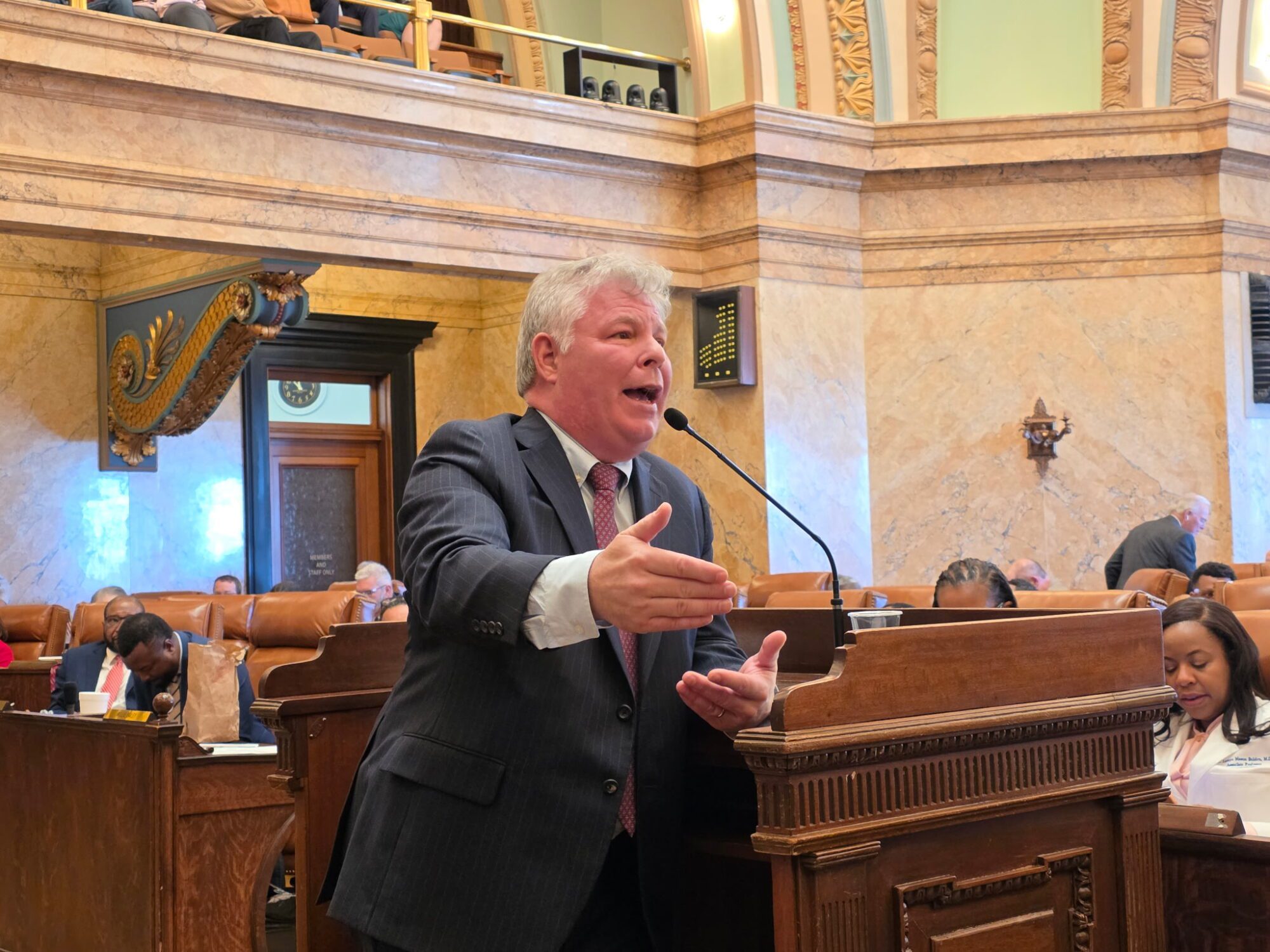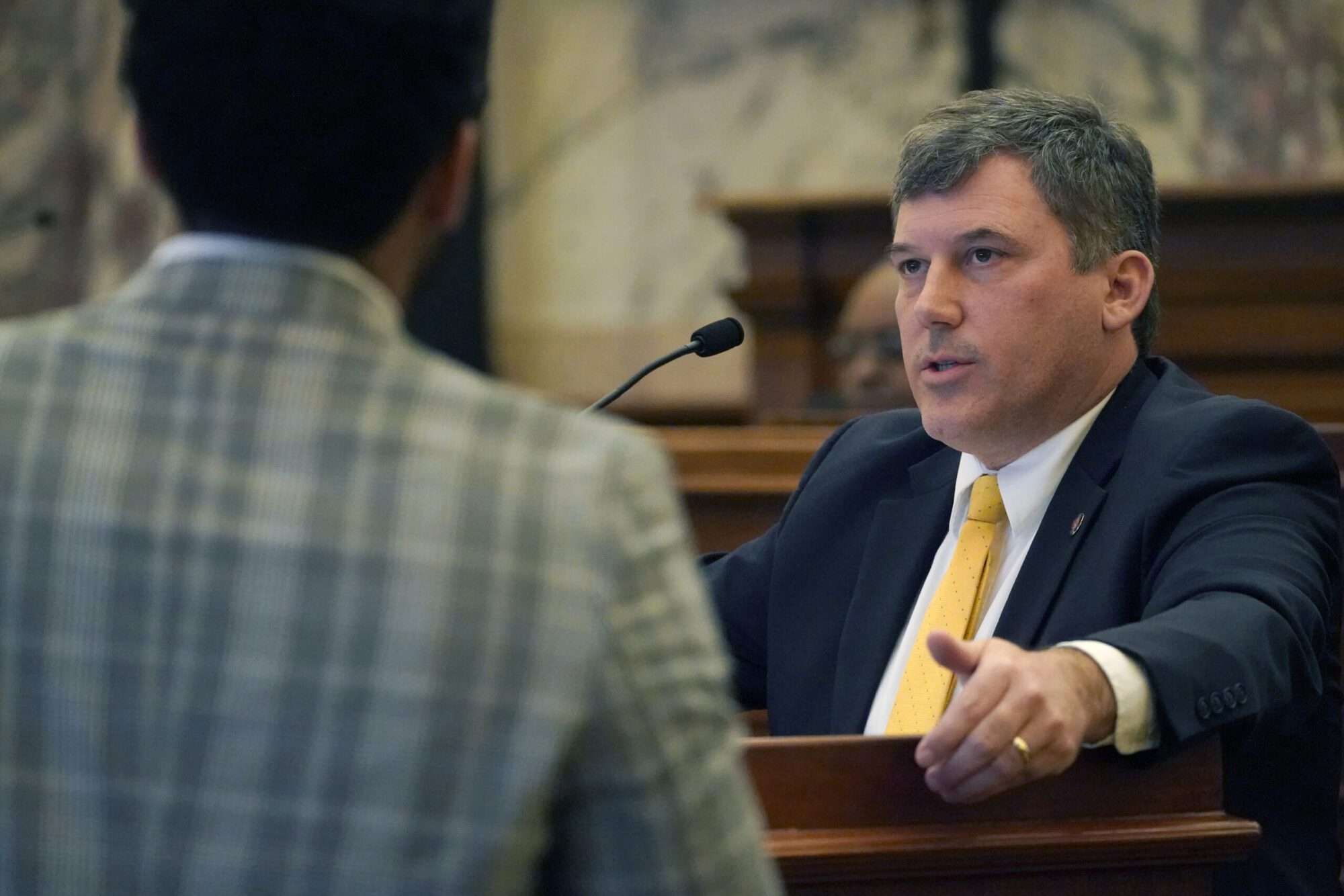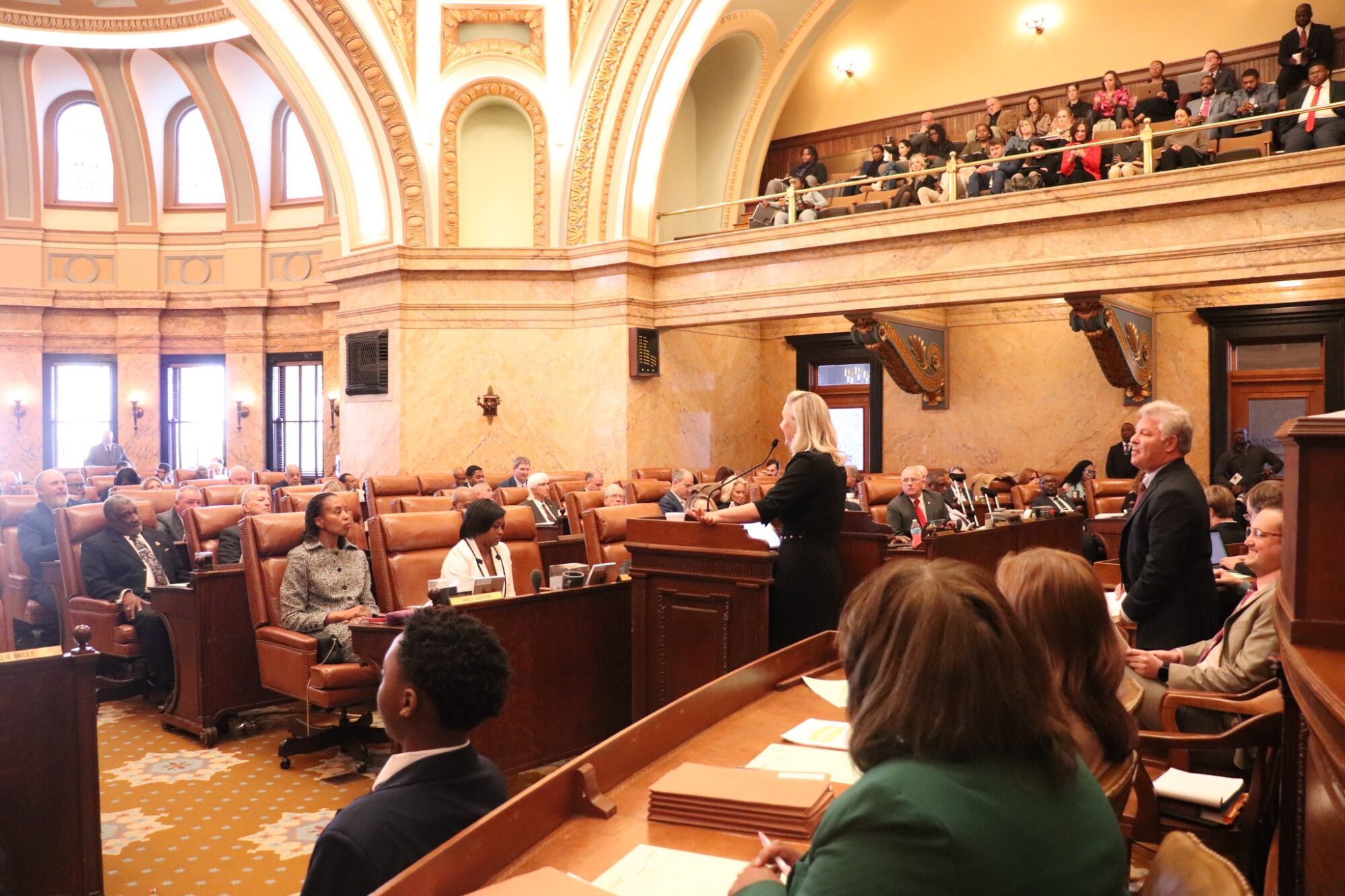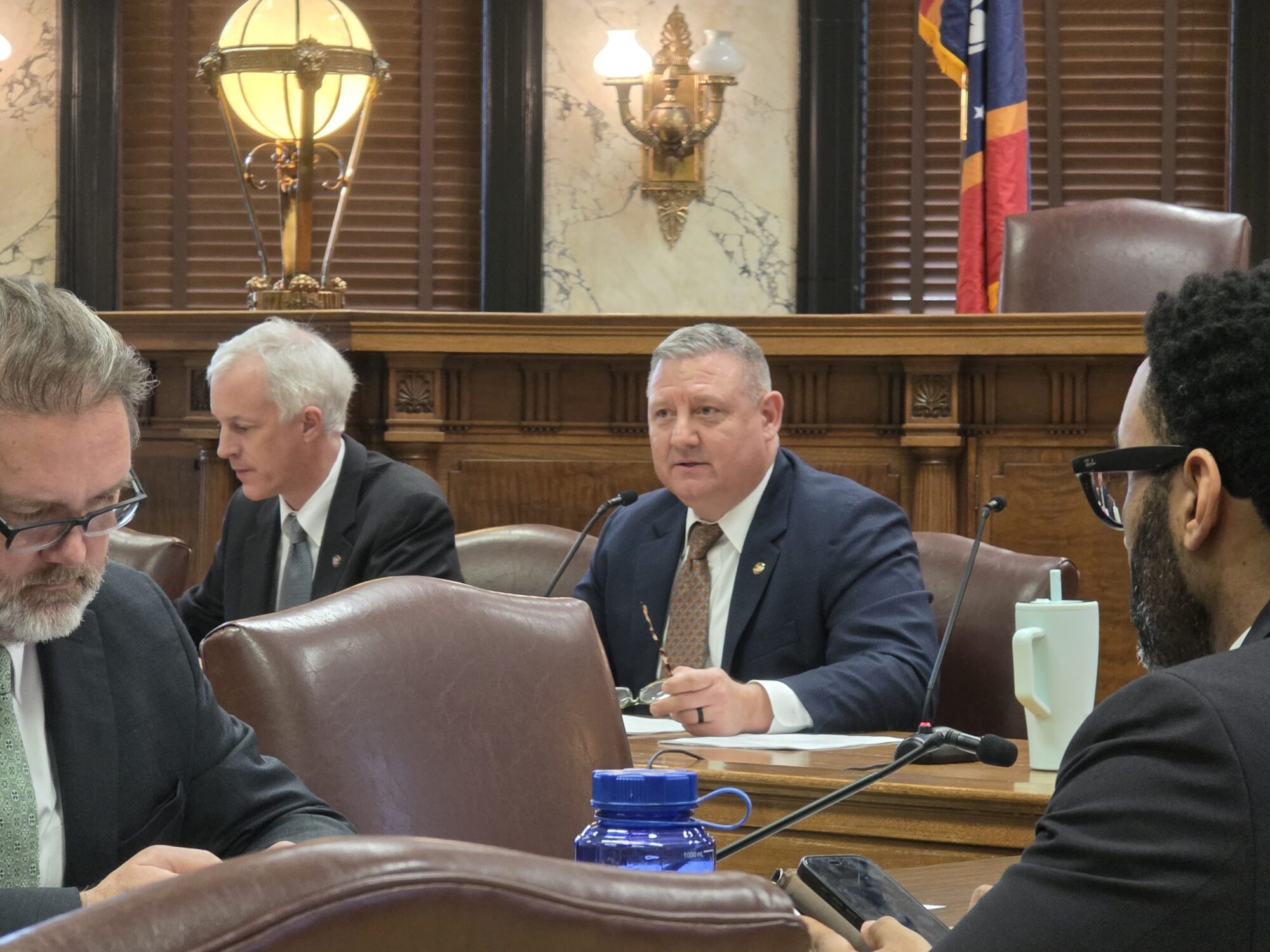
Senate Education Committee Chair Dennis DeBar (R) met with his fellow committee members on Tuesday to start the 2026 legislative session off by taking up three bills. (Photo by Jeremy Pittari | Magnolia Tribune)
- Under the Senate proposals, teachers could receive a $2,000 pay increase and students would be allowed to transfer between public schools without their current district objecting.
On the first day of Mississippi’s 2026 legislative session, the Senate Education Committee kicked things off by sending three bills to the floor, each intended to strengthen the state’s K-12 public school system members said.
The first bill – SB 2001 – seeks to provide teachers with a pay raise. A second measure – SB 2002 – is focused on public-to-public school transfers. The third bill – SB 2003 – would provide options for all retired state employees to become teachers through alternate route programs for certification.
Teacher Pay
The Senate teacher pay raise bill proposes to provide all educators in the state with a $2,000 across-the-board pay raise. The House is likely to propose their own figure soon.
The Senate proposal also includes teacher assistants, CTE instructors and those working at community colleges and the state’s public universities, Senator Dennis DeBar (R) described.
DeBar, who is the committee chair, estimates the total amount of the raise would cost the state an additional $132 million. However, he hopes changes to the bill will result in increasing the raise to $5,000. DeBar said passage of the bill out of committee on Tuesday will allow discussions to that effect to continue.
“We know the educators need more than just $2,000. I would like to see it get closer to $5,000 as most of our education groups have requested,” DeBar said. “This will allow time for us to work through the process and maybe by the end of the session Senator [Briggs] Hopson and the Appropriations Committee can find more money and we can increase the pay raise.”
The last pay raise of $5,000 passed in 2022 also began at a lesser amount.
The current bill states that the pay for teacher assistants cannot be reduced if it should become law. DeBar said that language was added to address instances where some school districts decreased their local supplement after the last pay raise was approved.
“In actuality, the teacher assistants did not get a pay raise,” DeBar explained about the previous pay increase. “This will prevent that and there are consequences for doing so.”
Public-to-Public Transfers
The Senate committee also passed a proposal to eliminate one current requirement when a student wants to transfer from one public school to another public school.
At present, both the sending and receiving school districts have to approve transfers, but the proposal adopted by the Senate Education Committee would remove the requirement of the sending school district to provide approval. Accepting districts would retain the authority to take in transfers provide there is room in their schools.
A similar House proposal died in the Senate committee last session.
“What we are doing with this legislation is removing the authority of the sending school district to veto or refuse to allow the child to transfer,” DeBar explained.
He added that this move will allow districts to continue accepting kids as they see fit as well as set any necessary fees or tuition as they deem reasonable. It is estimated that about 80 percent of districts across the state are freely allowing student transfers now, DeBar added.
The bill includes language that transfers cannot violate court-mandated desegregation orders and transferring students must abide by the Mississippi High School Athletics Association’s rules regarding transfers.
“I don’t believe this is going to hurt our public schools. I don’t believe you’re going to see a mass exodus of students leaving the schools,” DeBar said. “I also don’t believe you will see athletic superpowers in our schools throughout our state.”
Speaker Jason White (R) and the Republican House Education leaders have indicated support for not only public-to-public transfers, but also ESAs that give families options over where and how to spend their portion of state funds, including in private school settings.
Grant Callen, President and CEO of Empower Mississippi, said the bill was “a small but important step toward expanding educational opportunity for families across our state.”
“For years, Mississippi law has allowed a student’s assigned public school district to effectively veto a family’s attempt to transfer to another district, even when the receiving district is willing to accept that student. In practice, this has meant families could be trapped in schools that are not working for their child, with no meaningful recourse,” Callen said. “This bill removes that veto power. That’s important – families should not be held hostage by bureaucracy when another public school is willing to serve their child.”
Callen added that the bill does not include transparency provisions that would give parents clear information about a receiving school’s capacity, tuition, or admission requirements. Without that information, he said families are still navigating the system with limited visibility into their real options.
“Mississippi has made meaningful strides in education over the last decade, but too many families still lack real choices when their assigned school is not the right fit,” Callen contends. “Every child learns differently, and our education system should reflect that reality. Families need access to a variety of educational options, including public schools, charter schools, private schools, and homeschooling, so each student can find the right fit.”
Retirees to the Classroom
Previous bills have been introduced to allow retired teachers to come back to the profession while still collecting their retirement but they did not make it to the governor’s desk. This year’s Senate proposal aims to not only make that a path a reality but also expand that effort.
If it becomes law in the current form, it will provide an option for all retired state employees to become teachers through the alternative licensure path. The alternative licensure path is currently available to any person who holds a bachelor’s degree in any field, allowing them to meet the necessary requirements over several years to transition to education through various means.
The measure also proposes to increase the amount of retirement pay that can be collected while the person works, from 50 percent to 65 percent, and will reduce the time a person can return to work down to the next day after retirement. The bill also removes the previously proposed requirements that the retired professionals fill critical shortage areas in the state.
“So, you can come back to any school district in the state to come back and teach. Hopefully this will increase the number of people, retirees, who come back and teach in our schools,” DeBar said.
As previously reported, Mississippi currently has more than 3,800 open teaching positions across the state.

Jeremy Pittari