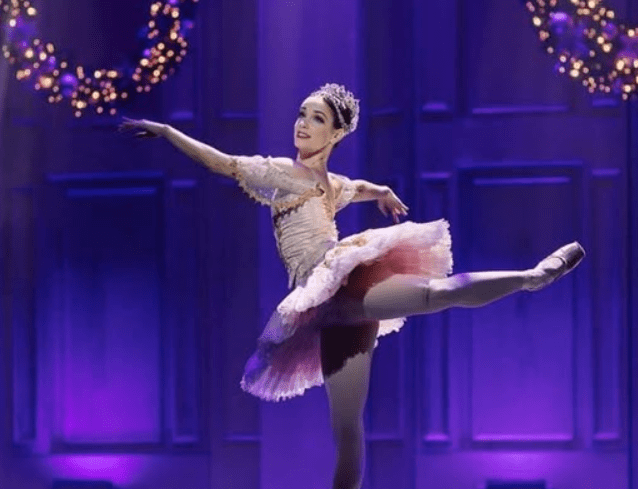
(Photo from Ballet Mississippi)
- David Keary, CEO and Executive Artistic Director of Ballet Mississippi, brings The Nutcracker to life each year for Mississippians who come from all over to enjoy the classic production.
Music critics wrote scathing reviews after the premiere performance of The Nutcracker in St. Petersburg, Russia, in 1892. The ballet, a worldwide Christmas tradition for millions today, could have ended up in the dustbin of history if those original critics had had their way.
The musical score was written by renowned composer Pyotr Ilyich Tchaikovsky. The choreography was begun by Marius Petipa, a famed choreographer of the Russian Imperial Ballet, but completed by his assistant Lev Ivanov when Petipa became ill. Whether the change in choreographer midstream had any bearing on the critics’ displeasure is uncertain, but the criticisms ranged from “This can in no way be called a ballet,” “It is too childish,” “It is too symphonic,” “It is lacking memorable music,” to “God, grant that similar failed experiments do not happen often.”
What would those experts think if they knew The Nutcracker has become the most frequently adapted ballet in history, transcending cultures and generations?
One historian stated that “There have been hundreds of incarnations of The Nutcracker over the years,” but it wasn’t until the mid-20th Century, especially in the United States, that The Nutcracker gained a foothold, evolving into today’s beloved institution that entertains children, parents, and grandparents alike.
David Keary, CEO and Executive Artistic Director of Ballet Mississippi, brings The Nutcracker to life each year for Mississippians who come from all over to enjoy the classic production. He estimates that he has had a major role in either dancing or directing at least 520 Nutcracker productions! And, to David, nothing about it ever gets old or dull. He is never bored, never finds the story or the music stale, and inserts fresh tweaks each year to the timeless tale of childlike magic and delight.
David’s first exposure to this extraordinary work was in 1979 as a member of the New York City Ballet. He was a wide-eyed, young, twenty-something from Jackson, Mississippi, when he danced the Spanish Divertissement in Act II, a feat that required extraordinary athletic strength. The renowned George Balanchine, co-founder of the NYC Ballet, directed and choreographed the production. You could say that David Keary received a Ph.D. in The Nutcracker then. Balanchine is credited with resurrecting Tchaikovsky’s much-ignored ballet in 1954 when he introduced his version to an American audience. Its popularity has only increased since then.
Years passed, and dance remained a mainstay in David Keary’s life even while he obtained a law degree. His meandering path brought him back to Ballet Mississippi as CEO and Artistic Director during a time when financial woes threatened the school’s demise. He began staging The Nutcracker annually in 1995 to invigorate community interest and support for Ballet Mississippi.
Perfectionist, purist, and well-trained Keary did two things that he believes have been key to Ballet Mississippi’s rendition of The Nutcracker’s continuing reputation for excellence. “I went back and read a lot of the history of The Nutcracker, and I got the piano score of Tchaikovsky’s original composition, which was a real guiding light,” he says.
He laughs that he has several versions of choreography for every scene, and he varies them year to year. Some tweaks are his creative license, but some adaptations are necessary when stage sizes differ, or the number of dancers participating calls for adjustments. The music, the dancers’ expertise, the professional quality of the costumes, and the beautiful scenery onstage never vary. Such an observation underscores the reason great works of art transcend cultural trends!
Although The Nutcracker is performed in Europe throughout the year, Americans reserve it for the Christmas season. Preparations at Ballet Mississippi begin long before the first hint of Christmas appears next to Halloween décor in the local Walmart! Auditions are held on the Saturday after Labor Day, and rehearsals begin by September 15 for the December performance.
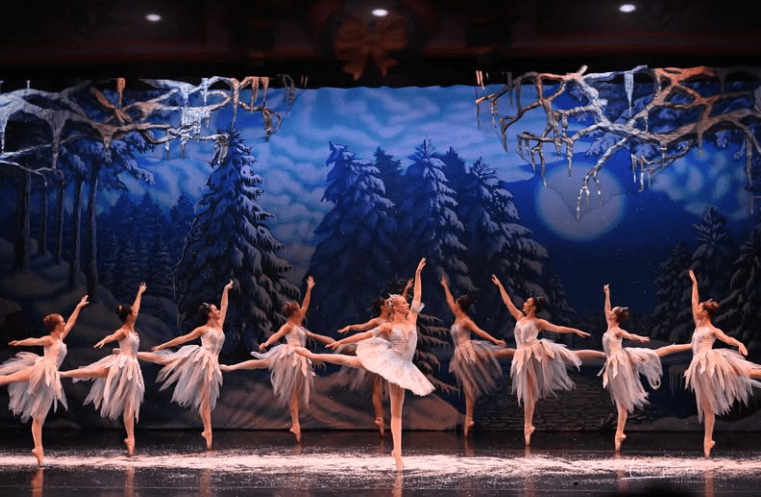
This year’s 33rd annual performance, December 4, 6, and 7, featured 105 total dancers at Jackson Prep’s Fortenberry Theatre. Syncing the movements, staging sets, and costuming the cast are daunting challenges in any ballet. The faculty and staff at Ballet Mississippi are professionals who commit untold hours to making their production the world-class gift to the community that it is year after year.

It is no surprise that David Keary’s entire life for the three months of preparation casts him in a role similar to a three-ring circus ringmaster whose time is spent herding cats!
Juggling schedules, accommodating students and parents, adapting choreography, and overseeing an infinite number of important details consumed his waking moments. It all felt so worth it on opening night when the fairy-like overture began, the curtain opened, and the festive party scene began. For the Executive Artistic Director and the expectant audience, the thrill is ever-present.
It never fails that something unexpected will happen, despite the best-laid plans and the number of flawless rehearsals. A sense of humor is a plus for any performer. David Keary’s is definitely intact when he recalls a few bloopers across the years.
“Costume foibles are the most common,” he says. When a flamboyant and dramatic Herr Drosselmeyer’s wig went flying through the air one evening, David stood off stage trying to suppress his laughter. The actor did not miss a beat but he, too, dissolved in laughter when he exited.
Mother Ginger, the comical character with the expansive hoop skirt from which several mini dancers emerge, had a serious wig dysfunction at a most inopportune moment a few years ago. David, who was supposed to stay hidden behind the cart that wheeled her onstage, had to stand up, retrieve her wig from around her shoulders, and place it back on her head. The accident drew laughter all around.
Other disasters include malfunctioning tutus slipping almost to the ankles at times, but the show always goes on. The music never stops, and the audience seems to enjoy the show even more because of the shared, very human, less-than-perfect experience in the middle of the fairy tale.

Marilyn Tinnin