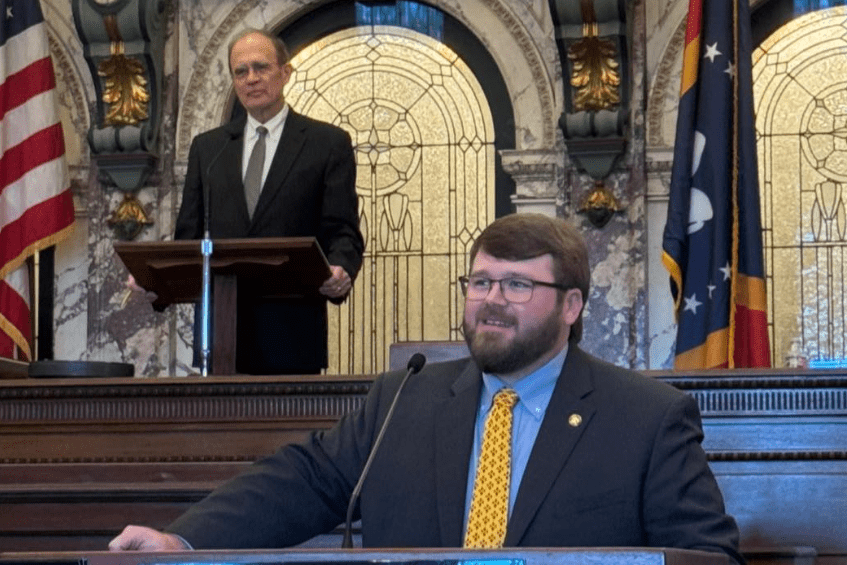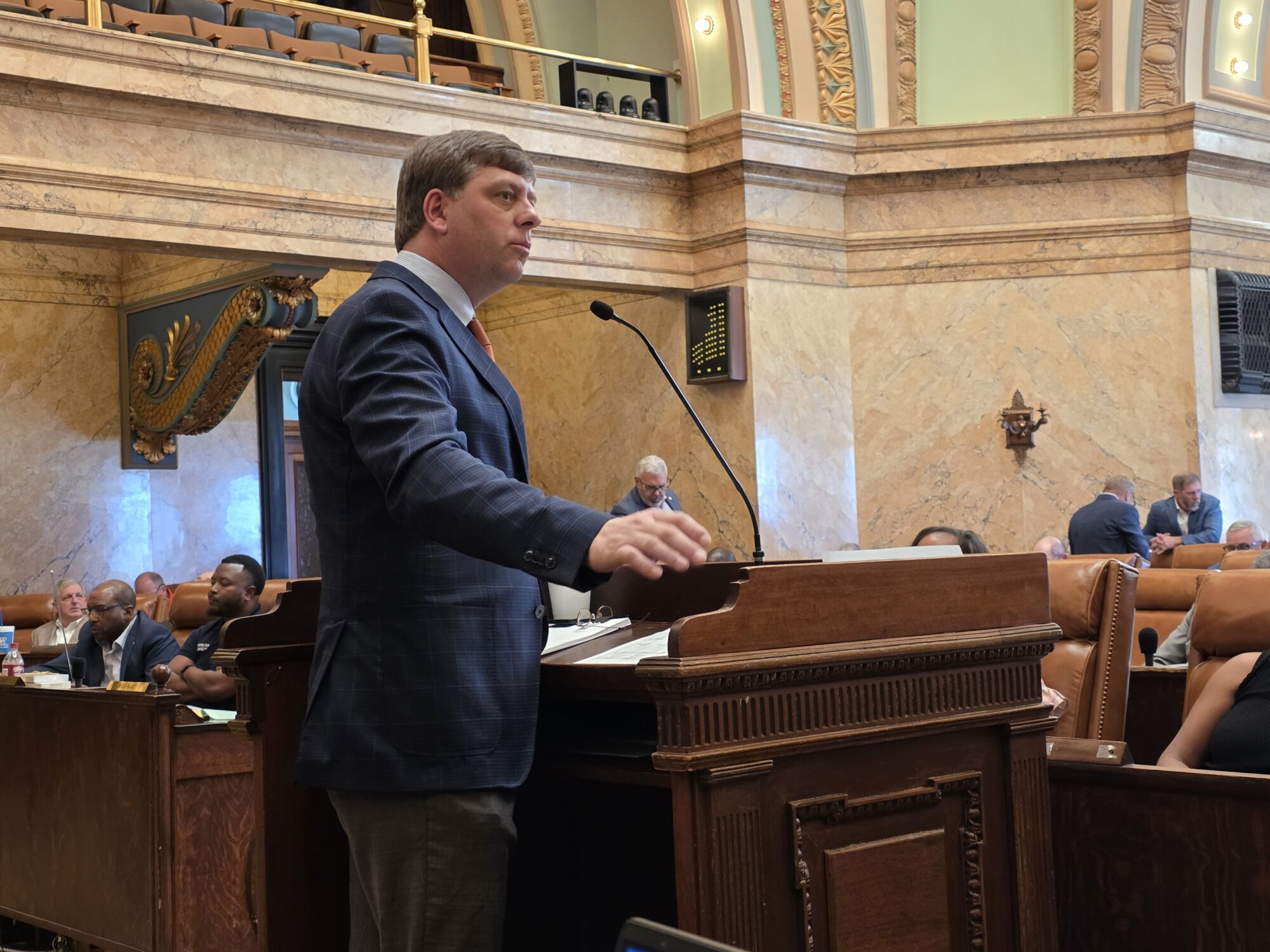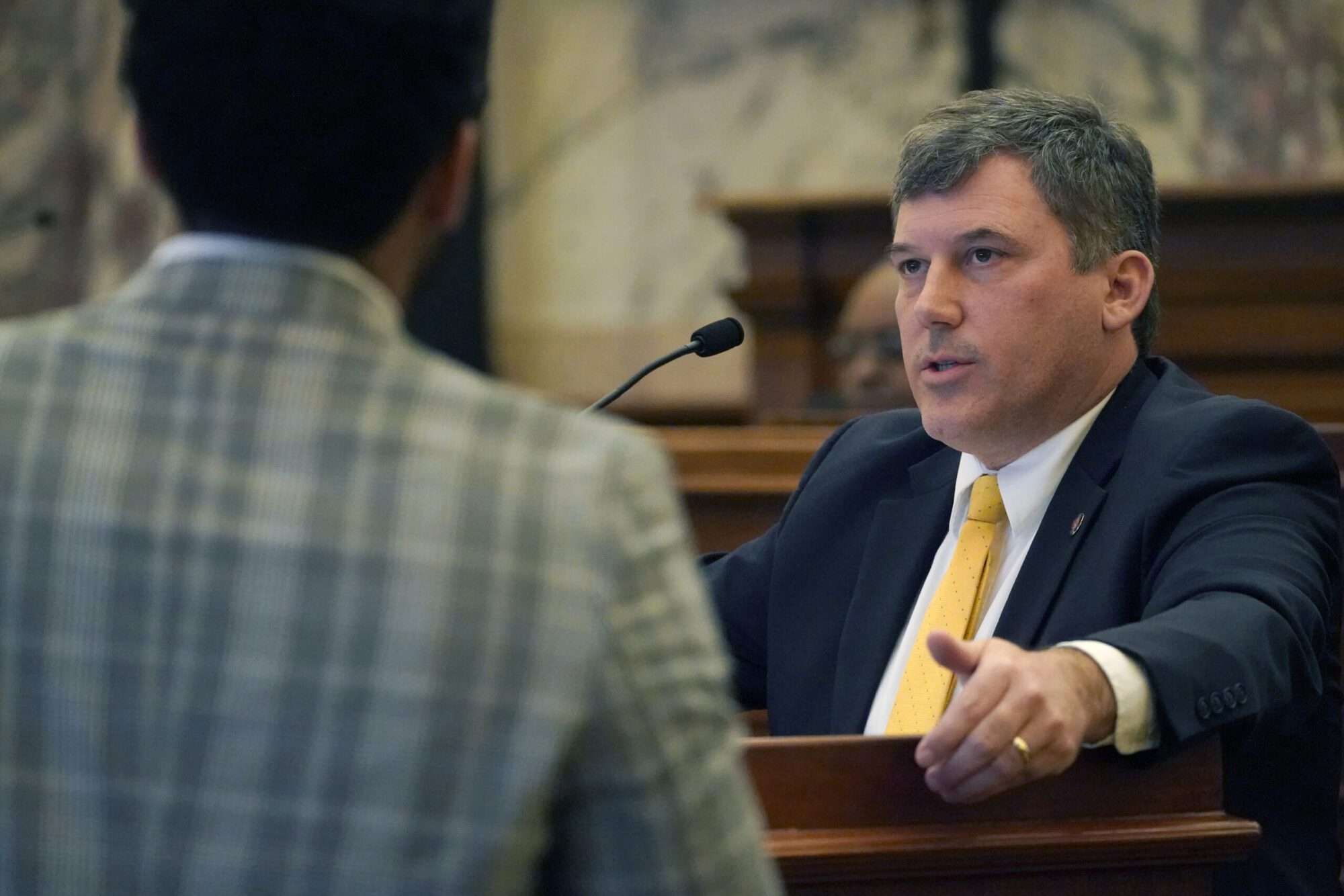
State Treasurer David McRae speaks at the Neshoba County Fair
- State Treasurer David McRae has also made successful moves to ensure the solvency of legacy programs under his purview.
Parents who are interested in ensuring their child will have their higher education covered before they even graduate high school have options through the State Treasurer’s office.
Currently, the state treasury offers two types of savings accounts, the MACS program and the MPACT prepaid program.
State Treasurer David McRae (R) said the prepaid MPACT program covers all college expenses as though tuition was locked from today until their child attends college years in the future. Locking in tuition costs is beneficial because the cost of college continues to rise. Additionally, enrollment in the program ensures the child graduates college with little to no debt.
“Whatever college costs today, it’ll cost that when your child is ready to go to college,” McRae said of the MPACT program. “So, we’re locking in tuition rates and that helps alleviate debt.”
The second program is the MACS plan. McRae describes this option as similar to a checking account. Families can start an account under this program for as little as $25. The account can be used to cover various expenses such as tuition, room and board, and books.
“It can also be used by teachers for school supplies. It can be used for private high schools. It can be used in state, out-of-state. It’s incredibly flexible and we’re seeing a lot of people sign up for those,” McRae added.
Plans offered today by the treasury are not just for attending a university, they can be used to get an education at a community college to obtain a certification, vocational degree or even later transfer to a university.
“We’re seeing people use these plans for community colleges. We’re seeing these people use plans for vocational training. And with all that economic development coming into the state that’s why they’re using them more,” McRae said.
Payments into the plans have also been modernized, now allowing for payments with PayPal and even cryptocurrency, a move that McRae said Mississippi was one of the first to implement.
“I consider the treasury a bank. We are a bank,” McRae said. “And this is just a service we offer to the people in Mississippi and as people in Mississippi want to continue to pay us for these college savings programs we’re going to find a way to make it work for them.”
Payments into these programs vary. For the prepaid program, families can pay in a lump sum or monthly to get it up where it needs to be based on preset goals to ensure the account reaches the level needed to cover the child’s college after they graduate high school. For the MACS program, money can be deposited periodically over time.
McRae’s office reports that as of June, the MPACT program has $292.8 million worth of market value, while the MACS program has about $344.59 million worth of market value. Within these programs more than 35,000 families are participating in the MPACT program, while MACS has about 23,200 families participating.
Minimizing debt is essential. More people are leaving college with larger and larger amounts of debt as the cost of a higher education continues to increase. McRae said the average amount of debt a person takes with them after college is about $35,000.
“When I started this job, and I was elected in 2019 took office in 2020, that was $30,000 worth of debt,” McRae explained. “So, obviously it’s growing tuition is rising, so debt will continue to occur.”
By reducing educational debt, these savings plans can help the state address brain drain in Mississippi. It has been noted that a number of graduates are forced to seek higher wage employment out of state to cover their college debt.
“I think firmly if we can eliminate that part of that equation, it is more likely a graduate of one of our fine universities will stay here in Mississippi,” McRae said.
McRae’s office has also been successful in ensuring the solvency of legacy college savings programs started by former State Treasurer Marshall Bennett. Due to the economic climate that ensued after the 2008 recession, the treasurer at the time thought it best to shut that program down in 2013. When McRae took office in 2020, those accounts were only 72 percent funded and dropping fast due to the lack of new funds being put into the program and a lack of necessary investment adjustments to the portfolios. To fix the issue, McRae took a hard look at how those funds were invested.
“I feel I have a moral and ethical obligation. People trusted the Treasury, trusted the state of Mississippi with these with these plans that they signed up for,” McRae said. “We sold these plans with the idea that this money would be there when they’re ready to use it.”
A review of what it would take to make the legacy plans solvent revealed an anticipated bailout of between $150-$250 million would be needed if the state was asked to step in. Because it was an amount McRae did not feel comfortable asking the Legislature to pay, he used his private sector investment experience and asked the Legislature for permission to modernize the portfolios. That involved allowing his office to invest those programs in the same manner as the Treasury invests its own funds.
Those changes increased returns in the legacy program, and now five years later, those legacy accounts are 101 percent funded.
“So, without having to use taxpayer dollars, without having to ask for a bailout, we saved the legacy program for future generations,” McRae added.