(Photo from Shutterstock)
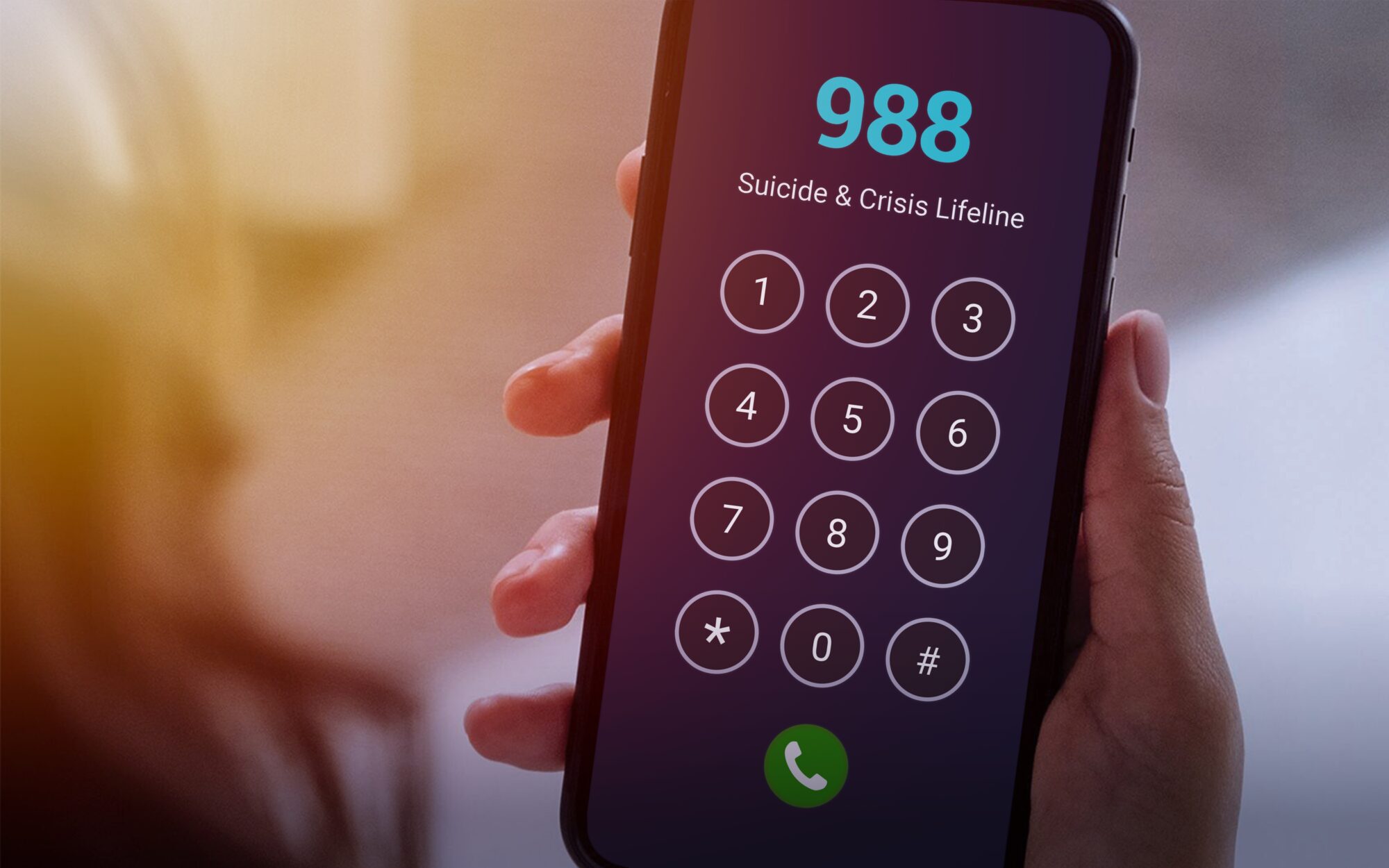
- Effective means to prevent suicide include connecting people in need with mental health services, promotion of proper firearm storage, and safety modifications to bridges. Access to 988 suicide hotline is also a positive avenue for prevention.
Suicide rates across the nation and in Mississippi have been on the rise since 2014.
To reverse that trend, mental health professionals are conducting studies to determine the underlying factors while advocating for prevention methods with broader and easier access to assistance.
In connection with National Suicide Awareness and Prevention Month, the Johns Hopkins Bloomberg School of Public Health shared updated statistics on risk factors, prevention methods, and the importance of advertising the availability of a no-cost resource to find help through the 988 Suicide and Crisis Lifeline.
Studies have determined that the contributing factors related to suicide risk include age, gender, ethnicity and access to mental health care.
Current statistics
Over the past quarter century, age-adjusted suicide rates have increased, the Centers for Disease Control and Prevention reports.
Statistics reported in 2001 show the national suicide rate was 10.7 per 100,000 people but rose to 13.7 in 2024. Two peak rates of 14.2 were reported in 2018 and 2022, according to the CDC.
Mississippi’s suicide rate is just above the national average, ranking 27th overall. The state’s rate has been on the rise for the past decade. In 2014, Mississippi’s rate was 12.5 per 100,000 residents. It rose to 15.1 people 10 years later.
Data shows that in 2024, 450 Mississippians died by suicide and 70% of those cases involved the use of a firearm, Holly Wilcox, a professor in the Department of Mental Health at the Johns Hopkins Bloomberg School of Public Health, described.
The American Foundation for Suicide Prevention (AFSP) states there were 48,824 deaths by suicide nationwide that year, with 62% of those cases involving a firearm.
Risk factors
Across the nation, suicide is the second leading cause of death in people aged 15 to 34, while across all age groups it is the tenth leading cause of death.
In Mississippi, suicide is the 13th leading cause of death, according to AFSP.
While the numbers are not hard and fast, Paul Nestadt, associate professor in the Department of Mental Health at the Johns Hopkins Bloomberg School of Public Health, said demographics play a part in a person’s risk for suicidal tendencies.
Data shows that males (22.2 per 100,000 people) are far more likely to attempt suicide than females (5.6), and indigenous American Indians and Alaskan natives (22.5) followed by white male Americans (17.2) lead the risk factors. However, during 2023, the suicide rate among veterans was higher than all of those categories at 35.2 per 100,000.
Age is another factor. For instance, the highest prevalence for suicide is found in people age 80 and older.
Additionally, if a person has a mental health condition, such as schizophrenia, they are five times more likely to consider suicide than the general population.
“One in ten people suffering from schizophrenia will die by suicide, and it’s similar numbers for people with substance dependance, especially opiates,” Nestadt added.
Methodology restriction
Research has shown that restricting access to the most effective methods of suicide can reduce the risk of attempts, and subsequently deaths. While firearms play a major role in countries where they are prevalent, people have been known to use whatever is at hand, such as leaping from high bridges and in agricultural economies, fertilizer.
Because the most lethal methods are guns and overdoses involving opioids Nestadt said that restricting access to those avenues is key.
“Among all the things you might overdose on, opiates are particularly lethal, as we’ve seen over the last several years with the overdose crisis,” Nestadt explained, adding that opioids are known to cause depression, which is another risk factor.
By restricting access to firearms and opioids, the likelihood a person survives an attempt is much greater. He said there is a much greater benefit in that people who survive an attempt are less likely to try again later in life.
“And one of the reasons for that is that most suicide attempts are actually survived. With overdose only about 2% of people who attempt suicide by overdose on medicines or drugs die,” Nestadt said. “You want the most common method of attempt to be imminently survivable, and it is.”
Tips on prevention
Effective means to prevent suicide include connecting people in need with mental health services, promotion of proper firearm storage, and safety modifications to bridges. The installation of nets and barriers on bridges has proven successful.
“The netting on the Golden Gate Bridge reduced the number of suicides from the bridge by 73% in its first year.” Wilcox said. “So placing time and physical distance between a person in crisis and a highly lethal jumping site can reduce suicide.”
Access to mental health care that focuses on the community as a whole is also an effective method to prevent suicide.
“I think part of that is because even though suicide does claim the individual, prevention is more of a community responsibility,” Nestadt said. “And because we can’t predict risk, we need to look at universal prevention strategies, public health, population-level strategies.”
Proper gun storage within households is also suggested, Wilcox said, noting that states with youth gun restriction and storage laws saw suicide rates in young people decline by about 14%. That decline, she said, effectively saved about 214 people under 18. Nearly 50% of all suicides among people younger than 18 involved a gun.
“The data shows that requiring guns to stored unloaded and locked makes a difference,” said Wilcox. “The bottom line here is that safe gun storage is a really effective way of saving kids’ lives.”
“So what I’m hoping for is that we can make things like safe gun storage, which is really effective for suicide intervention, as common as buckling up when you get into a car,” Nestadt agreed.
Importance of 988
Mississippians have access to a no cost source of emotional support and in more severe cases, a direct connection to more involved mental health services, through the nationwide 988 Suicide and Crisis Lifeline.
Initial reporting shows that since the 2022 launch of 988 in the United States, the number of suicides in people aged 15-34 have declined.
Using national mortality data and prior trends, researchers as part of a team led by Dr. Vishal R. Patel studied mortality rates amongst that cohort, Wilcox described. In that study, the researchers determined from the time of the hotline’s launch to December 2024 suicide rates in that age group declined by 11%.
She did clarify the study’s findings are observational and the decline has not been directly linked to the availability of the hotline. However, the findings are positive, and it appears that answer rates also play a part.
“The other thing that they found was that states with greater improvements in answering 988 calls saw larger declines in suicide, mortality, than states with lower uptake,” Wilcox described.
Mississippi has led the nation for in-state call rates, recently reporting a rate of 98%. In-state answer rates indicate how often a person located and trained within the state answers a 988 call. When calls are answered in a person’s home state, they can be better connected to services such as a medical professional or crisis center.
Nationwide, the in-state answer rate in 2024 was 89%.
Since the hotline is still relatively new, Wilcox said it is important to alert the public to the availability of the hotline. Services through 988 are open to any person suffering a mental health crisis, as well as family and friends of someone who may need assistance.