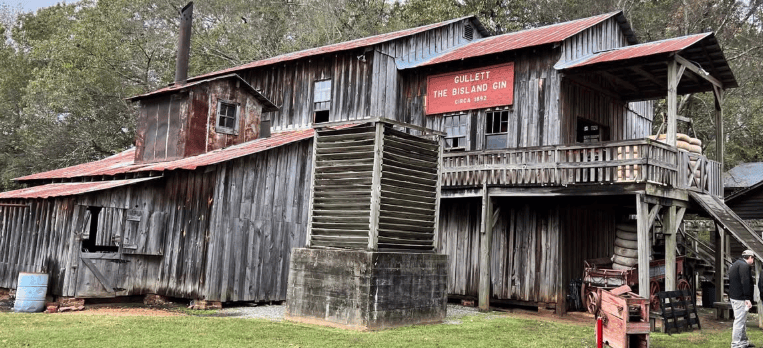
(Photo from Keith Ferguson)
- In a small community like Cannonsburg, it was probably one of the busiest places around when cotton was coming out of the fields. 134 years later it still works.
In 1892, Grover Cleveland was elected president, cotton was selling for about eight and a half cents a pound, and in the small community of Cannonsburg, Mississippi, Peter Bisland opened a cotton gin.
That was 134 years ago, and would you believe the old gin still works?
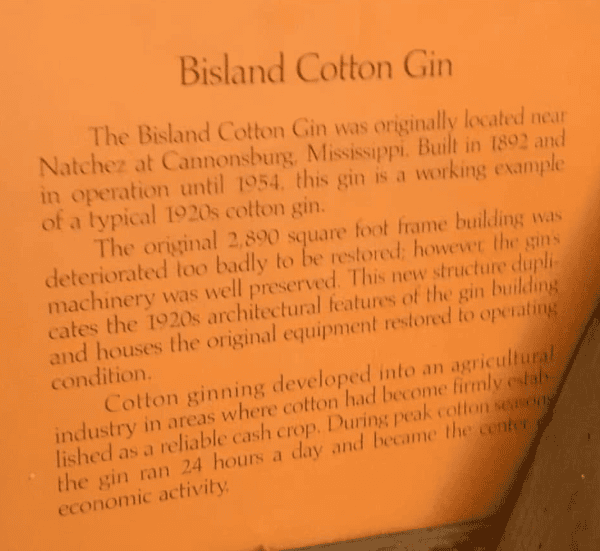
Today, the Bisland Cotton Gin is recognized as the oldest operating cotton gin in America. It’s no longer in Cannonsburg, a small community northeast of Natchez. Still, it is now home to the Mississippi Agriculture and Forestry Museum in Jackson, where visitors can see a machine that was once an important part of everyday life in rural Mississippi.
Cotton was a way of life for many Mississippi families. Farming wasn’t just a job; it was how people fed their families, paid their bills, and kept their communities going. And once the cotton was picked, the work was far from over.
During harvest season, the Bisland Gin would have been a busy place. Farmers arrived with wagons piled high with cotton, pulled by horses and mules. There was work to be done, neighbors to catch up with, and always the hope of getting the cotton processed before the next spell of bad weather.
In a small community like Cannonsburg, it was probably one of the busiest places around when cotton was coming out of the fields.
The Bisland Gin also provided electricity to the community for approximately two hours every evening.
Two hours!
It’s hard to imagine today, when we have electricity at our fingertips around the clock. Still, in the late 1800s, many rural Mississippi families didn’t have access to electric power at all. Those couple of hours must have been something the folks in Cannonsburg appreciated.
The gin originally operated on steam, but in the late 1920s, a new engine was installed. Manufactured in 1929 by the Continental Gin Company in Birmingham, Alabama, the single-cylinder, 55-horsepower engine powered the machinery through a belt approximately 50 feet long.
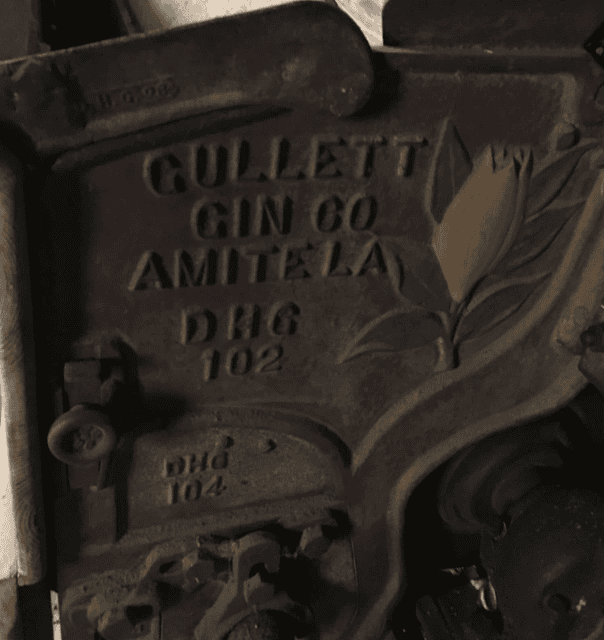
The gin also had three stands made by the Gullett Gin Company of Amite, Louisiana. Each stand contained 70 saw blades that separated the cotton fibers from the seeds.
At full operation, the gin could produce about three bales of cotton an hour. The cotton was compressed, wrapped in jute, secured with metal bands, and sent down a chute to a waiting wagon.
For 62 years, the Bisland Gin served the farmers of Cannonsburg. But as the years passed, agriculture changed. Larger, faster cotton gins began taking over, and the old machinery couldn’t keep up with the newer equipment.
In 1954, the Bisland Gin closed.
It might have been forgotten altogether if not for Charles McMahon, who bought the property hoping to turn the gin and a nearby general store into a museum. His plans never came together, but he eventually donated the equipment to the Mississippi Agriculture and Forestry Museum.
By then, the original building, constructed of rough-cut heart pine, had deteriorated too badly to save. Fortunately, the machinery inside was still in good condition.
Getting it to Jackson and running again took some work.
Bobby and Hilton Tarver, along with their father, were gin mechanics from Greenville who spent months moving and restoring the old equipment. On August 14, 1984, the Bisland Cotton Gin produced its first bale of cotton at the museum.
Thirty years after it closed, it was working again.
Today, the gin is part of the museum’s Small Town Mississippi exhibit, which includes a country store, blacksmith shop, grist mill, church, and other buildings representing life in Mississippi communities generations ago.
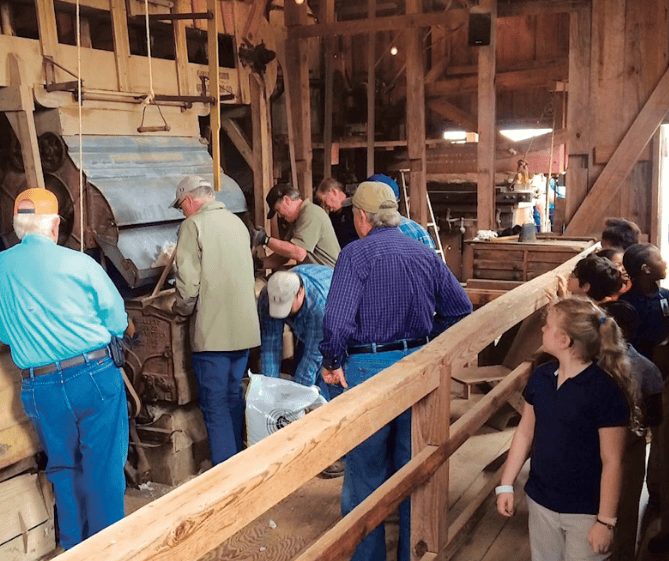
During the museum’s fall festival, the gin has traditionally been operated so visitors can see firsthand how cotton was processed before modern equipment changed the industry. The engine and machinery are still capable of doing the work they were built to do more than a century ago.
When the Bisland Cotton Gin first opened, farmers were hauling cotton in wagons, electricity was still a novelty in rural Mississippi, and automobiles had yet to become a familiar sight on American roads.
A lot has changed since 1892, including the way cotton is grown, harvested, and processed.
But the old Bisland Gin is still around, and more than 130 years after Peter Bisland first put it to work, it can still turn out a bale of cotton.
Not bad for a cotton gin that first went to work 134 years ago.

Meredith Biesinger