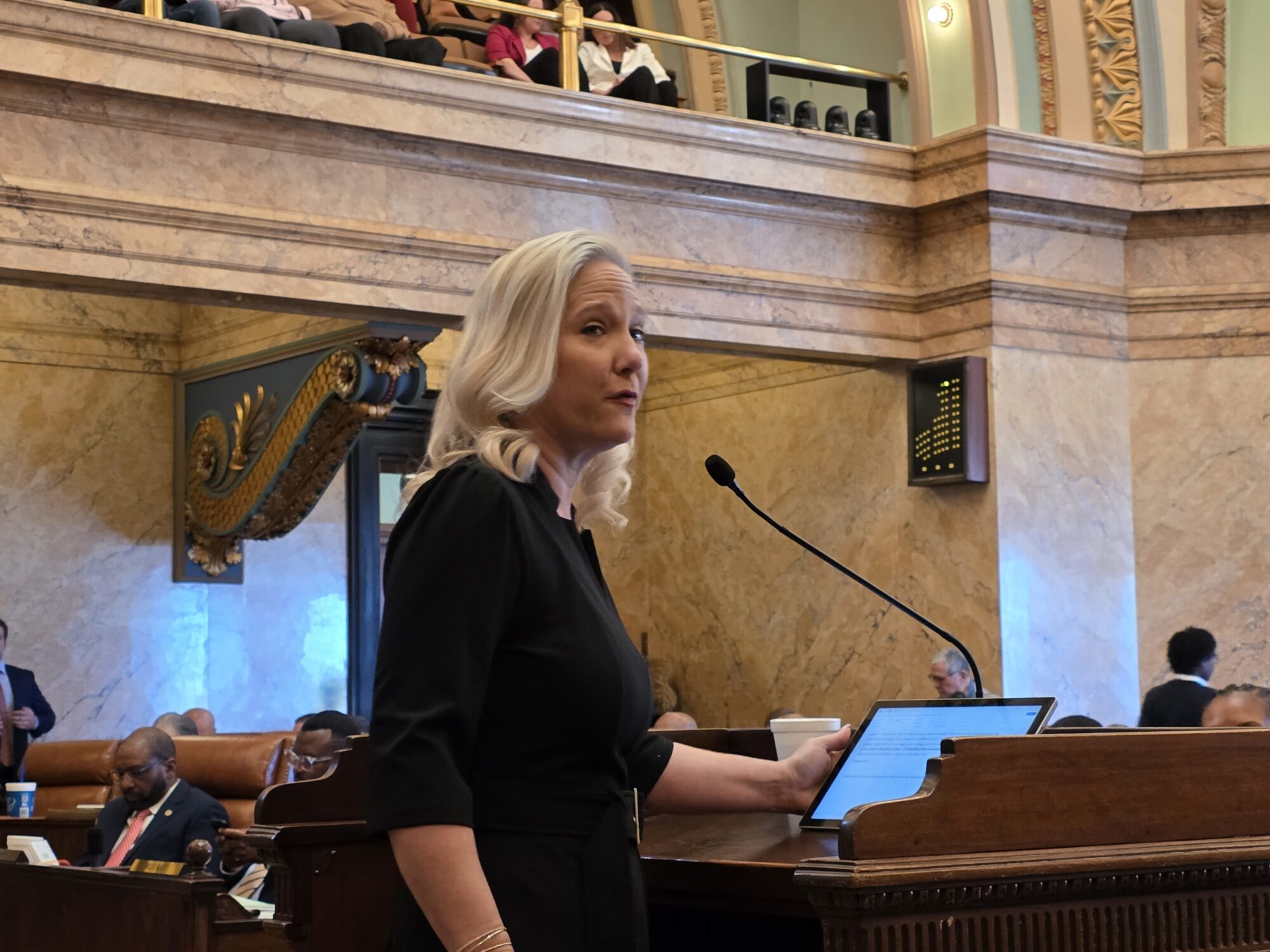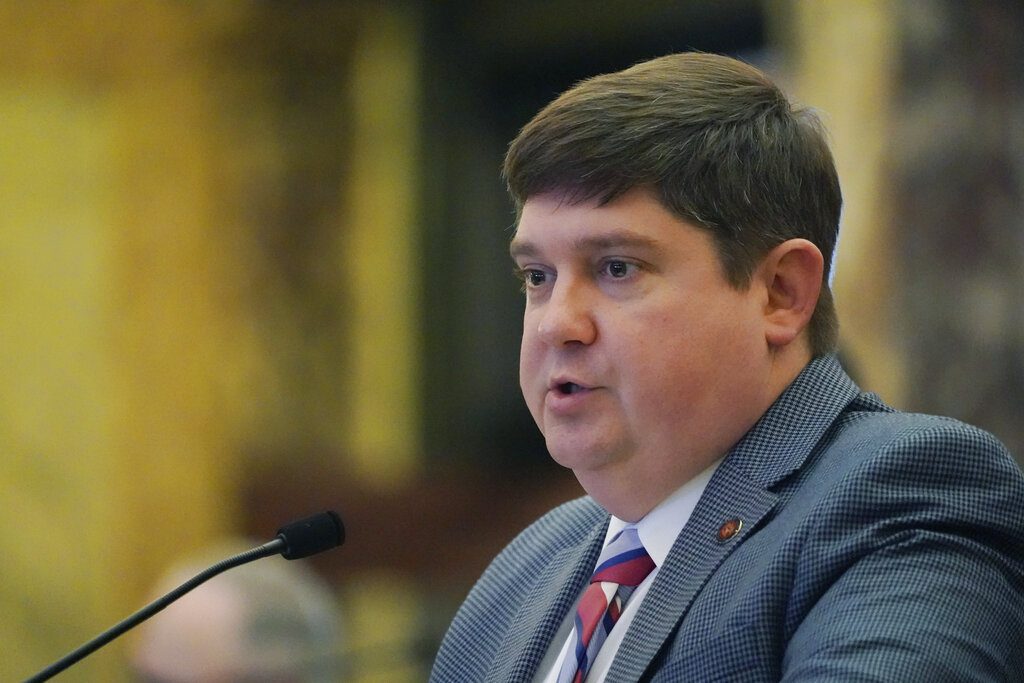
Sen. Jeremy England, R-Vancleave, presents legislation in the Senate Chamber at the Mississippi Capitol in Jackson, Wednesday, Feb. 1, 2023. Lawmakers in both chambers are considering bills that survived their committee deadline. (AP Photo/Rogelio V. Solis)
- Mississippi has been without a ballot initiative process since the 2021 state Supreme Court decision on Medical Marijuana Initiative 65 invalidated the process outlined in the state constitution.
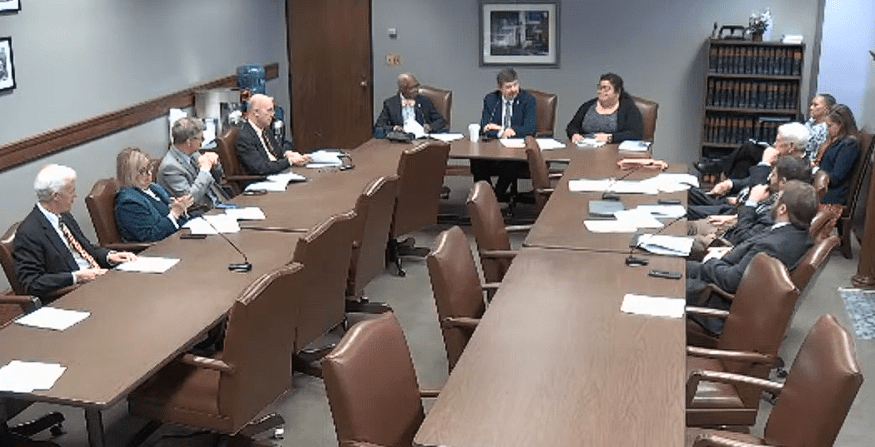
A measure to restore Mississippi’s ballot initiative process was moved out of the Senate Elections Committee this week to restart the negotiation process between the two chambers.
Mississippi has been without a ballot initiative process since the 2021 state Supreme Court decision on Medical Marijuana Initiative 65 invalidated the process on the basis that the signature threshold in the state constitution could not be met. The former initiative process required signatures to come from five congressional districts when Mississippi now only has four districts.
Negotiations between the House and Senate have stalled in previous sessions. Concerns from members have ranged from the number of signatures required for an initiative to be put before voters to what topics should or should not be allowed on an initiative. There has also been concern expressed over out-of-state monies flowing into the state to push initiatives sponsored by special interest groups.
Senate Elections Chairman State Senator Jeremy England (R) believes now is the time to bring the issue back before lawmakers.
“I’ve heard from both sides on this issue, and I think I agree, somewhat, with both sides on this issue about we’re a constitutional republic, we are elected here to come represent the will of the people,” England said. “I also understand the other side that this is something the people have had and as we know, Mississippians when have something and get it taken away from us, we want it back. This is an effort to help that along.”
Under England’s proposed measure, SCR 518, those seeking to place a ballot initiative before Mississippi voters would be required to gather signatures from 10% of registered voters in the state, meaning upwards of 170,000 signatures.
“This is, of course, an increase from the previous ballot measure that was stricken by the Supreme Court which was around 107,000 the last time it happened but it was based on elections and election results from the previous gubernatorial election,” England said. “This ties directly to active registered voters.”
No more than one-third of signatures would be allowed to come from one congressional district.
“It’s not really a pro-rata system, but if we ever do drop down to three [congressional districts]… this will still be a system that will work,” the Coast senator said.
Should a ballot initiative be proposed that would “cause a substantial cost to the state or require the substantial expenditure of state funds,” a 60% vote of approval from the public would be required to pass. Otherwise, an initiative would need to receive a majority of the votes cast and not less than 40% of the total votes to be approved.
The Legislature would also maintain the right to propose an alternative initiative on the same ballot. If conflicting initiatives or legislative alternatives are approved at the same election, the initiative or legislative alternative receiving the highest number of affirmative votes would prevail.
England proposes that ballot initiatives could not be used to deprive any human being of the right to life, meaning initiatives could not seek to reverse the state’s position against abortion. Initiatives would also not be allowed that change or amend the state constitution, local laws, or the Public Employees Retirement System (PERS).
As written, the Legislature would be limited from making changes to enacted ballot initiative statutes for two years once voters approve the measure.
Voters would be asked to adopt the new ballot initiative process if the bill makes its way through the Capitol, as it would amend the state constitution and reinstate the process as outlined therein.
The bill now heads to the full Senate for consideration. Should it pass, the measure’s fate is uncertain in the House.