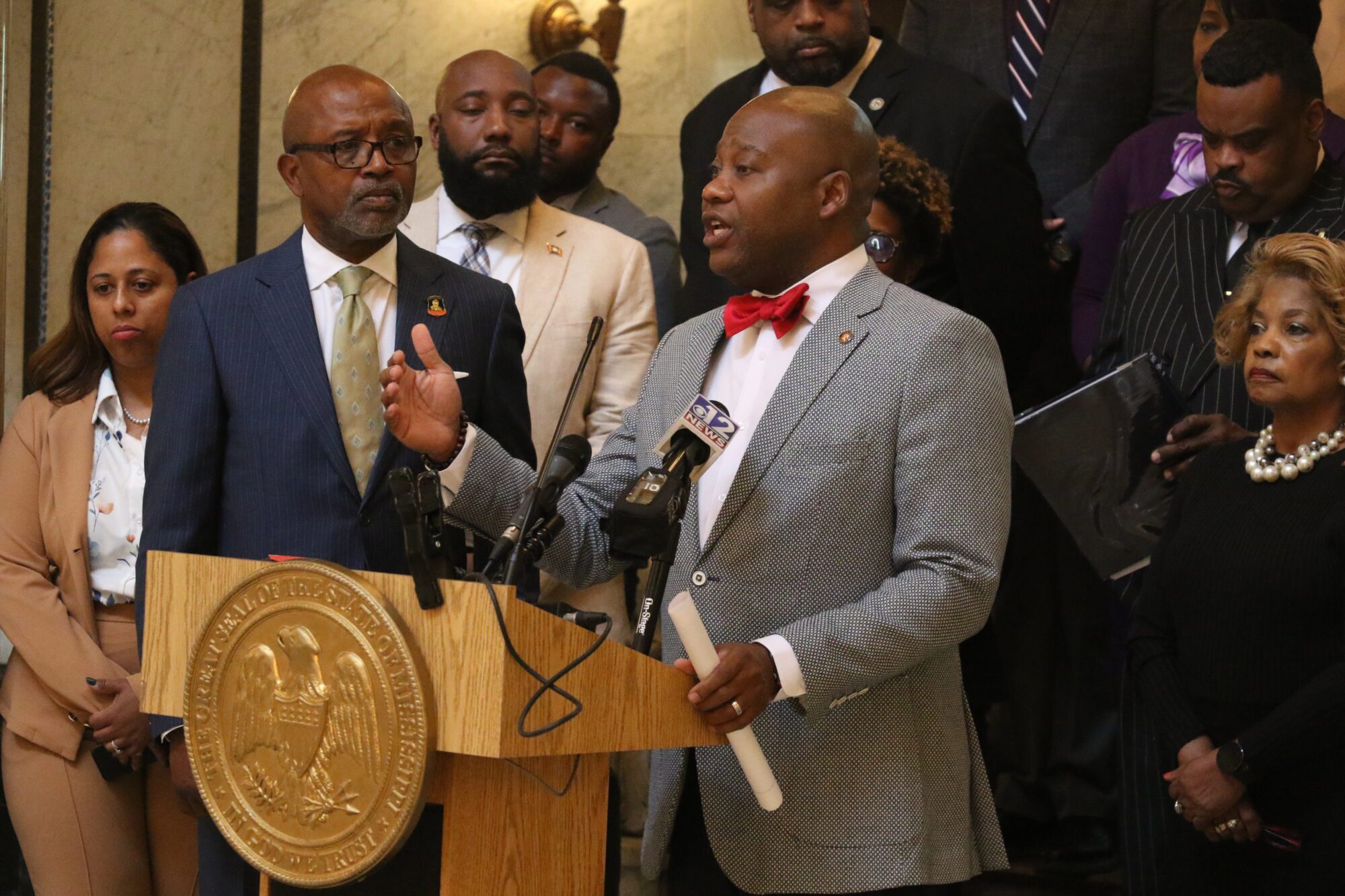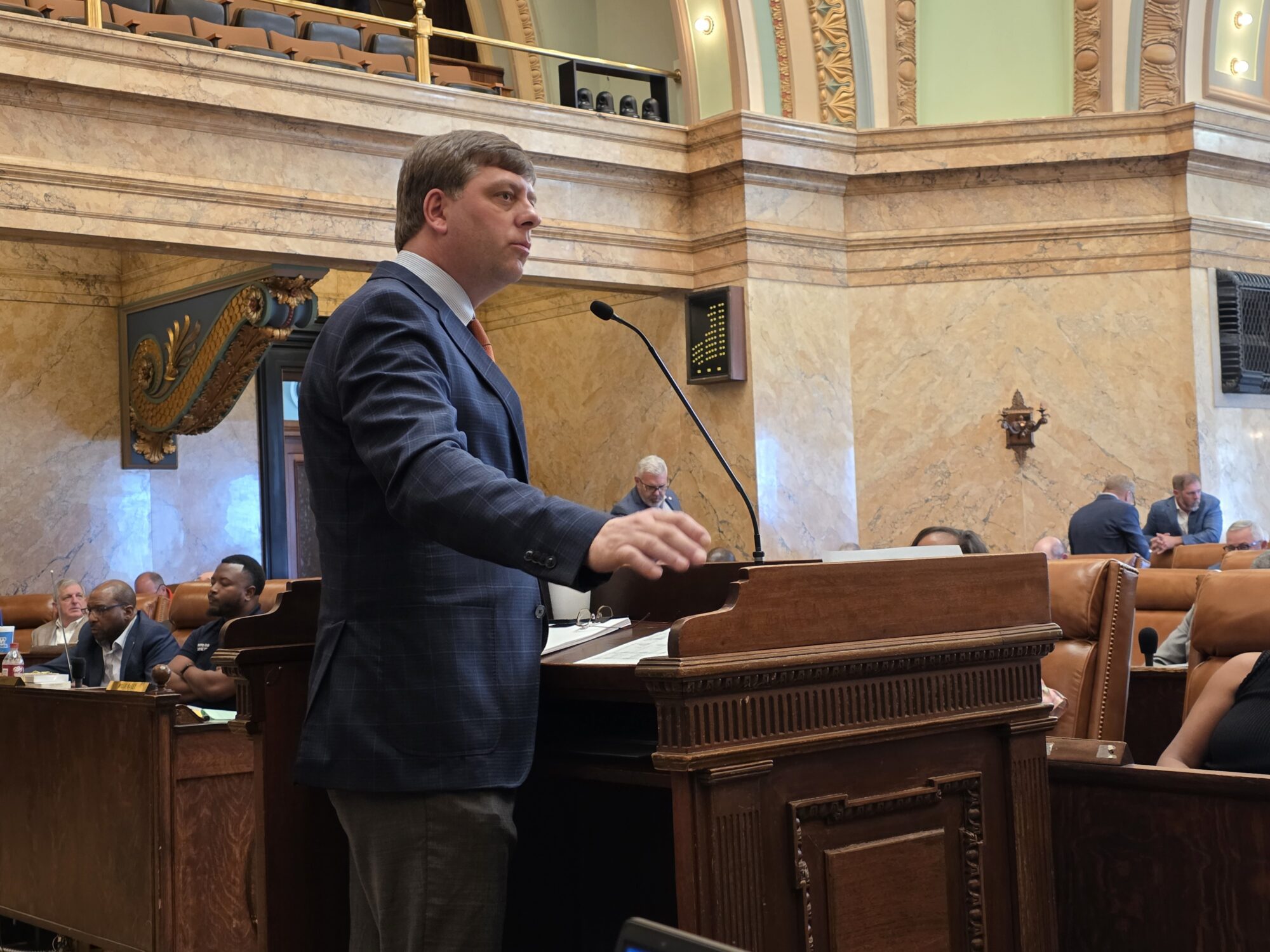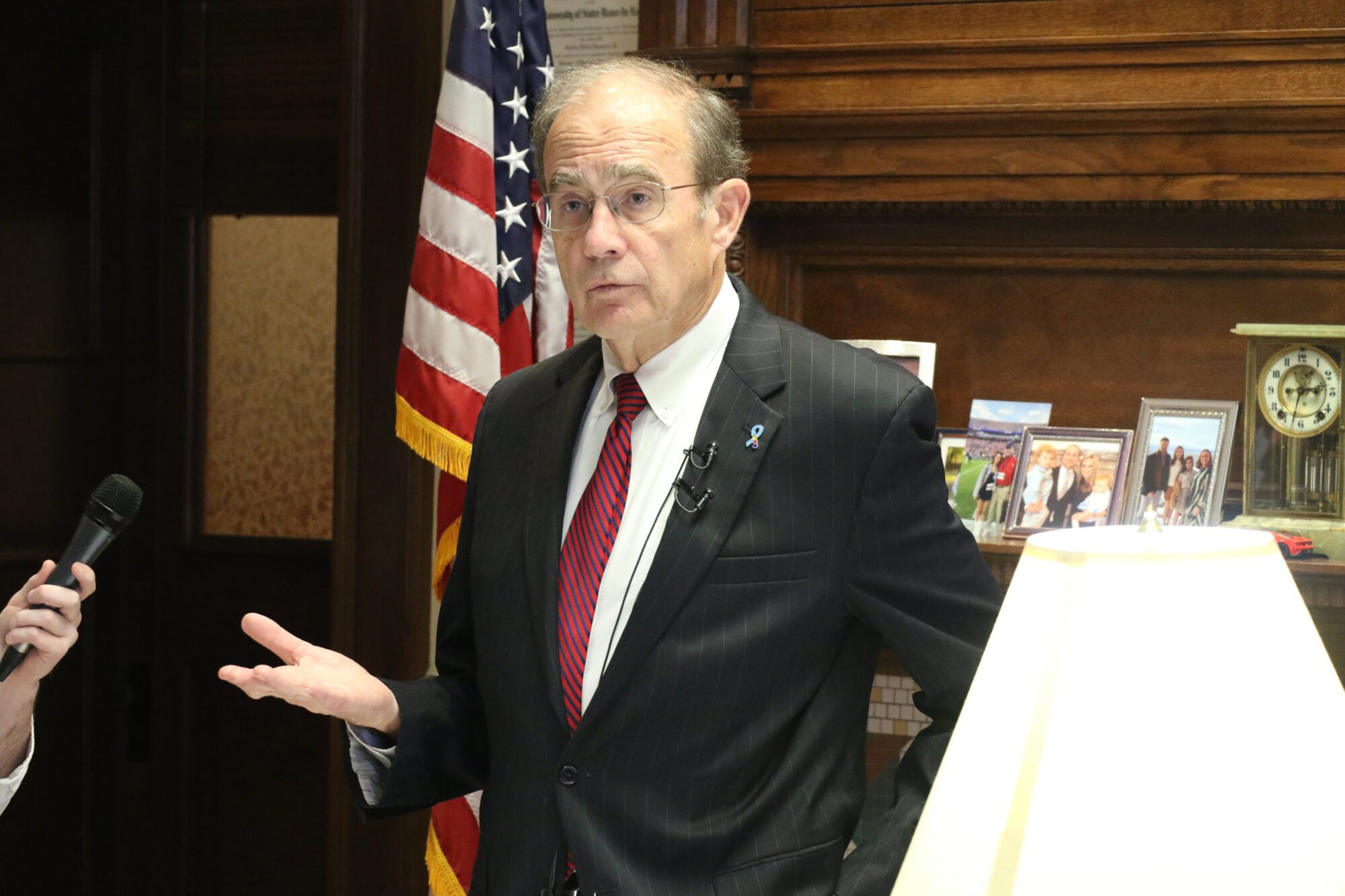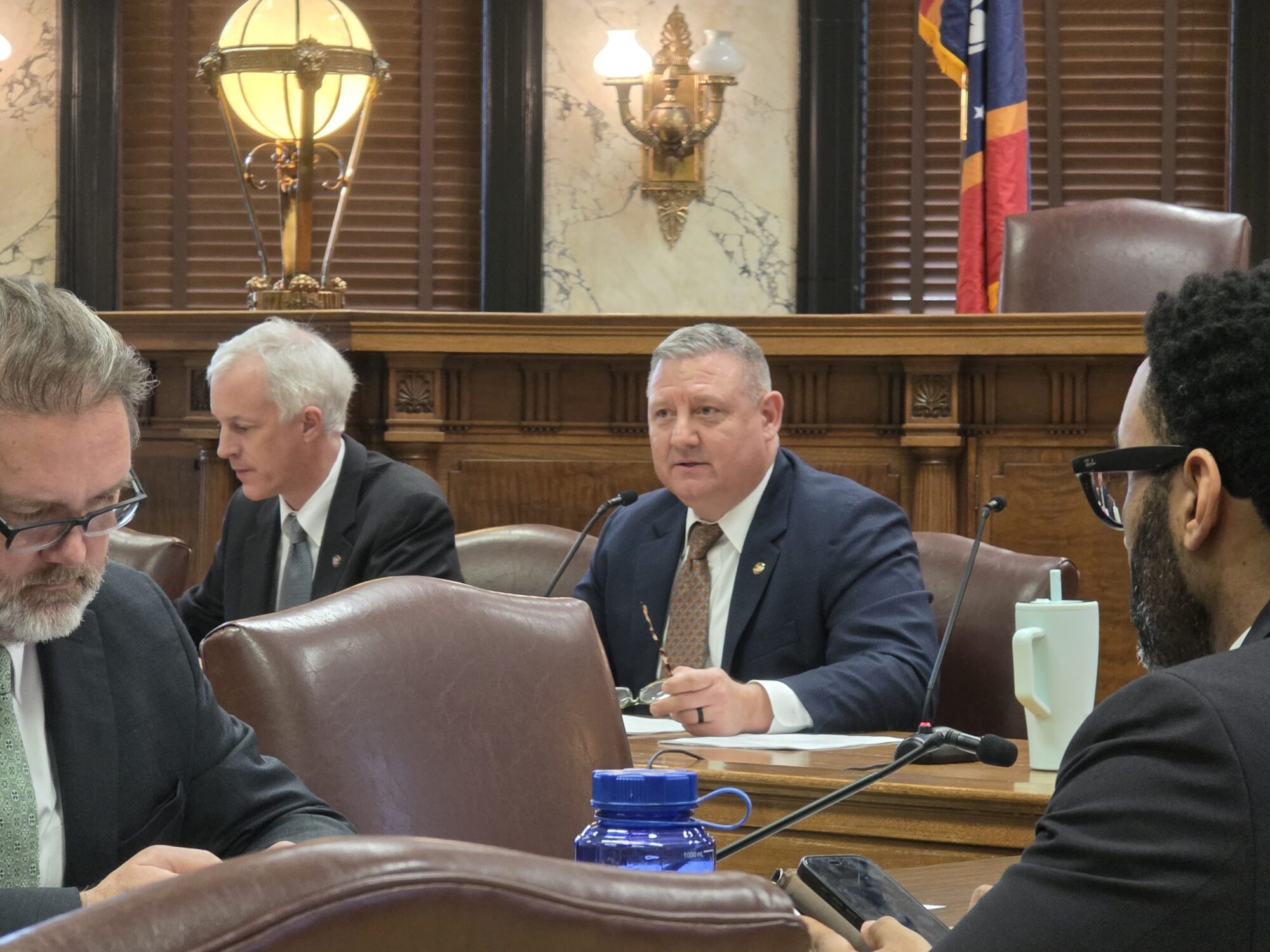
Senate Education Committee Chair Dennis DeBar (R) met with his fellow committee members on Tuesday to start the 2026 legislative session off by taking up three bills. (Photo by Jeremy Pittari | Magnolia Tribune)
- Supporters of the measure say the bill is needed to ensure school staff are aware of violent offenses as they attempt to keep campuses safe.
The Mississippi Senate Education Committee passed a measure Monday that would mandate school districts receive notification within 24 hours of a student’s felony arrest.
SB 2235 would require law enforcement agencies in the state to notify school districts within 24 hours when one of their students is arrested for a felony offense.
State Senator Brian Rhodes (R) said he authored the legislation after discussions with some school district personnel, who expressed a need for knowledge of such offenses for student safety.
“It just seeks to have better communication between law enforcement and our educators and administrators,” Rhodes explained. “I’ve had school districts request this in a couple places. There’s been some kids that might have gotten arrested for a violent crime or a pretty bad crime over the weekend and show back at school on Monday with nobody knowing anything about it.”
Senate Education Committee Chair State Senator Dennis DeBar (R) and Rhodes stated the bill aims to ensure school staff are aware of violent offenses and whether a firearm was involved so they have the information they need to keep campuses safe. Additionally, that information could help educators connect the student with mental health intervention or find therapy.
Several senators expressed concern about the bill. State Senator Brice Wiggins (R) said it appears the bill conflicts with current law that protects a juvenile’s personal information, even when they are arrested.
“So, there’s a little bit of a conflict here,” Wiggins said.
Another concern lodged by State Senator Nollie Norwood (D) focused on the broad nature of the wording “felony arrest” as opposed to just reporting arrests involving violence and/or firearms. Norwood also said he was worried about the impact to the student if the arrest was false.
The question of who at the school district would receive the notification was also posed. State Senator Rod Hickman (D) said he would rather that information not be shared with the wrong staff members.
Student Transfer Program
In other business, the Senate Education Committee shot down SB 2244 which would have offered a potential path for students to transfer to another school if they attend a public school in a district that has been rated an F two years in a row.
Senator DeBar said the measure would cover the additional expenses associated with the transfer, to the tune of $7,200 per student, in addition to the base student cost. This current school year the base student cost was about $6,900.
“That is transportation and any other fees that might be incurred by the student,” DeBar explained. The receiving school district would still retain the right to deny the transfer.
If every student attending a school within an F rated district decided to transfer, DeBar said the cost to the state would be in the hundreds of millions.
“That’s why we inserted a reverse repealer in it because of the fiscal amount of about $200 million,” DeBar added.
After discussion within the committee, DeBar called for a voice vote on the bill, announcing that “the no’s have it.”
Editor’s Note: This article has been updated to correct a previous version that errantly reported SB 2244 passed on the voice vote taken Monday in the Senate Education Committee meeting.