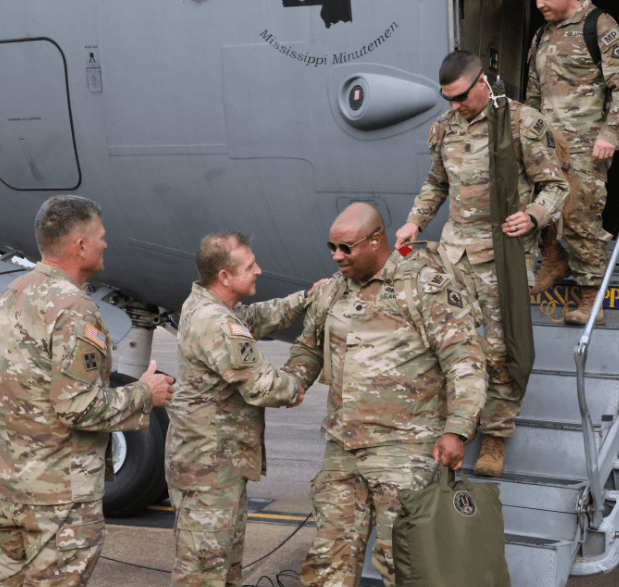
(Photo from MS National Guard on Facebook)
- Colonel Chris Cooksey, Commander of the 155th Armored Brigade Combat Team for the Mississippi National Guard, told lawmakers that chaplain support is plays a major role in reducing service member suicide rates.
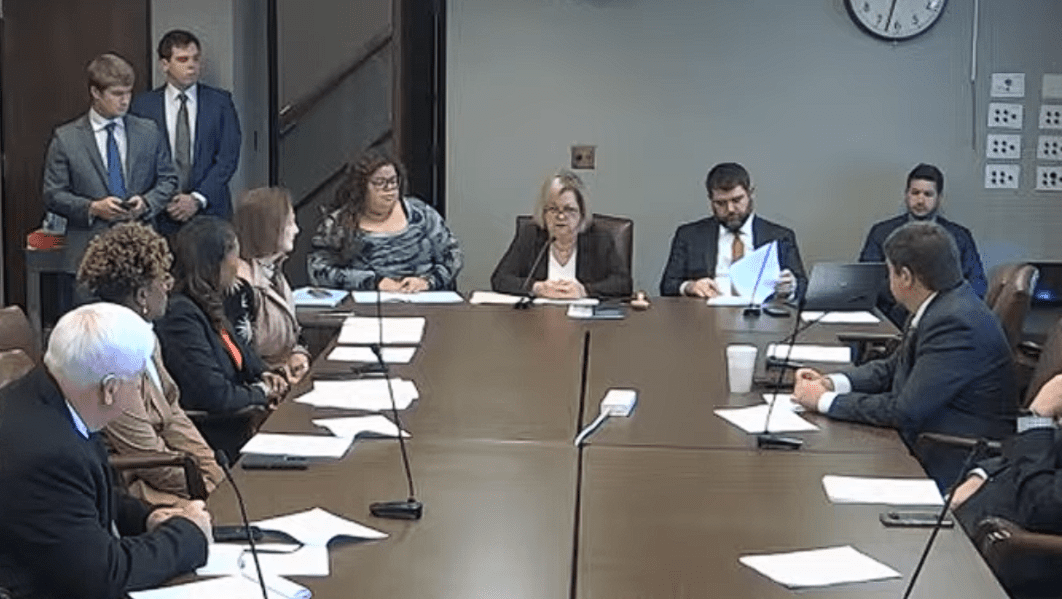
Legislators on the Mississippi Save Our Service Member Task Force heard Monday of the importance of having someone to talk to when dealing with mental health issues, particularly for members of the military and the nation’s veterans.
Suicide among veterans and those who serve in the military are typically seen at increased rates, Colonel Chris Cooksey, Commander of the 155th Armored Brigade Combat Team for the Mississippi National Guard told the legislative task force.
As the commander of the brigade, Col. Cooksey has come to the conclusion that his military training has not prepared him for one prevalent enemy.
“I’ve found out there is an enemy I cannot defeat, and that enemy is suicide,” Cooksey said.
In a span of about 50 days between September to mid-December last year, his unit lost three soldiers to that enemy.
Each time a soldier tries to commit suicide, whether successful or not, he receives notification through a serious incident report. In the past three years as the commander, Col. Cooksey estimated that he has received up to 60 such reports. Roughly 90 percent of those calls occurred when the service member was between training sessions and spending time at home.
“We have a problem, and I don’t know how to get in front of it,” Cooksey said.
He noted that during drill, service members have access to mental health professionals and also chaplains trained in dealing with mental health emergencies.
“Chaplain support is the number one reason that we do not have as high a suicide rate during IDT [Inactive Duty Training] or actual AT [annual training],” Cooksey explained.
Currently, there is one chaplain per battalion in the state.
“That’s the number one thing that my chaplains do at AT, is deal with behavioral health,” Col. Cooksey said.
Chaplains stand out in providing mental health because they do so in a more discreet manner, which is enticing to service members due to the stigmas associated with mental and behavioral health.
There is also a need to provide that aid at no cost, such as through insurance. For instance, when a service member in AT status needs help, they may go to Pine Grove Behavioral Health in Hattiesburg, where that care is covered so long as they maintain their status.
“But there’s a point where they’ll say when he comes off orders, he’s also coming out of Pine Grove,” Cooksey added.
The other problem is that most service members are in their 20’s and don’t carry insurance.
“In his priorities, insurance is not number one,” Col. Cooksey said of those service members.
The committee tossed around the idea of using military budget funds to develop a rotation of chaplains who would be on call. They also alluded to a bill that would provide reimbursements to National Guardsmen for TRICARE premiums, the health care program for service members, retirees and their families.
That bill, SB 2018, unanimously passed on the Senate floor Monday afternoon. Authored by State Senator Jeff Tate (R), the bill would allow National Guardsmen to be reimbursed for their healthcare.
The only qualifiers in the measure are that the person must be qualified for TRICARE, the member does not already have insurance with another provider or employer, and the member is active with the Mississippi National Guard, Senator Tate told senators.
State Senator Dennis DeBar (R), who is a member of the Mississippi National Guard, recused himself from voting on the bill.

Jeremy Pittari