(Photo from Shutterstock)
- The state agency will ask lawmakers for $15 million to cover an increased state share for program administration and nearly $10 million for better income and asset verification tools.
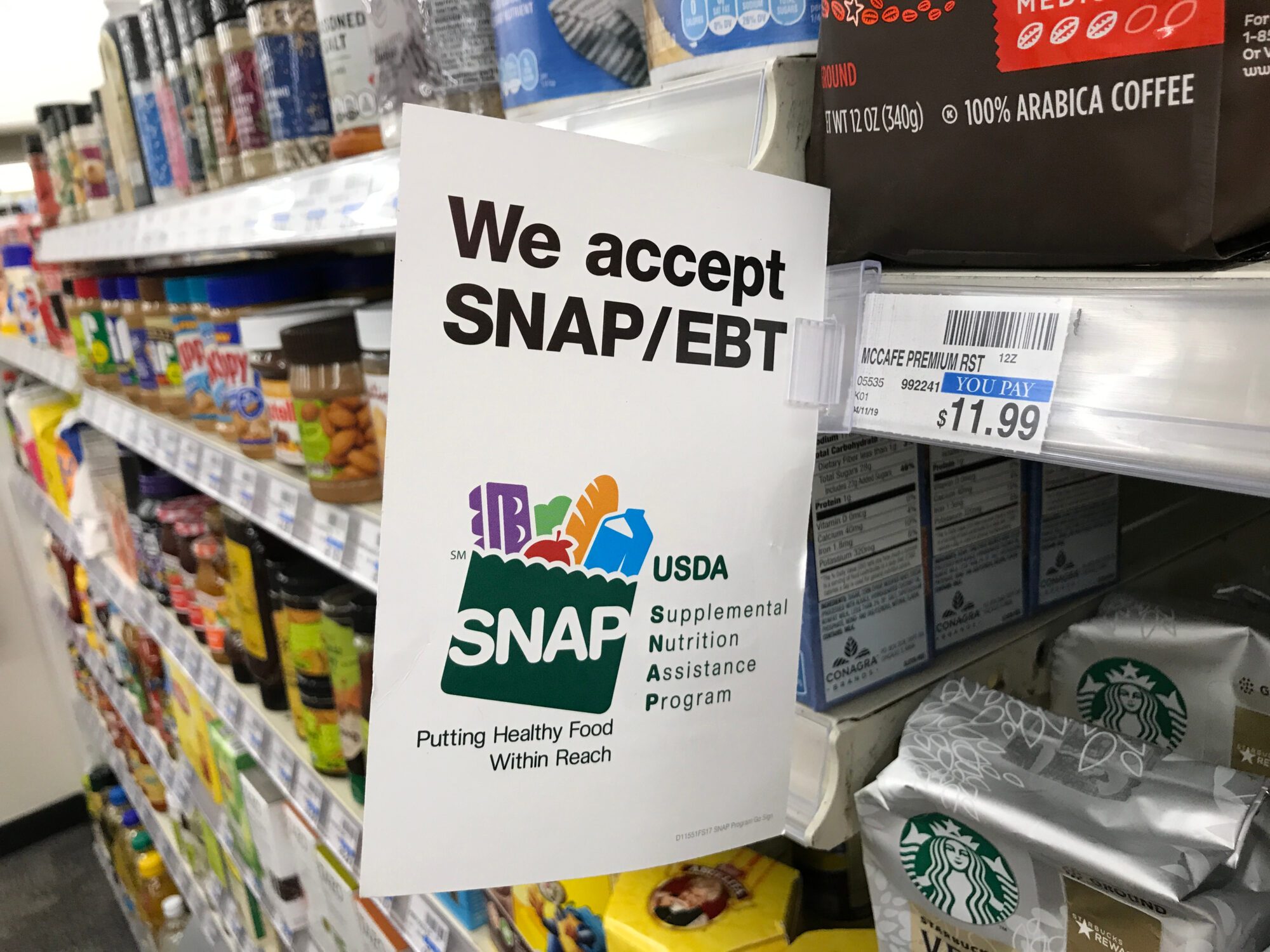
Changes are coming to the Supplemental Nutrition Assistance Program, or SNAP, that are expected to affect Mississippi financially if the current error rate stays in place.
To prevent that from happening, the Mississippi Department of Human Services (MDHS), the agency that oversees the SNAP program in the state, plans to seek funding to access more rigorous financial and asset confirmation tools.
How income and assets are verified for SNAP
Three factors are associated with eligibility determinations for SNAP, the federal welfare program previously referred to as food stamps. The factors include household income, household size and any household assets, including savings accounts, vehicles and other real property.
In terms of income, the threshold is set at 130 percent of the federal poverty level. Applicants provide their income information to the Mississippi Department of Human Services which is tasked with certifying the information as true and accurate.
“For every application and recertification that we do, every six months we do our due diligence on income verification with the tools that we currently have in place,” Mark Jones, Chief Communications Officer at MDHS said.
Now that states with high error rates will be asked to provide a cost share to the SNAP program, MDHS has been advocating for funding to gain access to services that go deeper into the applicant’s financial situation.
“What we are asking for are more robust tools that will give us a stronger picture of the individual’s overall financials beyond just what is reported and the revenue from a job,” Jones added.
Shenetta Drone, Deputy Executive Director for Economic Programs for MDHS, mentioned in the One Door Policy Committee hearing held in October that there is currently no state or federal funding to help pay for more robust income verification methods.
MDHS Executive Director Bob Anderson said he plans to again request funding to gain access to more robust means of income verification and asset reporting. He is expected to make that request to the Legislature during the coming 2026 legislative session.
Upcoming changes
Last year, about 350,000 Mississippians were in the SNAP program, equating to nearly $800 million in benefits provided, Anderson testified during a recent state Senate committee hearing.
Currently, the federal government provides 100 percent of the funding to beneficiaries and 50 percent of the funding used to cover the administrative costs of the program. However, the passage of the One Big Beautiful Bill Act this year means the Trump administration will implement changes as outlined in the federal legislation.
First, states will be asked to cover an additional 25 percent of the administrative costs, bringing the state share up to 75 percent.
Anderson plans to ask Mississippi lawmakers for the additional funding to cover the 75 percent of administrative costs before the change goes into effect on October 1, 2026.
“We anticipate needing an extra $15 million to pay that extra 25 percent of administrative costs,” Anderson told Magnolia Tribune.
Mississippi currently spends $60 million on administrative costs, based on last year’s $800 million in benefits.
Second, cost sharing penalties will be applied to states that have payment error rates above 6 percent. States with an error rate between 6 to 8 percent will be responsible for 5 percent of the program costs or about $40 million for Mississippi based on last year’s numbers. Error rates up to 10 percent will equate to a cost share of 10 percent of the cost of the program, or $120 million using last year’s benefit total, and error rates above 10 percent will lead to a cost share of 15 percent, or about $240 million, when last year’s benefits in Mississippi are factored in.
Mississippi’s most recent error rate was 10.49 percent.
Anderson said there has always been a penalty for states with an error rate above 6 percent but the penalties were waived by the Food and Nutrition Services during and after the COVID pandemic. Penalties would have equated to about 1 percent of total benefits paid out if they had been enforced, equating to about $8 million based on the benefits paid within Mississippi last year.
Anderson clarified that the error rate is not indicative of fraud.
“The payment error rate is comprised not only of errors that clients may make in not giving us all of the information that we need at the front end, but it is also comprised by agency errors such as, you know, frankly, an error in putting in the information on the part of our staff,” Anderson noted.
To help lower the error rates on the part of MDHS staff, a new electronic system is in development to allow online reporting.
“It’ll be in user-acceptance testing in February of 27,” Anderson explained. “And then if all goes well with the shakedown crews in February, we’ll go live statewide in May of 27, with a completely new eligibility platform for SNAP, TANF, childcare and child support all together.”
He added that the new system will be a huge leap for the agency, considering staff are currently using old green screen computers.
How error rates are determined
MDHS has a SNAP quality control division staff that pulls between 75 to 100 cases to check the work of all eligibility staff.
The department does a more thorough check of the beneficiary’s income, household and assets. Then representatives from the Food and Nutrition Service pulls a sample and combines the quality control division’s error rate with their own error rate to determine the cumulative average error rate across a fiscal year.
Every client who has been previously approved for SNAP must go through a re-verification process every 6 months in Mississippi. However, if a change in income occurs in the household and it is not reported by the beneficiary that can be attributed to the payment error rate, Jones described.
Plans to address the error rate
Anderson said that until just recently, MDHS had access to an employment and income verification tool called The Work Number through Equifax. That access was grant-funded through U.S. Department of Agriculture for one year. MDHS would like to reestablish access to Equifax as well as one or two other financial information vendors. Pilot programs are being implemented currently in a handful of counties of varying sizes, at no cost to the state for the first year, Anderson described.
“You see those things as efforts we’re already making on income verification with the pilot programs specifically point to the agency’s willingness to do income verification despite the obstacles of the financial component to pay for it,” Jones said.
Anderson added that his agency is also working with a group called Westat, a professional consulting group comprised of former Food and Nutrition Services employees. They work with states to conduct a root-cause analysis to identify factors contributing to error rates.
Starting next month, MDHS will work with the consultant for the next 12-15 months to pull samples to identify error rate causes paid for through non-profit grant funding. Similar work will also be conducted by Code for America, also at no cost.
MDHS is also working with TRUV, which looks at an applicant’s entire financial picture, and Steady IQ, a service that gives agencies access to all financial assets of an applicant. Anderson hopes the Legislature will approve funding that would provide access to multiple methods of deeper income verification.
“We’re going to ask the Legislature and hope that we’ll get the opportunity to take advantage of two or three different approaches because there’s not a one-size-fits-all when it comes to this income verification,” Anderson added.
While an exact cost has not been determined, Anderson estimates access to two to three tools that meet the agency’s needs could cost between $5 to $12 million.
During the Women Children and Families Study Committee hearing earlier this month, Committee Chair state Senator Nicole Boyd (R) asked Anderson if he foresaw any hurdles to reducing the error rate before penalties are imposed.
“Well, I’m going to say this much, and really not a whole lot more. We’re the only state in the country under change reporting and change reporting is different from every other state (which) uses something called simplified reporting where they do… recertification every six months,” Anderson replied during the committee hearing. “Under change reporting our obligation is if there is a $125 change in household income within a month, we are required under current law to re-certify that family for SNAP eligibility.”
Change reporting was implemented as part of the passage of the Medicaid and Human Services Transparency and Fraud Prevention Act, also known as the HOPE Act.
Change reporting in Mississippi through the HOPE ACT
Dr. Jameson Taylor, who was involved in the formation and passage of the HOPE Act, clarified that Mississippi is not the only state to use change reporting in some way, rather Mississippi is the only state to not use simplified reporting. Taylor is the Director of Policy and Government for the American Family Association.
“Mississippi is the only state that does not use simplified reporting. And that means that we use only change reporting,” Taylor told Magnolia Tribune. “It’s important to understand 19 states use a combination of both change reporting and simplified reporting, meaning if there’s a change on some things and then those people are supposed to report that.”
Back in 2015 and 2016, he began working with then State Representative Jason White (R), former State Representative (now Public Service Commissioner) Chris Brown (R) and state Senator Kevin Blackwell (R) on getting the bill passed, but it did not make it to the governor’s desk in the first two attempts.
“And then in 2017 we finally passed it, and at that time Chris Brown had the genius idea to call it the HOPE Act,” Taylor described. “The HOPE Act is the Gold Standard for welfare-to-work legislation in the states and in a certain way it has planted the seeds for some of the reforms coming out of the Trump administration. We’re talking about common sense ideas like auditing food stamp rolls, encouraging states to reduce their SNAP error rates, things like that.”
Welfare to work requirements go back to moves by a Republican-led Congress under Bill Clinton’s presidency in 1996 that mandated a person on welfare must show proof they are seeking employment, Taylor described. Welfare benefits typically last three months while that search continues, but Taylor explained that waivers put in place by the Obama administration negated work requirements.
“The Obama administration was doing everything that it could to expand welfare enrollments,” Taylor said.
Getting the bill passed was a way to address the welfare fraud that was happening in almost every county of the state along with increasing the workforce participation rate, Taylor added.
“Why were we so focused on welfare reform? Because Mississippi has a low workforce participation rate, because we are one of the poorest states in the country, and you don’t have to be a genius to know that if you don’t want to be poor you have to get a job,” Taylor said.
A study focused on just SNAP was instrumental in getting the law passed. Taylor described how the study demonstrated that when SNAP waivers ended, those recipients were prompted to seek employment, which led to improved outcomes.
“Just food stamps, eliminating one waiver, and we saw thousands of people that got back to work,” Taylor said. “You know, the first year they might be working at a gas station or a coffee shop, or something. But after two years they might be working at Nissan making like $70 – $80,000 a year. And those results are astonishing because… you just have to ask yourself, ‘Wait a minute, like you were on food stamps for eight years.'”
As such, he argues against rolling back the change reporting requirements, especially since Mississippi still has one of the lowest labor force participation rates, last reported to be at 53.9 percent in 2024.

Jeremy Pittari