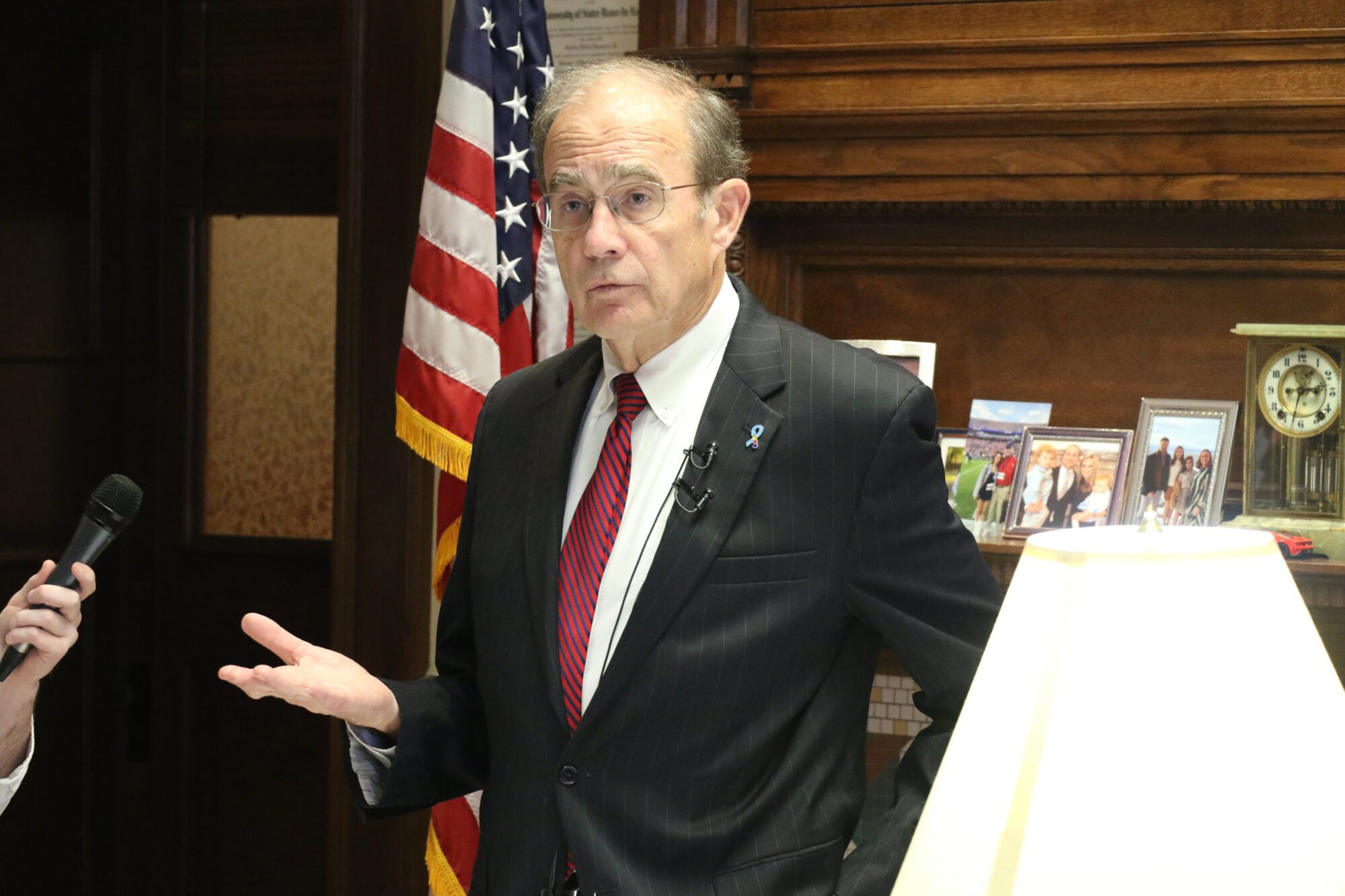
- Expectations are that legislation will be presented during the 2026 legislative session focused supporting Mississippians in their workforce development educational journey.
Mississippi has a goal of more of its citizens being trained in an industry recognized credential or obtaining a college degree, an effort referred to as Ascent to 55%.
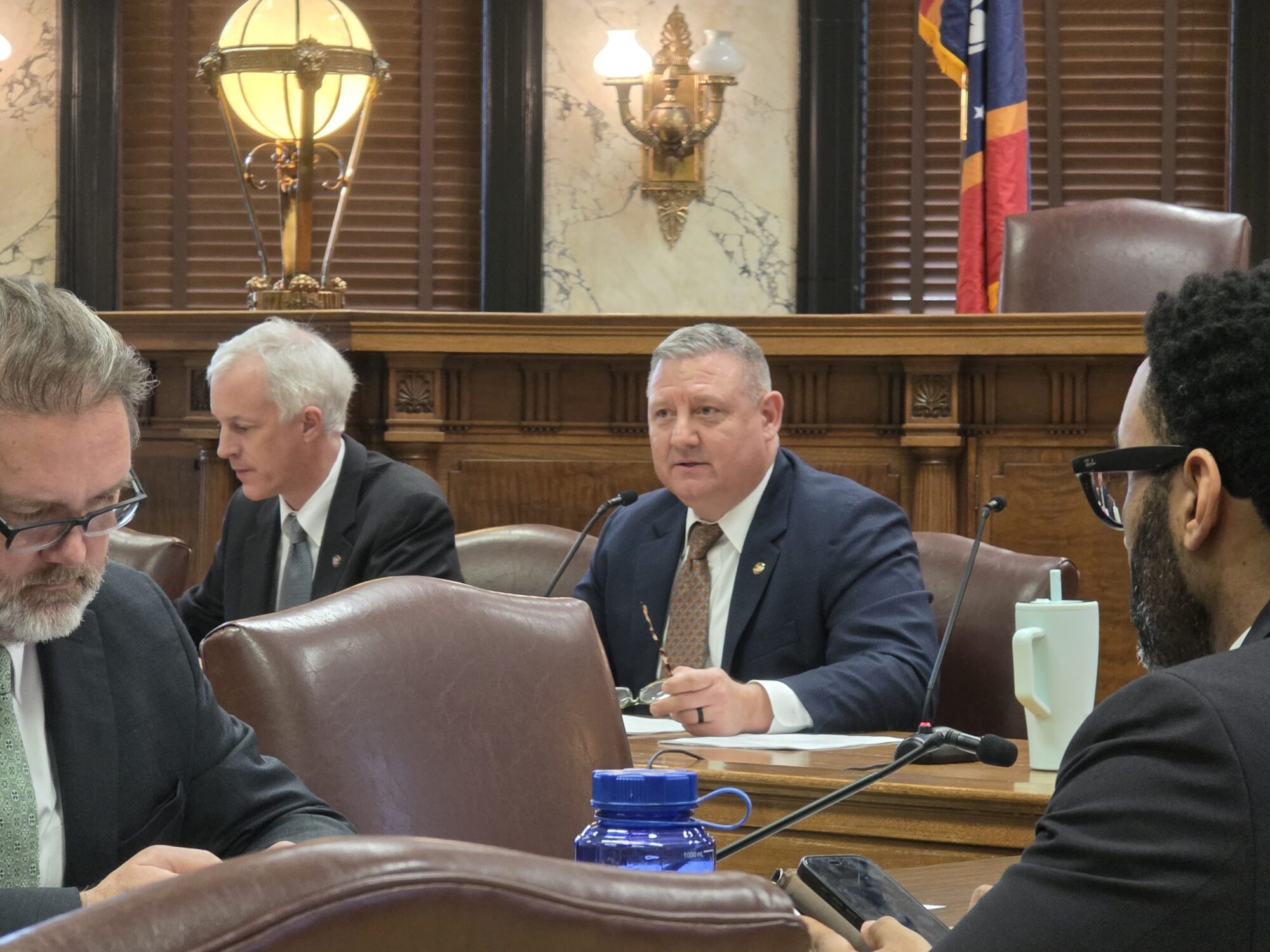
Jennifer Rogers, Director of State Student Financial Aid at the Mississippi Institutions of Higher Learning, told lawmakers last week at a hearing of the Senate Committee on Universities and Colleges Committee about a potential program that could help the state reach that goal.
Currently, Mississippi is at roughly 48.7 percent. Jean Massey, Executive Director of the Mississippi Economic Council for Ascent to 55%, said during her presentation that the national average is 54.9 percent.
One of the ways to raise that rate is by providing adult learners with access to state aid programs. Rogers said a large percentage of Mississippi community college students are not recent high school graduates, making them ineligible for the current state aid programs.
Tennessee’s Reconnect was put forward as an example of a program that Mississippi could use as a model. Tennessee’s program has increased community college enrollment by 40 percent among the adult population and raised credential completion of that population by more than 14 percent.
A similar program in Michigan, called Michigan Reconnect, received 67,000 applications in just four months and more than 19,500 adult enrollees in the program’s first two years. The Michigan program was able to produce 5,600 credentials in those two years.
The creation of a similar effort in Mississippi that targets students in workforce alliance programs can ensure that any additional dollars flow directly to industries facing substantial shortages.
Lawmakers were told that financial aid programs are needed for the lower income population since Pell grants typically do not cover all of the costs associated with college attendance. This could be especially impactful since adult learners face financial needs outside of tuition, including transportation, books, equipment, and lost time at work.
Rogers said adults attending college are more likely to complete credentials when wraparound supports accompany tuition assistance. She suggested the creation of a simple grant program that has low administrative costs. The program could include a repayment requirement if course work is not completed. She added that it should also focus on priority occupations as defined by the state and/or Accelerate MS.
“So, they wouldn’t just be able to enroll in any general studies program,” Rogers described. “They would have to be enrolled in a program that is leading to a priority occupation.”
State Senator Nicole Boyd (R), the committee chairman, said there is an expectation that some sort of legislation will be presented during the coming session focusing on this need.
Dr. Courtney Taylor, Executive Director of Accelerate MS, noted that some priority professions currently include HVAC technicians, electricians, plumbers, and construction workers.
“I think, very simply, we don’t have enough humans with the skills required that we need right now,” Taylor said. “We have regions of this state who are seeing unprecedented demand, but they cannot answer it.”
Taylor also suggested putting a focus on providing assistance to people who have the desire and drive to enter these fields, instead of just high achievers. Career coaches can help steer people to the careers where they may be best suited, while alleviating perceived stigmas associated with a particular career.
“I think at some times at the post-secondary level students get steered into the wrong majors because of a lack of understanding of the difference between industrial maintenance and engineering and engineering technology,” Taylor said.
There is also a need to convince those who have retired from one of those fields to consider being an instructor to fill current voids seen at the community college level.
“My dad is a 72-year-old sheet metal mechanic, and if I told him you could be an instructor he would say, ‘I only have an associate’s degree I cannot be an instructor’ to which I would say, ‘That’s wrong,'” Taylor described.