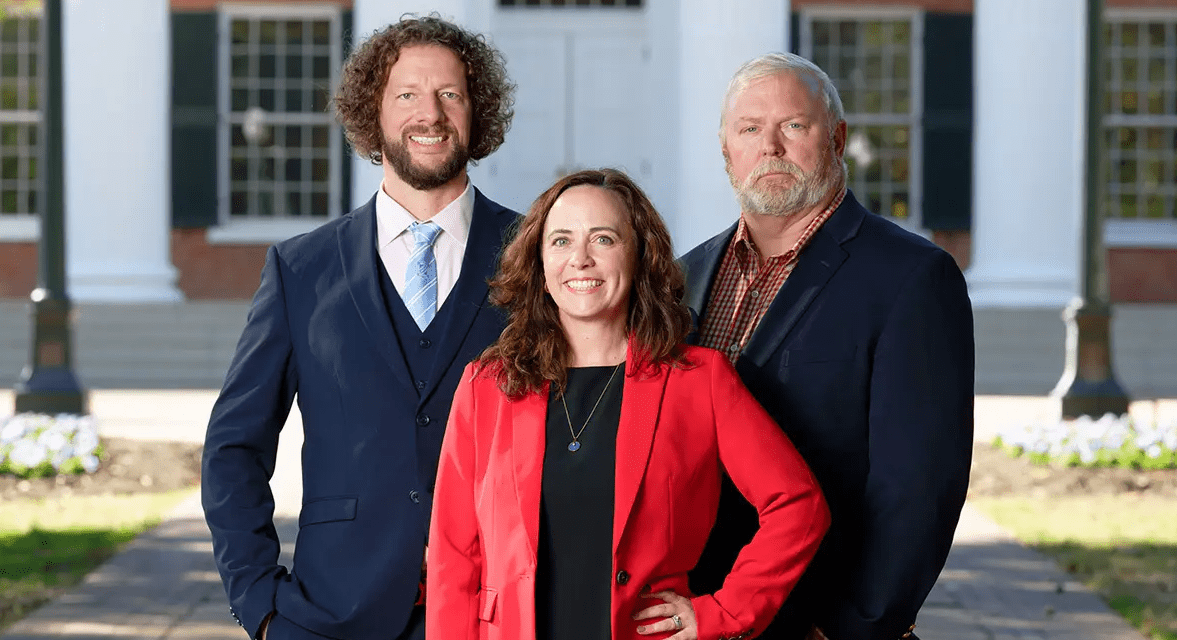
Mississippi Institute for National Security and Resilience director Wes Jennings, dean of the School of Journalism and New Media Andrea Hickerson, and National Center for Tactical Readiness director Chip Wade (Photo from Ole Miss)
- The administration believes these defenses are needed now more than ever since technology is so tightly integrated into much of the world.
Two centers at the University of Mississippi have begun work to help the general public, emergency responders and the military be better informed as they respond to potential threats to the state and nation.
Ole Miss is now home to the National Center for Tactical Readiness and the Center for Information Advantage and Effectiveness. Both centers are operating under the umbrella of the Mississippi Institute for National Security and Resilience. The aim is to help people better understand the plethora of information that bombards them daily.
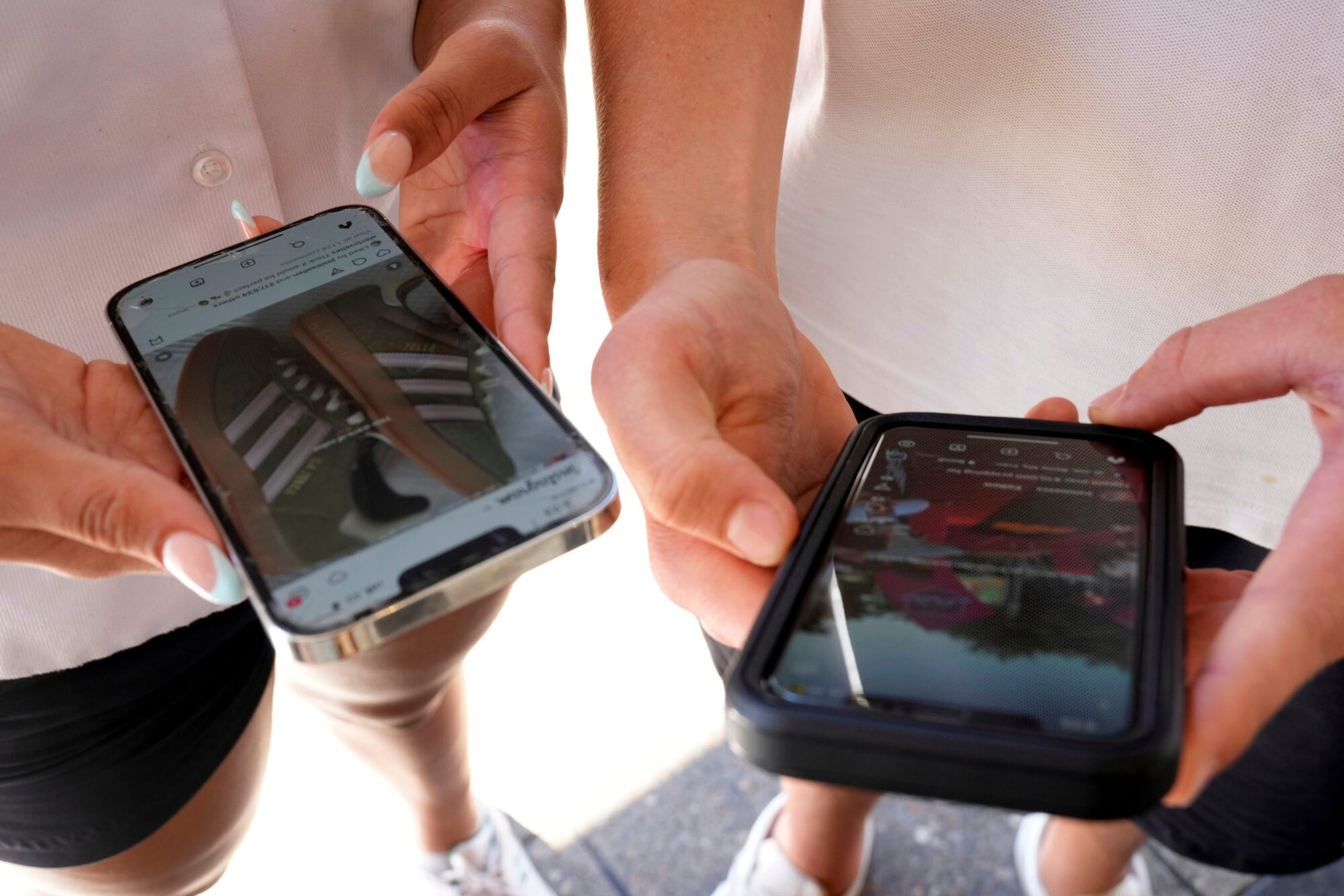
Wes Jennings, Director of the MINSR, said that in today’s age, algorithms drive the viewpoints of the media the public consumes. These algorithms keep track of previous online views and searches, along with likes and engagements via social media platforms to tailor future content for maximum engagement. This tailoring leads people to only see one viewpoint, at times leading to misinformation or exposure to content created by bad actors from abroad seeking to undermine the security of the United States.
The two Ole Miss centers will work to train people to seek out broader sources of information that are less filtered. Exposure to varying viewpoints helps the population come to a better understanding that is closer to reality, Jennings said.
“It’s about learning that there’s much more broad-based information out there on any given topic that you would like to be informed on and educated on,” Jennings told Magnolia Tribune. “We want to move the perception closer to the reality, because perception is what dictates and impacts behavior.”
Most people are forced to just read the headlines due to an overabundance of information, he said. Also, some websites use headlines as clickbait, resulting in readers seeing that the story contains none of the information promised.
“The idea is that we want people to have a healthy level and ability to digest information, but also from broader sources,” Jennings said.
When people get information from varying viewpoints, they usually come away with a more middle-of-the-road perspective, said Jennings. He suggests conducting more research into important topics and not to trust everything posted on social media.
“It is definitely playing a part because the information is filtered and it’s contingent upon what you’ve looked at in the past,” Jennings explained. “So, we’re trying to teach people to be intentional about seeking out other information from other outlets too.”
For instance, Jennings said when a person views a town or city as having a high crime rate, they will avoid those areas, impacting that respective economy. Yet, at the same time, educating the public that engaging in risky behavior also prevents negative outcomes, such as the importance of avoiding drug use or locking vehicles and homes.
“It’s telling people that leaving your car doors open, leaving guns and cash in the backseat that, ‘Yes, you’re going to get your stuff stolen,'” Jennings explained.
As for the National Center for Tactical Readiness, the center will work to train the military, public and emergency responders to operate within a resilient space where they can effectively react to ongoing digital warfare. It will also help the public more effectively consume media and information to be less permeated by divisive foreign influences.
The administration believes these defenses are needed now more than ever since technology is so tightly integrated into much of the world, including travel, shipping, finance and the nation’s infrastructure. Having a better trained military to identify and respond to those threats allows them to shore up those vulnerabilities.
While conducting their research, Jennings expects artificial intelligence to play a part in filtering out the noise from the sheer mass of information that is now available.
“But you still need the human subject matter expert to filter through some of these themes,” Jennings added. “And that’s where I think we’re starting to grow in that area. But the same idea applies, don’t trust everything AI gives you. It’s that interplay between technology and AI and human intelligence.”
At times, this inundation of too much data can cause some people to shut down and avoid keeping up with the news altogether, distancing themselves from the world.
“And that’s not good either,” Jennings said. “We don’t want people to be, you know, disengaged and unplugged, so to speak, from parts of society that matter for the general good, but also that matters for potential victimization risk and being compromised for national security related things.”
Within the Center for Information Advantage and Effectiveness, the goal is to identify and address bad actors who are intent on pushing out skewed information. Jennings said that at times these groups twist information from American media outlets and push it back out with ill intent.
Since the centers and associated institute were established in October after approval from the Mississippi Institutions of Higher Learning Board of Trustees, their goals are still in the research phase.
“I’m pleased that the University of Mississippi and the state of Mississippi are going to be front and center on these issues of national security and resilience,” Jennings said. “This is something that we want to be nationally known for because literally every single person in society, and obviously in our country, is touched by these issues.”